The Philadelphia Flyers left Las Vegas on Monday night with more than just two points. What they carried was something just as useful at this point in the season: evidence.
Evidence that the slide they’d been stuck in was not structural. Evidence that their habits, when honored, still hold up against good teams. Evidence that belief, once cracked, can be repaired faster than it was broken.
As Philadelphia heads to Utah to face the Mammoth, there are plenty of things to consider. The Olympic break is inching closer. The standings are tight. And momentum, fragile as it can be, is once again available to be claimed.
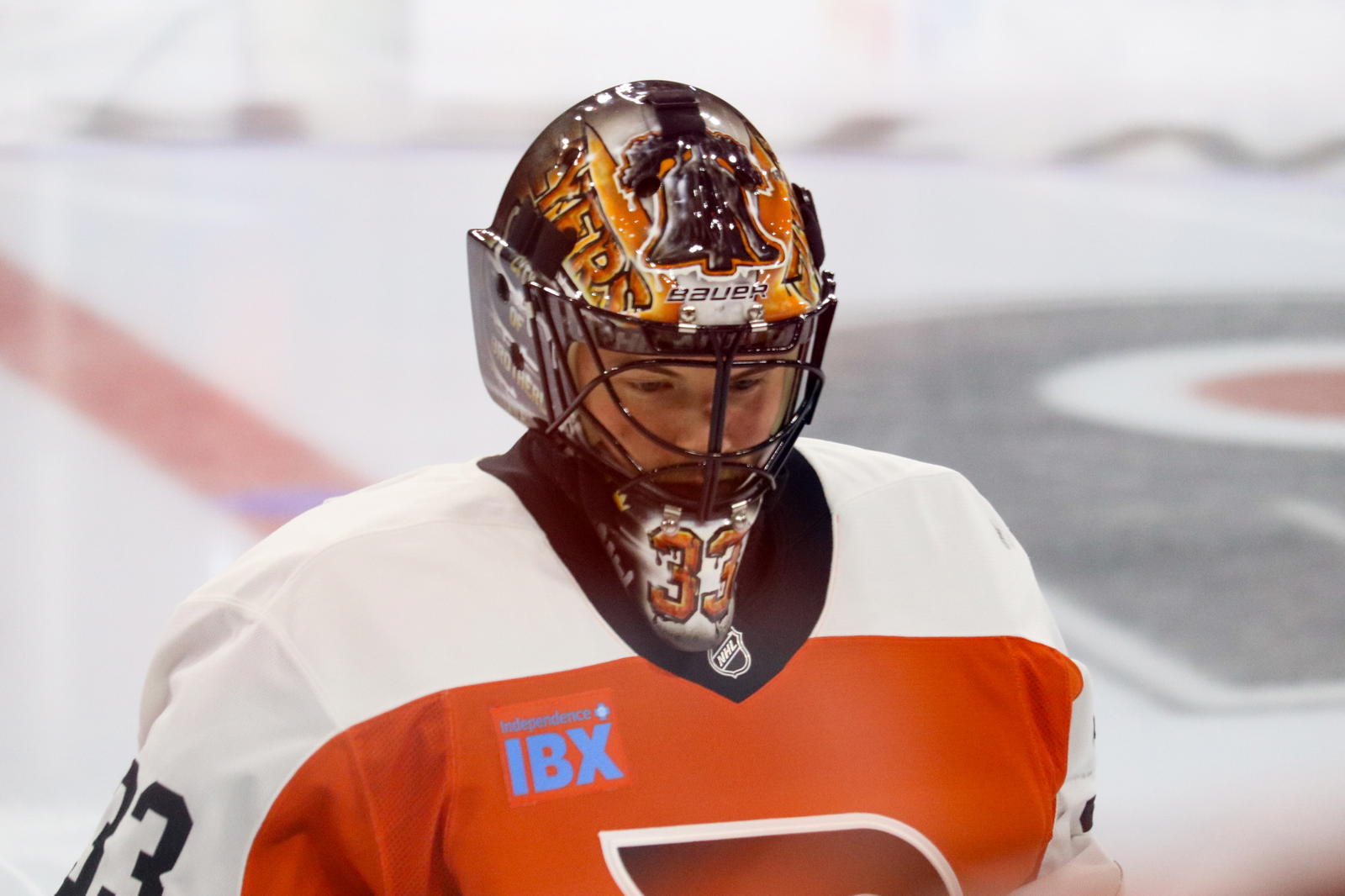
1. Sam Ersson and the Value of Continuity.
Rick Tocchet’s decision to give Sam Ersson back-to-back starts is not just a reward for his performance in Vegas, but a vote for stability.
After a stretch in which goaltending became entangled with the Flyers’ broader struggles, Ersson’s commendable outing against the Golden Knights felt like a reset of sorts. He simplified his game, trusted his positioning, and resisted the urge to overmanage moments of chaos. The Flyers, in turn, played like a team that trusted what was happening behind them.
Going right back to Ersson signals a desire to let that rhythm breathe. There’s a psychological component here, too: when a goaltender finds clarity, changing the equation too quickly can reintroduce noise. Tocchet appears content to let Ersson sit in the crease with that confidence intact, particularly against a Utah team that thrives on quick strikes and opportunistic offense.
If the Flyers are serious about turning one good night into a stretch of good hockey, continuity in net is a logical place to start.
2. Proving Vegas Was Not a Fluke.
The Flyers were careful not to oversell their win in Vegas, but internally, it mattered. Not because it snapped a losing streak—those end eventually—but because it validated their process.
Against Utah, the test becomes replication. Can they manage the puck with the same discipline? Can they defend without overextending? Can they avoid the temptation to cheat offensively when the game tightens?
Vegas forced Philadelphia to play honest hockey. Utah will challenge them differently. The Flyers’ recent funk was fueled in part by mental lapses and impatience. The way out of it is consistency, because that is where good teams separate themselves
3. Rolling Confidence Into Structure.
One of the more subtle takeaways from the Golden Knights game was how the Flyers’ confidence manifested.
Breakouts were cleaner. Defense was tighter. Risk was taken selectively rather than compulsively. That kind of confidence is harder to maintain than the adrenaline-fueled variety, and it’s exactly what Utah will test.
The Mammoth are dangerous when opponents lose their shape, when defenders get caught puck-watching or forwards start pressing for offense that isn’t there. Philadelphia’s challenge is to keep its identity intact even if the scoreboard doesn’t immediately cooperate.
The Flyers don’t need to play faster; they need to play calmer. That’s the version of their game that resurfaced in Vegas, and it’s the one that gives them the best chance to build real momentum heading into the break.
4. The Clock Is Starting to Matter.
The Olympic break looms as January begins to close out, and with it comes a natural psychological checkpoint. Teams want to arrive there feeling secure, not scrambling.
For the Flyers, this stretch is about more than individual games—it’s about trajectory. The standings remain crowded, and recent history has made them acutely aware of how quickly a season can tilt if a slump lingers too long. The Vegas win stopped the bleeding. Utah offers a chance to heal further.
There’s also a subtle urgency in the room now. Not panic—the Flyers have done well to avoid overreacting—but awareness. Awareness that they’ve seen what happens when habits slip, and what it feels like when they’re restored. Few teams have done better than the Flyers this season to avoid prolonged downturns. This is the moment to prove that trend holds.
Projected Lines
Philadelphia Flyers
Forwards:
Trevor Zegras - Christian Dvorak - Travis Konecny
Denver Barkey - Sean Couturier - Owen Tippett
Matvei Michkov - Noah Cates - Bobby Brink
Nikita Grebenkin - Lane Pederson - Garnet Hathaway
Defense:
Travis Sanheim - Cam York
Emil Andrae - Jamie Drysdale
Nick Seeler - Noah Juulsen
Goalies:
Sam Ersson
Aleksei Kolosov
Utah Mammoth
Forwards:
Clayton Keller - Nick Schmaltz - Lawson Crouse
JJ Peterka - Barrett Hayton - Daniil But
Michael Carcone - Jack McBain - Dylan Guenther
Brandon Tanev - Kevin Stenlund - Liam O'Brien
Defense:
Mikhail Sergachev - Sean Durzi
Nate Schmidt - John Marino
Ian Cole - Nick Desimone
Goalies:
Karel Vejmelka
Vitek Vanecek