The NHL is getting creative in exploring its options for the 2020-21 season.
While the league is looking for ways to have teams play in their own buildings, it's also discussed using short-term hubs and temporarily realigning the divisions to reduce travel amid the coronavirus pandemic, NHL commissioner Gary Bettman said Tuesday.
"You'll play for 10-12 days," Bettman said of the potential hub system, according to NHL.com's Nicholas J. Cotsonika. "You'll play a bunch of games without traveling. You'll go back, go home for a week, be with your family. We'll have our testing protocols and all the other things you need.
"It's not going to be quite as effective as a bubble, but we think we can, if we go this route, minimize the risks to the extent practical and sensible. And so that's one of the things that we're talking about."
With the Canada-United States border closed to nonessential travel, a division including all the Canadian teams is another possible adjustment.
"Obviously, we're not going to move all seven Canadian franchises south of the 49th parallel, and so we have to look at alternative ways to play," Bettman said.
He added, "As it relates to the travel issue, which is obviously the great unknown, we may have to temporarily realign to deal with geography, and that may make sense, because having some of our teams travel from Florida to California may not make sense."
The NHL is targeting Jan. 1 as the start date for the 2020-21 campaign and reportedly won't consider playing less than a 48-game season. Bettman, who previously said he'd prefer to avoid playing in the summer, says he's focused on getting back to the league's usual calendar.
"While we're in the middle of working on our return to play as well, which I hope to have put to bed soon, our goal is to get back to a normal schedule starting (next) fall and being done before July on a longer-term basis," Bettman said. "That is the goal."
The NHL and NHLPA each need to agree upon any potential plan as they did for the 2020 return to play.
The two sides have stayed in touch over the offseason and the lack of significant progress on a new agreement is nothing to be concerned over, Drance and Dhaliwal add.
The 2020-21 campaign will be the final season of Pettersson's entry-level contract and he's eligible for an extension at any point. However, the Canucks appear willing to take their time on a new pact for the 21-year-old as they navigate through the ramifications of a flat salary cap for the foreseeable future.
General manager Jim Benning said earlier in November that the pandemic is currently affecting the Canucks' financial flexibility when it comes to awarding head coach Travis Green a contract extension.
Vancouver is projected to have over $24 million in salary cap space before the 2021-22 season, and the club will also need to ink defenseman Quinn Hughes to a new deal by then.
Pettersson's next deal could easily reach over $10 million per season, with the left-handed shooter averaging 0.92 points per game across his first two seasons. The young Swedish sniper, who has a Calder Trophy on his resume, also registered 18 points in 17 games this past summer in his first taste of the Stanley Cup Playoffs.
This is the second half of a two-part series ranking all 31 NHL teams by tiers for the 2020-21 season. Part 1, which addresses the bottom 14 teams, was published Monday.
This is an annual exercise conducted after the dust has settled on the draft and free agency. The tiers are based on projections for the 2020-21 season only, not the long-term trajectories of each franchise. Lastly, keep in mind the timing. We're all awaiting word on the 2020-21 NHL season, which means there's runway for teams before rosters need to be finalized.
Moderately dangerous (4th tier)
Possible playoff teams unlikely to go on deep run
Calgary Flames
"Solid" is the word that comes to mind regarding the 2020-21 Flames. They're a high-floor team (make the playoffs, probably?) whose ceiling is limited (win a round or two, at best?). Landing stud goalie Jacob Markstrom in free agency was massive; he'll be a huge help over the short and long terms. Otherwise, the roster is unexceptional: above-average top-six forwards, above-average top-four defense, decent but unspectacular depth at both positions. The playoff history of this team during Johnny Gaudreau's six-year tenure (two total series wins) doesn't inspire a ton of confidence. The Flames fit - solidly - into the fourth tier.
Trendline: Stuck in middle
2019
2018
Previous tiers
3rd
4th
Chase Agnello-Dean / Getty Images
Columbus Blue Jackets
Anybody with half a hockey brain could have guessed what Columbus general manager Jarmo Kekalainen would attempt to do this offseason: Find. More. Goals. The John Tortorella-coached squad is routinely one of the top defensive outfits in the NHL, but it finished last season tied for 27th in team offense. Acquiring free-wheeling playmaker Max Domi should help the cause. Domi will find a home down the middle behind young star Pierre-Luc Dubois - who's currently unsigned - while 37-year-old former Minnesota Wild captain Mikko Koivu, added on a cheap one-year deal, will fill the third-line center role.
Many wonder if Kekalainen has more maneuvers up his sleeve, seeing as Gustav Nyquist is scheduled to miss a big chunk of 2020-21 because of shoulder surgery. Perhaps the Blue Jackets put the full-court press on free-agent winger Mike Hoffman to supplement the attack. They need finishers. Some food for thought: What should we expect from the Joonas Korpisalo-Elvis Merzlikins goalie duo?
Trendline: Rounding out
2019
2018
Previous tiers
6th
3rd
Vancouver Canucks
The Canucks have taken a small step in the wrong direction. After a breakout year filled with thrilling storylines and two playoff series wins, their starting goalie (Markstrom), a top-six winger (Tyler Toffoli), and two everyday defensemen (Chris Tanev, Troy Stecher) left via free agency. Nate Schmidt and Braden Holtby arrived to more or less replace Tanev and Markstrom. Looking strictly through a 2020-21 lens, the Canucks are worse - albeit by a small margin.
Assuming the upward trajectory continues for Elias Pettersson, Bo Horvat, J.T. Miller, and Quinn Hughes, the end product might actually look pretty close to the 2019-20 Canucks: a team very much in the hunt for a playoff spot. That description surely isn't what Vancouver fans hoped for following a transformative and exciting season, but it is the reality of the situation.
Trendline: Cautious optimism
2019
2018
Previous tiers
6th
8th
Montreal Canadiens
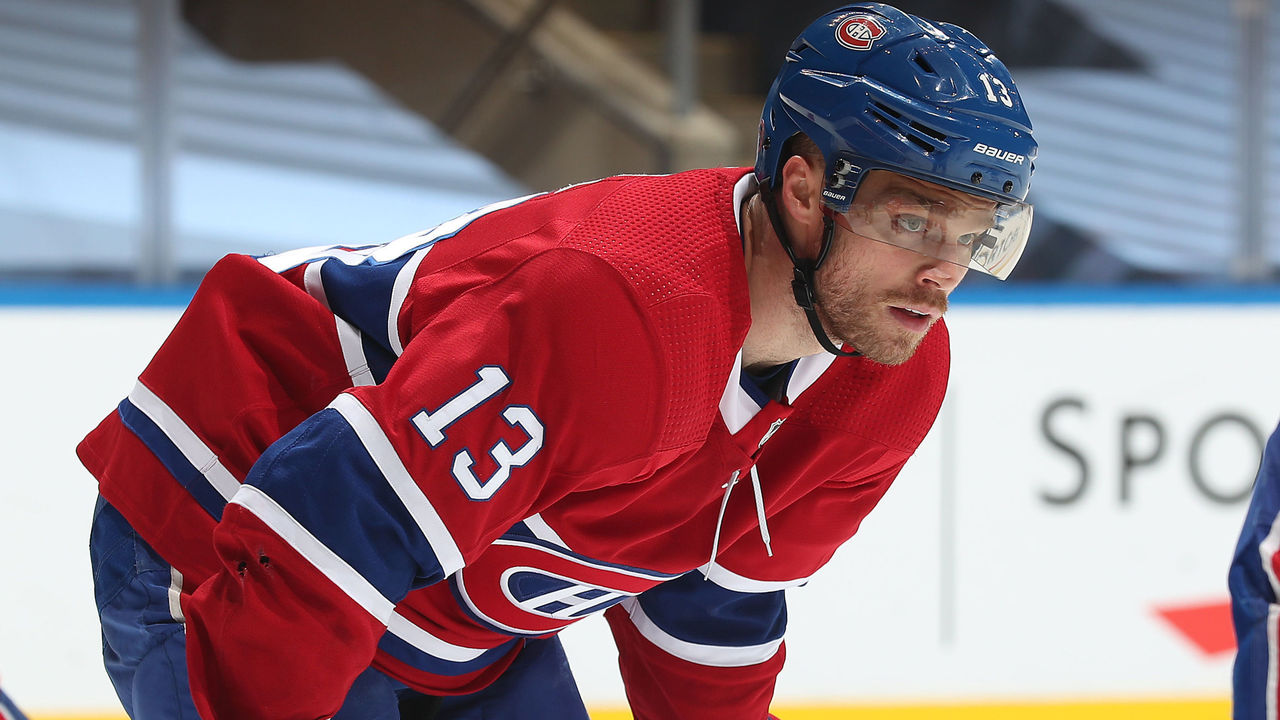
It's easy to like the Canadiens' offseason. Aside from the term of the contract handed out to power forward Josh Anderson, all of GM Marc Bergevin's transactions could be filed under "astute." Anderson, exchanged for Domi in a swap of two 20-something forwards, and Toffoli, a medium-sized free-agent splash, shore up the top six. Former Hurricane Joel Edmundson and Russian prospect Alexander Romanov add some oomph to the back end. Jake Allen, acquired via trade from the Blues, is an excellent backup for Carey Price.
The flurry of activity comes after a confidence-building showing in the bubbled postseason, where youngsters Nick Suzuki and Jesperi Kotkaniemi impressed. The Habs are suddenly in the mix for the best team in Canada. They are, unquestionably, the most fascinating of those seven clubs.
Trendline: Gearing up
2019
2018
Previous tiers
5th
8th
Bruce Bennett / Getty Images
New York Islanders
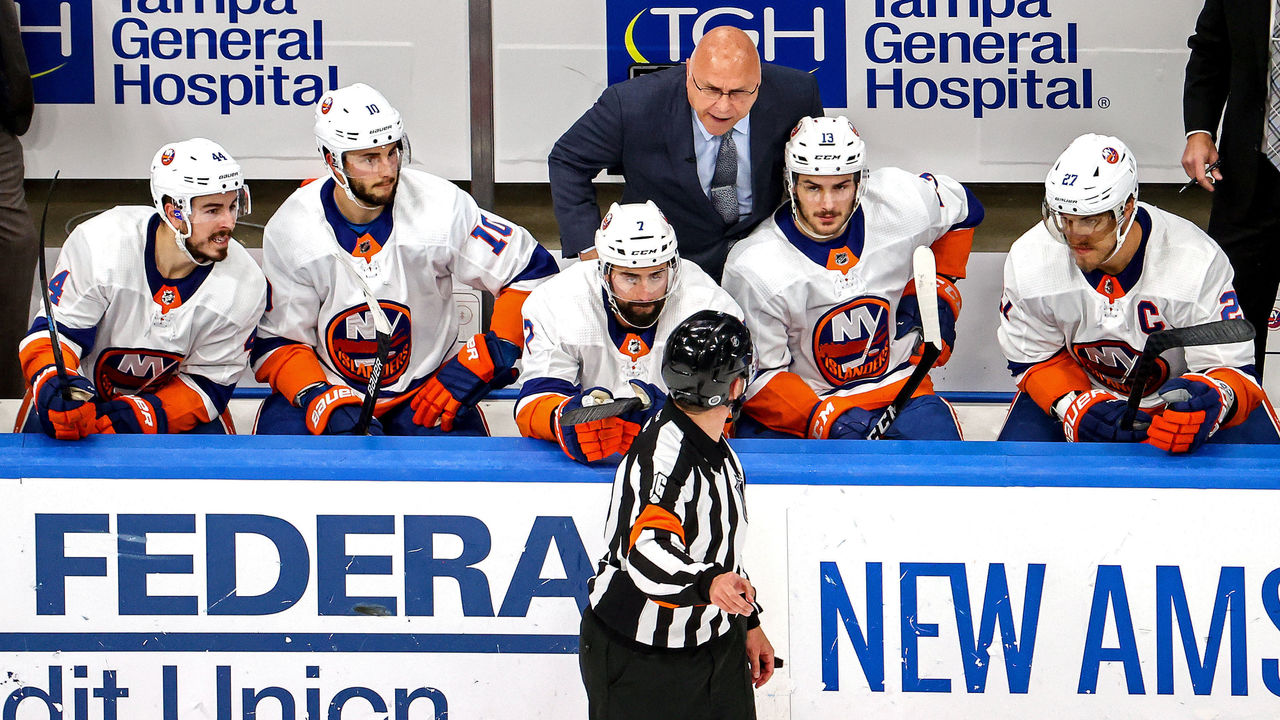
In the Barry Trotz-Lou Lamoriello era, the Islanders have made the playoffs both years and won four series, earning a trip to the conference finals in the 24-team bubbled postseason. There's little reason to expect anything different in 2020-21. Trotz's style of play - keep opponents' shots to the outside, cycle the hell out of the puck in the offensive zone - perfectly suitsthe mentality of Lamoriello's stable of mostly blue-collar players. Losing top-four defenseman Devon Toews in a salary-dump trade stings, but it's not the end of the world. Meanwhile, star center Mat Barzal, a potential offer-sheet target, will eventually re-sign. The train keeps chugging in New York.
Trendline: Predictably good
2019
2018
Previous tiers
4th
7th
Philadelphia Flyers
As usual, the Flyers are hard to nail down. Based on last year's success in the regular season and their current roster, it wouldn't be crazy to suggest they're a top 10 team in the NHL. But Philadelphia is definitely in the bottom half of that list, perhaps even 10th, which means its chances of winning a Cup aren't overly high.
It feels like this team is one significant piece - even two - away from jumping from the fourth tier to the third, though that upgradecould still happen this offseason or at the trade deadline. Not helping matters: veteran defenseman Matt Niskanen's surprising retirement. GM Chuck Fletcher picked up Erik Gustafsson in response, but the offensively inclined blue-liner probably doesn't fully compensate for the loss of Niskanen.
Trendline: Back and forth
2019
2018
Previous tiers
5th
4th
Edmonton Oilers
It's going to come together for the Oilers someday … right? 2020-21 will be Connor McDavid's sixth year in the NHL, and his team - beyond superstar teammate Leon Draisaitl and a few other pieces - is once again middling. So once again, it's difficult to envision a deep playoff run for Edmonton, barring some miraculous performances from McDavid and Draisaitl. Top-pairing defenseman Oscar Klefbom is expected to miss most, if not all, of next season because of his chronic shoulder injury.
GM Ken Holland reeled in fresh faces Kyle Turris, Dominik Kahun, and Tyson Barrie on short-term deals. Settling for a Mikko Koskinen-Mike Smith duo in net, however, is a tough pill to swallow for the fan base.
Trendline: Opportunities missed
2019
2018
Previous tiers
5th
5th
Scary at full potential (3rd tier)
Cup win not out of question, though a lot must fall into place
Pittsburgh Penguins
God bless Jim Rutherford. No GM provides fodder for fans and media as consistently as Rutherford, who obtained forwards Kasperi Kapanen, Colton Sceviour, Mark Jankowski, and Evan Rodrigues and defensemen Michael Matheson and Cody Ceci this offseason. Gone are Matt Murray, Patric Hornqvist, Patrick Marleau, Dominik Simon, Justin Schultz, and Jack Johnson. From an aggregate talent standpoint, it's probably a wash.
That's been the Penguins' approach for a few years: Squeeze every last ounce out of the tail end of the Sidney Crosby-Evgeni Malkin era by trying out new peripheral pieces every season. This team will make the playoffs for the 15th straight time. If 2019-20 All-Star Tristan Jarry can hold down the fort as the No. 1 goalie, look out. The long offseason will benefit Crosby, 33, Malkin, 34, and running mate Kris Letang, 33, while the early exit from the bubble should add extra fuel to the fire.
Trendline: Ever-threatening
2019
2018
Previous tiers
3rd
2nd
Mark Blinch / Getty Images
Toronto Maple Leafs
GM Kyle Dubas made his team wiser, nastier, and bigger by bringing in Joe Thornton, Wayne Simmonds, and Zach Bogosian this offseason. According to Dubas' critics, these moves show growth because the Leafs have been "too easy to play against" for the past few years. Toronto also signed longtime Flames defenseman T.J. Brodie, who undoubtedly upgrades the blue line. Meanwhile, homegrown wingers Kapanen and Andreas Johnsson were shipped out of town while Joey Anderson, Jimmy Vesey, and Travis Boyd were welcomed into the fold.
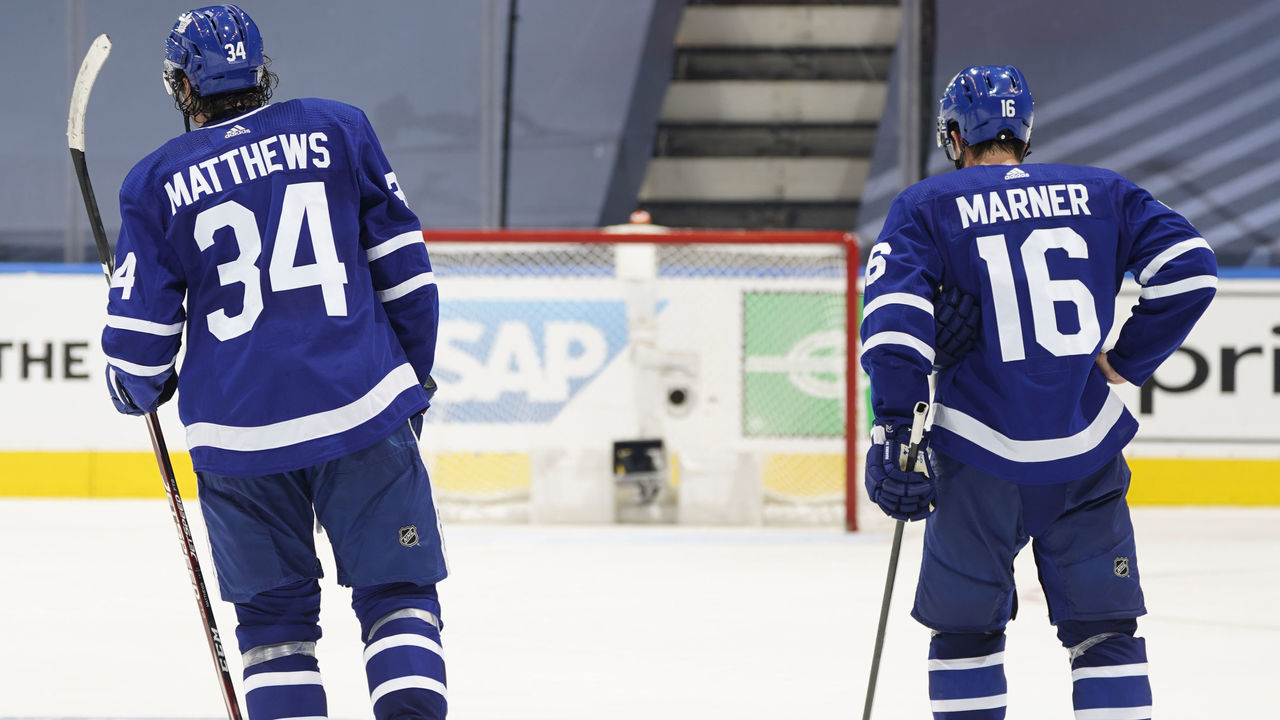
The revamped depth chart isn't markedly better or worse - it's just a little different. Make no mistake, the Auston Matthews-led crew will win plenty of regular-season games in 2020-21. The success or failure of this group ultimately depends on its performance in the playoffs, which is why Toronto earns a third-tier spot in these rankings. The Maple Leafs have consistently been better on paper than in the games. Time to flip the script.
Trendline: High-ceiling underachiever
2019
2018
Previous tiers
2nd
2nd
St. Louis Blues
The Blues would have landed in the second tier if they had re-signed Alex Pietrangelo, weren't in a bind up front with Vladimir Tarasenko out until at least February after his third shoulder surgery in as many years, and had some semblance of salary-cap flexibility. They're a deep, experienced hockey team only two seasons removed from winning the Cup, but they're in a few pickles. The optimistic spin: Torey Krug's presence lessens the Pietrangelo hit and a breakout season from Robert Thomas could go a long way in helping to replace Tarasenko's production. In terms of projecting regular season and playoff success, St. Louis looks to be among the best of this tier.
Trendline: Stubborn A-lister
2019
2018
Previous tiers
2nd
3rd
Boston Bruins
It feels like 2020-21 could be the beginning of the end for this iteration of the Bruins. Krug is gone, Zdeno Chara might retire, Tuukka Rask and David Krejci are both entering the final year of their contracts, and Patrice Bergeron turned 35 in July. That said, the 2019-20 Presidents' Trophy winner is still a force to be reckoned with. Signing play-driving forward Craig Smith at $3.1 million per season for three years ranks as one of the smartest moves of the offseason. Although Brad Marchand and David Pastrnak are both coming off surgeries, they're world-class players. Rask remains an upper-echelon goalie, and Charlie McAvoy is underrated and only 22. So this team can't be counted out of Cup contention. Not yet, anyway.
Trendline: Veteran savvy
2019
2018
Previous tiers
2nd
2nd
Icon Sportswire / Getty Images
Carolina Hurricanes
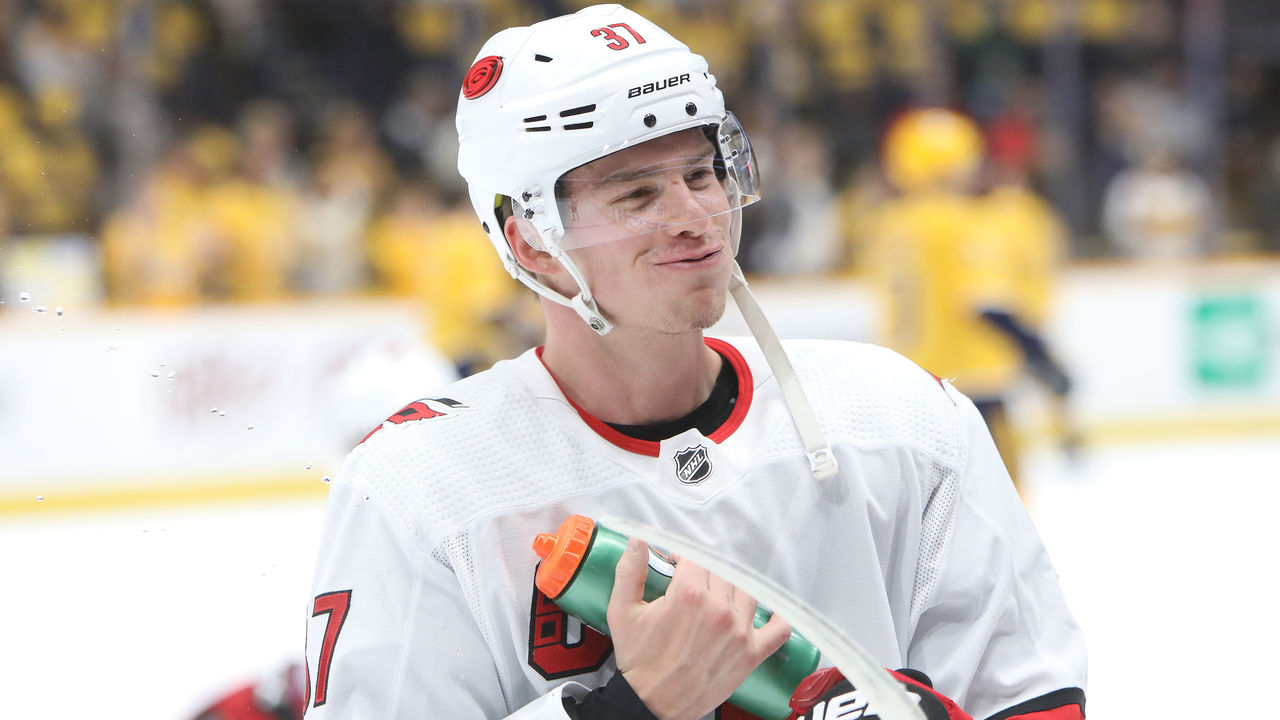
The Hurricanes have been relatively inactive this offseason - and that's totally fine because Carolina has been knocking on the door for a while. The team controls the flow of play most nights and quietly boasts deep groups at forward and on defense. As for star power, Dougie Hamilton and Jaccob Slavin are two of the best blue-liners in the game; Sebastian Aho is an elite top-line center; and Andrei Svechnikov, who will surely score 50 goals one day, is due to level up again. Jordan Staal and Vincent Trocheck fill out the second and third center roles nicely, while Jesper Fast, who signed a three-year deal as a free agent, is a reasonable replacement for retiring longtime Cane Justin Williams.
The roster's only true weakness is in goal; barring a trade, Petr Mrazek and James Reimer will share the workload. If this club was located in Canada and not the Sun Belt, it'd be due for more buzz. The Hurricanes are a bit of a sleeping giant in the Eastern Conference.
Trendline: About to burst
2019
2018
Previous tiers
4th
6th
Washington Capitals
The Capitals are well-known at this point. Most of the long-term core is locked up for a few more years and GM Brian MacLellan hasn't performed any major surgery around the edges this offseason. Sure, Henrik Lundqvist arriving as the wily backup to Ilya Samsonov is cool, and Justin Schultz subbing in for Radko Gudas on the back end is interesting. Brenden Dillon's extension is team-friendly. But that's it, in part because the 2018 Cup champions have so much money tied up in their top guys.
The sticky thing about Washington is its lackluster showing in the bubbled postseason, and now Alex Ovechkin - one of the lone playoff standouts - is in the final season of his 13-year deal. Calling 2020-21 a crossroads season might be a tad dramatic, but the coming campaign does have a certain urgency. Well-respected coach Peter Laviolette provides a fresh voice behind the bench, so there should be equal amounts of motivation and pressure.
Trendline: Always contending
2019
2018
Previous tiers
3rd
2nd
Dallas Stars
The Stars are running back the same crew that captured the Western Conference title, though top center Tyler Seguin and starting goalie Ben Bishop will be sidelined until late March or early April as they recover from offseason surgeries. Let's be clear: Dallas' players, along with GM Jim Nill and head coach Rick Bowness, deserve full marks for what they accomplished in the bubbled postseason. Hit by the injury bug, they gutted out 14 playoff wins before running out of gas against Tampa Bay. Nobody can take away those accomplishments. But let's be clear again: It was a perfect storm for the Stars. They're a very good NHL team, but not a great one, so repeating or improving on their playoff feats is a daunting task in 2020-21.
Trendline: Consistent dark horse
2019
2018
Previous tiers
3rd
5th
Secondary Cup favorite (2nd tier)
Elite, battle-tested team with a few minor concerns
Dave Sandford / Getty Images
Vegas Golden Knights
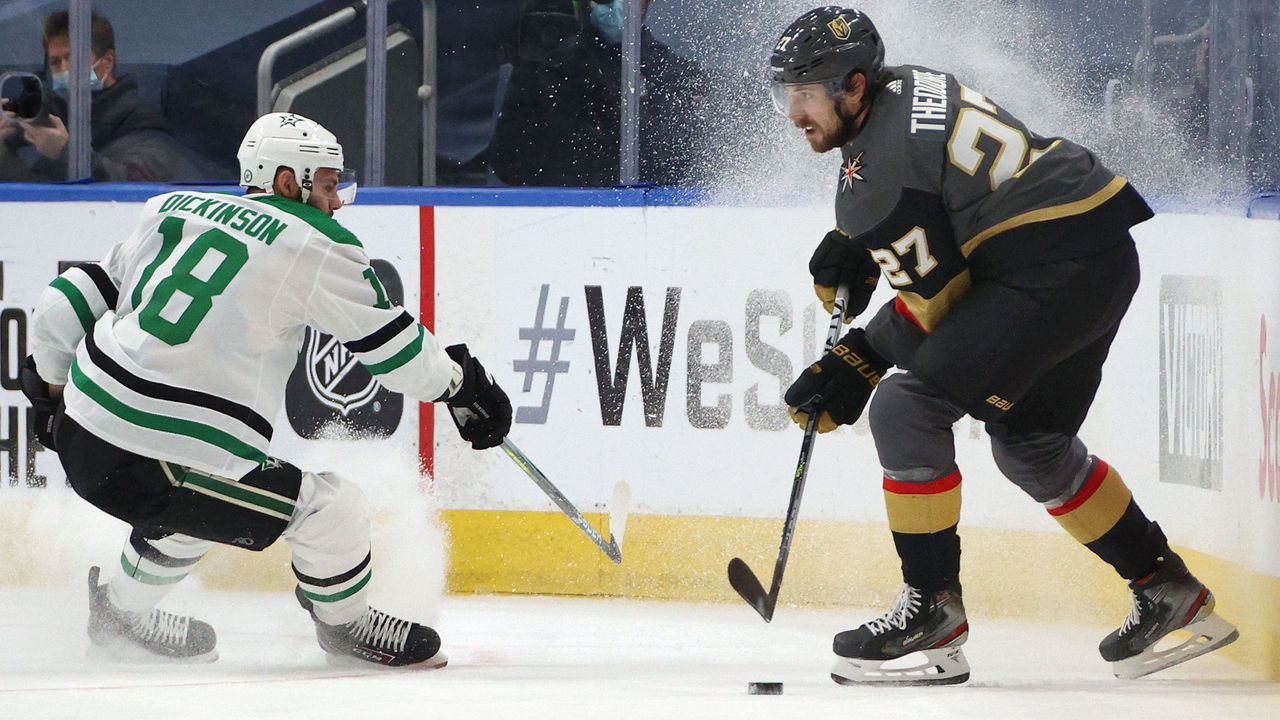
The Golden Knights landed the biggest fish in free agency by inking Pietrangelo to a seven-year, $61.6-million deal. He's an elite blue-liner fresh off a Norris Trophy-caliber season. However, having to ship out top-four defenseman Schmidt and top-six center Paul Stastny to make room for Pietrangelo was suboptimal, and that's fundamentally why Vegas landed in its own tier below Tampa and Colorado.
Coach Pete DeBoer doesn't have a proven second-line center right now, though there is a chance rookie Cody Glass slides into that role. Shea Theodore and Marc-Andre Fleury are other 2020-21 X-factors. How much growth is left in Theodore, the breakout star of the bubbled postseason? How will Fleury perform as the 1B goalie to 1A Robin Lehner? Vegas is one of those rare teams constructed to win both in the regular season and the playoffs, and management is clearly all-in.
Trendline: Legit challengers
2019
2018
Previous tiers
3rd
3rd
Heavy Cup favorites (1st tier)
Star-studded, deep - simply a cut above the rest
Colorado Avalanche
GM Joe Sakic has been inching toward this moment since he was hired in 2014. Through masterful drafting, developing, and acquiring, the Nathan MacKinnon Avalanche have evolved into legitimate Stanley Cup favorites. Like the Lightning, Colorado's roster offers a fantastic mix of high-end talent (MacKinnon, Mikko Rantanen, Gabriel Landeskog, Cale Makar) and dependable depth (Nazem Kadri, Brandon Saad, Devon Toews, Samuel Girard, etc.). The only real question mark for the Avs is in the crease, where Philipp Grubauer returns as the starter. But it could end up a moot point since Colorado possesses the firepower to dominate in every other facet of the game most nights.
Trendline: Apex reached
2019
2018
Previous tiers
4th
6th
Tampa Bay Lightning
It's tempting to look at the Lightning's salary-cap conundrum and conclude the reigning champions will regress in 2020-21. Could one or two of Tyler Johnson, Alex Killorn, Yanni Gourde, and Ondrej Palat be absent from coach Jon Cooper's lineup card on opening night? It sure seems likely given the crunch that GM Julien BriseBois is dealing with. But zoom out for a moment and it's reasonable to suggest this juggernaut can withstand a notable roster hit; the Lightning did win the Cup with Steven Stamkos sidelined for all but five playoff shifts. Tampa Bay is built to repeat, with any value lost in the offseason made up by improvements from Brayden Point, Anthony Cirelli, Mikhail Sergachev, and Erik Cernak, four players in their early 20s who still have plenty of room to grow.
The Toronto Maple Leafs superstar announced he'll shave his polarizing mustache - which he sported for all of last season - if he can raise $134,000 by the end of November for Movember proceeds.
In the video below, Matthews also reads out a handful of online comments that both criticize and praise his duster.
Matthews posted a career-high 47 goals and 80 points with his muzzy in 70 games last season. Though hockey players are notoriously superstitious, lacking a lip toupee shouldn't prevent the 23-year-old from another strong campaign in 2021.
Detroit Red Wings general manager Steve Yzerman strongly believes the NHL and players' association will establish a successful plan for the 2020-21 campaign.
"I'm very optimistic," Yzerman said earlier this week, according to the Detroit Free Press' Helene St. James. "I'm hopeful. I don't really have any control over it. The league can only control so much, as well.
"I think the players' association and the league, the cooperation from both sides has been fantastic. It's my understanding they're working together now to put a plan in place."
The 2019-20 season ended Sept. 28 after being delayed multiple months due to the COVID-19 pandemic. Deputy commissioner Bill Daly reiterated last week that the league is targeting a Jan. 1 start for the 2020-21 campaign.
As of Friday, the NHL-NHLPA return-to-play committee apparently hadn't yet met to discuss next season despite the date being less than two months away.
Yzerman says the biggest hurdle facing the league is the border restrictions between Canada and the United States.
"Ultimately, we're restricted by international governments - the Canada-US border - local, state governments," Yzerman said. "Right now, it looks like we'll be able to come up with some kind of plan, but I don't know specifically what that is."
Yzerman will be hoping the Red Wings can take the next step in their rebuild in 2020-21 after finishing dead last in the NHL for the first time since 1985-86.
The Dallas Stars signed forward Roope Hintz to a three-year deal with an average annual value of $3.15 million, the team announced Monday.
Hintz, 23, will be a restricted free agent when the deal expires following the 2022-23 season.
The 6-foot-3 Finn ranked second on the Stars with a career-best 19 goals - including five game-winners - and added 14 assists through 60 regular-season contests in 2019-20.
He added two goals and 13 points over 25 playoff games during the Stars' run to the Stanley Cup Final.
Stars general manager Jim Nill has kept busy this offseason. He inked netminder Anton Khudobin and forwards Radek Faksa and Denis Gurianov to new deals and brought in defenseman Mark Pysyk. Nill also named Rick Bowness permanent head coach in October.
Dallas now has just under $258,000 in projected cap space with a full 23-man roster, according to CapFriendly.
This is the first installment of a two-part series ranking all 31 NHL teams by tiers for the 2020-21 season. Part 2, which addresses the top 17 teams, will be published Tuesday.
This is an annual exercise conducted after the dust has settled on the draft and free agency. The tiers are based on projections for the 2020-21 season only, not the long-term trajectories of each franchise. Lastly, keep in mind the timing. We're all awaiting word on the 2020-21 NHL season, which means there's runway for teams before rosters need to be finalized.
Worst of the worst (8th tier)
In a league of their own in a not-so-nice way
Detroit Red Wings
The Red Wings' offseason has been undeniably productive, which is a step in the right direction for a franchise looking to regain respectability. Up front, Vladislav Namestnikov, Bobby Ryan, Sam Gagner, and Adam Erne were brought in on short-term deals. Troy Stecher, Jon Merrill, and Marc Staal are all also under contract for a year or two and were added to the blue line. And inking goalie Thomas Greiss at $3.6 million per season for two years was a tidy piece of business from general manager Steve Yzerman.
These acquisitions improved Detroit, yet the offseason work will only slightly move the needle because the bar was set so laughably low last campaign. The 2019-20 Wings lost 54 of 71 games while finishing with a minus-122 goal differential. Among 31 teams, they're still the furthest away from a Stanley Cup in 2020-21.
Trendline: Still murky
2019
2018
Previous tiers
7th
8th
Head barely above water (7th tier)
Rebuilding with the inside track on prime draft-lottery odds
Anaheim Ducks
Where are the goals going to come from? That's the biggest question tied to the Ducks right now, with Ryan Getzlaf, Rickard Rakell, Adam Henrique, Jakob Silfverberg, Sonny Milano, and Danton Heinen probably making up the team's top six.
Getzlaf, who's 35 years old and on an expiring contract, could be trade bait as the deadline approaches. Anaheim's blue line is solid, especially with Kevin Shattenkirk arriving on a three-year deal, and John Gibson is a premier goalie, so there's a glimmer of hope for this capped-out franchise in transition. But the Ducks will be a bottom-five team in 2020-21, and they'll benefit from finally committing to a full-scale rebuild.
Trendline: Nearing bottom
2019
2018
Previous tiers
6th
3rd
Icon Sportswire / Getty Images
Los Angeles Kings
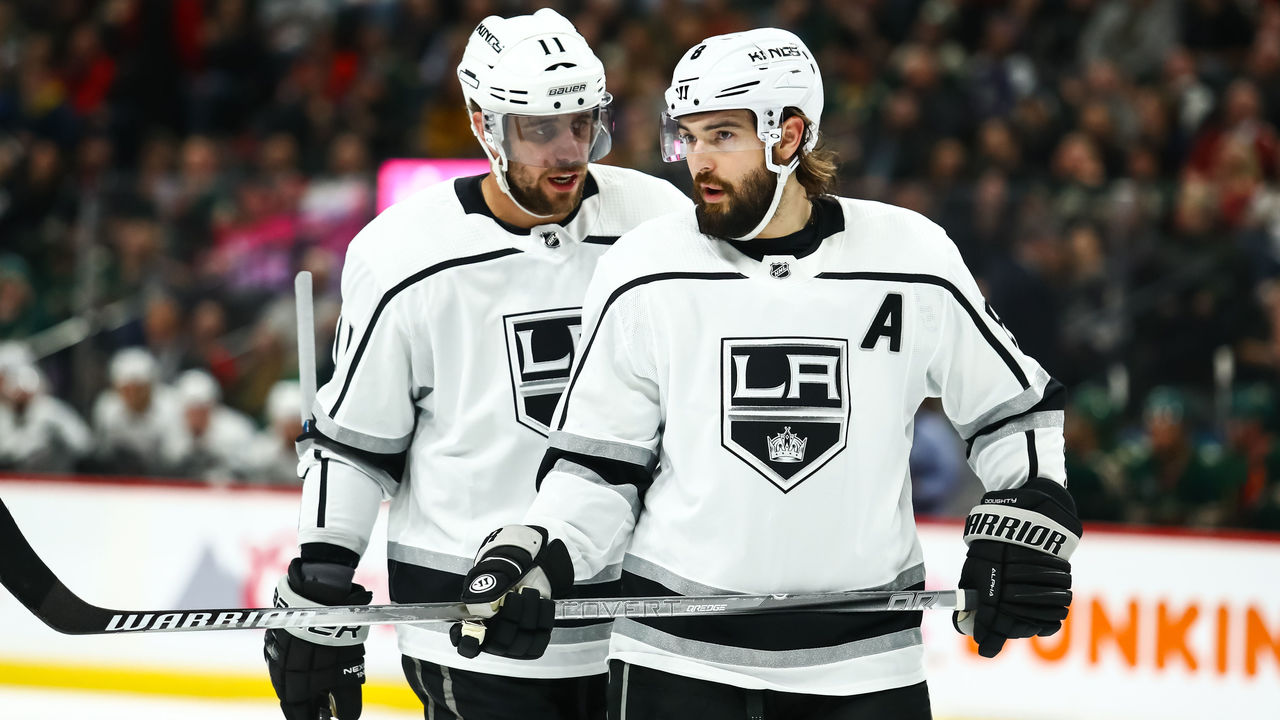
Of the four teams in the seventh tier, Los Angeles' fan base has the least to gripe about. GM Rob Blake has been honest about trudging through a weighty rebuild while aging stars Anze Kopitar and Drew Doughty remain under contract. So far, so good, with Quinton Byfield, Alex Turcotte, Jaret Anderson-Dolan, Rasmus Kupari, Arthur Kaliyev, Akil Thomas, Samuel Fagemo, and Tobias Bjornfot headlining an impressively deep and talented prospect pipeline.
The club also holds nine picks in the 2021 draft and plenty of cap space to weaponize. The Kings' future looks bright, but don't expect anything beyond minor gains this season.
Trendline: On the rebound
2019
2018
Previous tiers
7th
4th
San Jose Sharks
The Sharks are one of the trickiest teams to gauge. In 2018-19, they lost in the conference finals. Then while struggling through injuries and poor performances this past campaign, they ranked 29th in points percentage, missing the 24-team postseason. Most of their top players are 30 or older, and GM Doug Wilson didn't accomplish much this offseason.
Notable new faces include top-six forward Ryan Donato and goalie Devan Dubnyk, both of whom were acquired in a trade with the Minnesota Wild. On paper, Dubnyk and Martin Jones are far from a reliable goaltending tandem, which is why San Jose lands in this lower tier. Erik Karlsson, Brent Burns, Logan Couture, and other key contributors could bounce back during Bob Boughner's first full year behind the bench, but the Sharks' roster probably isn't strong enough to mask the deficiencies in net.
Trendline: Lacks clarity
2019
2018
Previous tiers
4th
3rd
Ottawa Senators
The Senators are on a similar trajectory to the Wings, though they're a bit further ahead in the rebuilding process. They're not ready to contend for a playoff spot despite graduating from the painful bottoming-out phase. Picking up two-time Stanley Cup champion Matt Murray in a trade should solidify the goaltending position in Ottawa, while former Panthers winger Evgenii Dadonov is set to inject some much-needed offensive punch.
Still, this team's record will largely rest with the growth of core youngsters like Thomas Chabot, Erik Brannstrom, Brady Tkachuk, Colin White, Josh Norris, Drake Batherson, and Alex Formenton. Really, it's in the Sens' best long-term interest to enter the draft lottery again before transitioning into a new, more competitive phase in 2021-22. The wait continues in Canada's capital city.
Trendline: The climb begins
2019
2018
Previous tiers
8th
8th
Notch below the playoffs (6th tier)
For various reasons, 2020-21 doesn't project to be a banner season
Arizona Coyotes
The Coyotes have been a hot mess lately, and that's putting it mildly. The team's effort in the postseason was uninspiring, and Arizona forfeited two high draft picks due to scouting violations. The club then attempted but failed to trade captain Oliver Ekman-Larsson, and it renounced the rights to draft pick Mitchell Miller following a public outcry.
That series of events has left Arizona with a dire outlook over the next few years. The Coyotes should be fine in 2020-21, largely due to stellar netminders and Rick Tocchet's coaching. However, Clayton Keller and Phil Kessel leading an attack isn't intimidating anyone.
Trendline: A drying well
2019
2018
Previous tiers
6th
7th
NHL Images / Getty Images
Minnesota Wild
There are simply too many unknowns with the Wild. The club's center depth leaves plenty to be desired. Who knows how impactful highly touted Russian forward Kirill Kaprizov will be as an NHL rookie. First-round pick Marco Rossi may or may not make the team. Top-four defenseman Matt Dumba has been mentioned in the trade-rumor mill all offseason. Three longtime leaders - Dubnyk, Mikko Koivu, and Eric Staal - are gone. Cam Talbot is the new starting goalie. And much more.
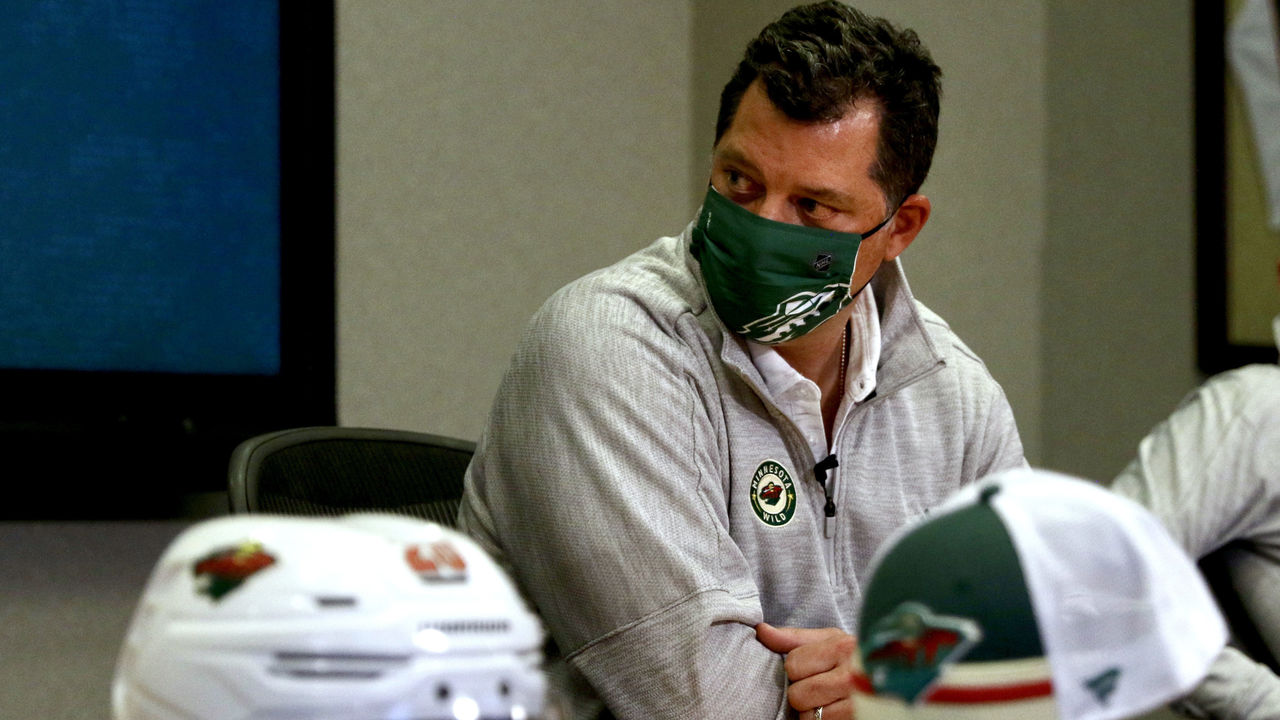
Toss in the fact that GM Bill Guerin, who's been on the job for a year, isn't done turning over the roster, and Minnesota is in an awkward, ho-hum position for 2020-21.
Trendline: Direction TBD
2019
2018
Previous tiers
6th
5th
New Jersey Devils
Tom Fitzgerald is quickly putting his stamp on this team, and the GM's first offseason in charge has been sharp. Signing Corey Crawford makes a ton of sense, as the move gives goalie-of-the-future Mackenzie Blackwood veteran support. The acquisitions of Andreas Johnsson and Ryan Murray were shrewd, and Lindy Ruff appears to be a solid head coach hire.
However, the Devils - an organization with just two playoff appearances over the past decade - will be chasing the seven other Metropolitan Division teams even after all of their moves. With Jack Hughes and Nico Hischier green still, is New Jersey as good as or better than Carolina, Philadelphia, Washington, Pittsburgh, Columbus, or the two New York teams in 2020? Probably not.
It's an optimistic time for the Devils, but they're only starting an upward trajectory.
Trendline: A good start
2019
2018
Previous tiers
6th
5th
Chicago Blackhawks
Like the Kings, the Blackhawks are trying to rebuild without tearing down the entire championship foundation, which, in this case, includes Jonathan Toews, Patrick Kane, Duncan Keith, and Brent Seabrook. Longtime starting goalie Crawford wasn't re-signed, creating a dangerous dynamic in the crease. Chicago is porous defensively, and now Malcolm Subban and Colin Delia will be tasked with bailing out that unit? Good luck.
On the flip side, Kane is an elite player, Toews experienced a resurgent 2019-20, and Alex DeBrincat, Kirby Dach, Dominik Kubalik, Adam Boqvist, and Ian Mitchell are all promising young talents. The Blackhawks finished last year with a .514 points percentage. Just above .500 is a fair prediction for 2020-21.
Trendline: Treading water
2019
2018
Previous tiers
5th
5th
Florida Panthers
No NHL franchise is spinning its wheels more than the Panthers. Jonathan Huberdeau is 27 years old, Aleksander Barkov is 25, and Aaron Ekblad is 24, and the team has accomplished basically nothing over the trio's six seasons together (zero playoff series wins in two appearances).
Now there's been a huge turnover, with the club bidding farewell to Mike Hoffman, Evgenii Dadonov, Mike Matheson, Colton Sceviour, Josh Brown, Erik Haula, Brian Boyle, Lucas Wallmark, and Mark Pysyk while welcoming Patric Hornqvist, Alex Wennberg, Markus Nutivaara, Radko Gudas, Vinnie Hinostroza, Carter Verhaeghe, and Ryan Lomberg. The acquisitions were cost-effective and carry little risk, yet Florida has become worse.
Down the road, Bill Zito and Joel Quenneville - a pretty good GM-head coach tandem - could turn the ship around. In the present, though, prepare for more mediocrity.
Trendline: Slipping back
2019
2018
Previous tiers
4th
4th
Standings purgatory (5th tier)
Playoff potential, but the stars must align perfectly
New York Rangers
Putting the Rangers in the "purgatory" section may seem negative. But it's actually a compliment to the fine job management has done while rebuilding the Original Six franchise.
A playoff spot in 2020-21 isn't out of the question. Then again, even after adding first overall pick Alexis Lafreniere and continuing to develop sophomores Adam Fox and Kaapo Kakko, New York is still in a transition zone. The club's rise has been fast and virtually mistake-free. However, we don't know how good the goaltending tandem of Igor Shesterkin and Alexandar Georgiev will be in the short term. Nor do we know if the defense corps, as currently constructed, is strong enough to protect one-goal leads against high-octane offensive squads.
Trendline: Future forward
2019
2018
Previous tiers
6th
5th
Andy Devlin / Getty Images
Nashville Predators
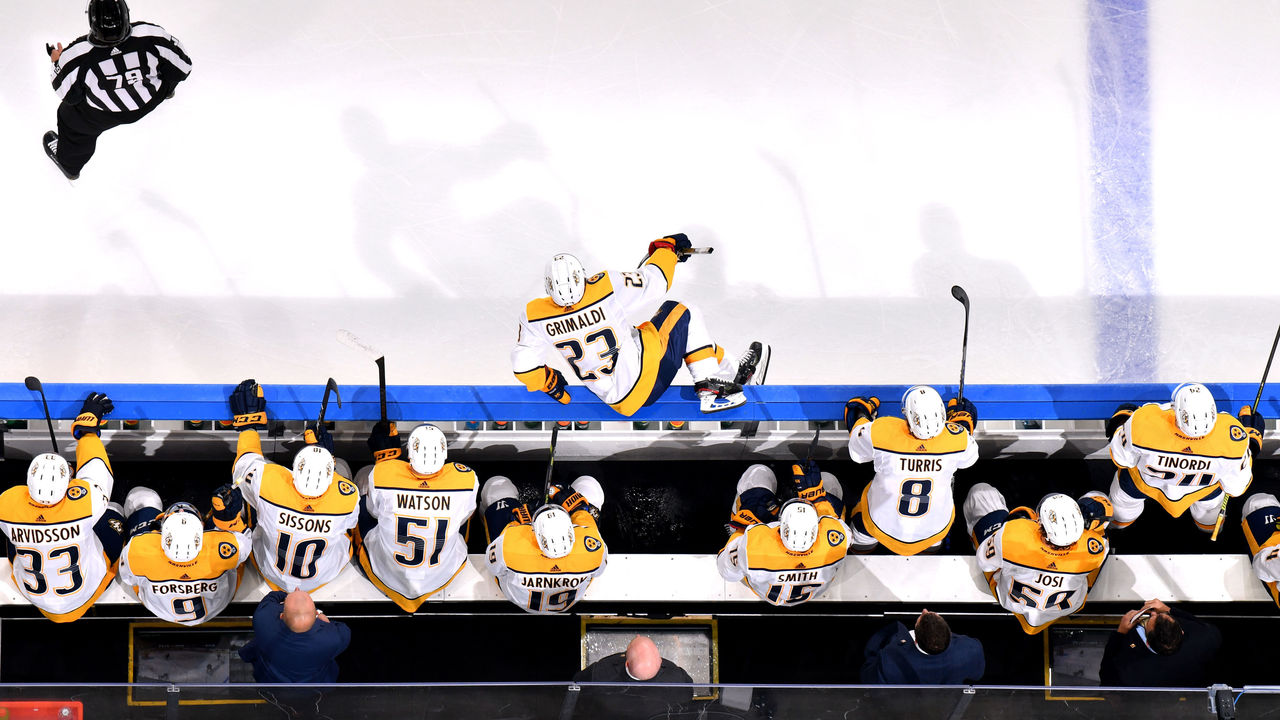
It's almost unfair to slot the Predators into any tier right now, as they appear far from finished with their offseason maneuvering. There's $12.9 million in cap space for GM David Poile to work with, and two unsigned free-agent forwards - snipers Mike Hoffman and Anthony Duclair - are obvious fits.
The Preds disappointed in the postseason, losing to the Coyotes in the qualifying round. Despite boasting an elite blue line and quality goaltending, Nashville has generally failed to build off a trip to the 2017 Stanley Cup Final. Unless something drastic happens soon, the franchise could be entrenched in the NHL's mushy middle as an annual toss-up while good but not nearly good enough to win a championship.
Trendline: In decline
2019
2018
Previous tiers
3rd
1st
Buffalo Sabres
The Jack Eichel-era Sabres will finally challenge for a playoff spot this year. Whether they make the postseason is another question. Either way, there's no denying first-time GM Kevyn Adams has upgraded the club's forward group substantially.
The top six now features Eichel, former MVP Taylor Hall, veteran two-way center Eric Staal, former 40-goal scorer Jeff Skinner, young sniper Victor Olofsson, and reliable producer Sam Reinhart, with hot-shot rookie Dylan Cozens also in the mix. There are question marks on the back end and between the pipes, but the Sabres' offense should keep them competitive every night.
Trendline: Slowly upward
2019
2018
Previous tiers
6th
7th
Winnipeg Jets
The Jets land in the fifth tier because there's a lot of variance in their possible outcomes for 2020-21. If everything goes according to plan, they can make some noise in the Western Conference. If the season's bumpy, they're likely not a playoff team.
Reacquiring Paul Stastny to fill the vacant second-line center role has been Winnipeg's lone notable transaction this offseason. The team's defense, which was atrocious last year, is essentially the same. And while he's among the league's best goalies, there's no guarantee Connor Hellebuyck produces another Vezina Trophy-caliber season.
However, Winnipeg's attack remains scary with Blake Wheeler, Mark Scheifele, Kyle Connor, Nik Ehlers, and Patrik Laine (if he doesn't get traded) leading the charge. And head coach Paul Maurice is a difference-maker himself.