The deal is reportedly for two years and carries an average annual value of $1.55 million, according to Sportsnet's Elliotte Friedman.
The two sides were reportedly heading to arbitration roughly $1 million apart, with Lemieux seeking $2 million annually and the team offering slightly over $1 million.
The physical forward accumulated 164 hits and 111 penalty minutes last season while also racking up six goals and 12 assists in 59 games.
Lemieux was selected with the 31st pick in the 2014 NHL Draft by the Buffalo Sabres. He's appeared in 131 career games with the Rangers and Winnipeg Jets, tallying 19 goals and 17 assists. Lemieux ranks ninth in the league in penalty minutes since his NHL debut in 2017.
Seven NHL teams now find themselves without an official leader following the departures of Alex Pietrangelo from St. Louis and Mikko Koivu from Minnesota. With a high number of captain vacancies throughout the league, let's take a look at some of the top candidates for each opening.
Ottawa Senators
Icon Sportswire / Icon Sportswire / Getty
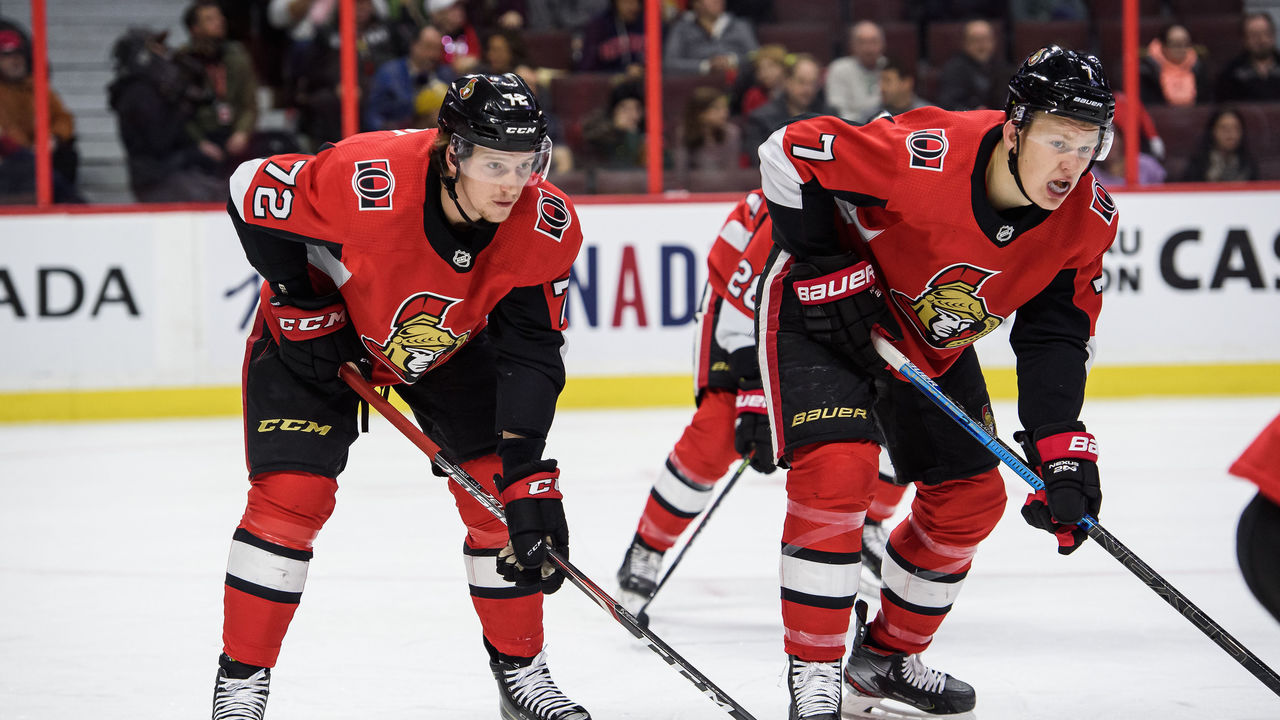
The Senators expressed their utmost confidence in Thomas Chabot by inking the then-22-year-old to a massive eight-year, $64-million extension in 2019. He figures to be a big part of Ottawa's bright future as one of the league's highest-paid blue-liners. It would make sense to put him at the forefront of the Senators' resurgence.
On the other hand, Ottawa turned some heads by taking Brady Tkachuk fourth overall in 2018. Tkachuk has already surpassed expectations by breathing new life into the Senators' lineup as the team's premier forward. The 21-year-old's evident heart and dedication make him a great choice to captain Ottawa for years to come.
New Jersey Devils
Elsa / Getty Images Sport / Getty
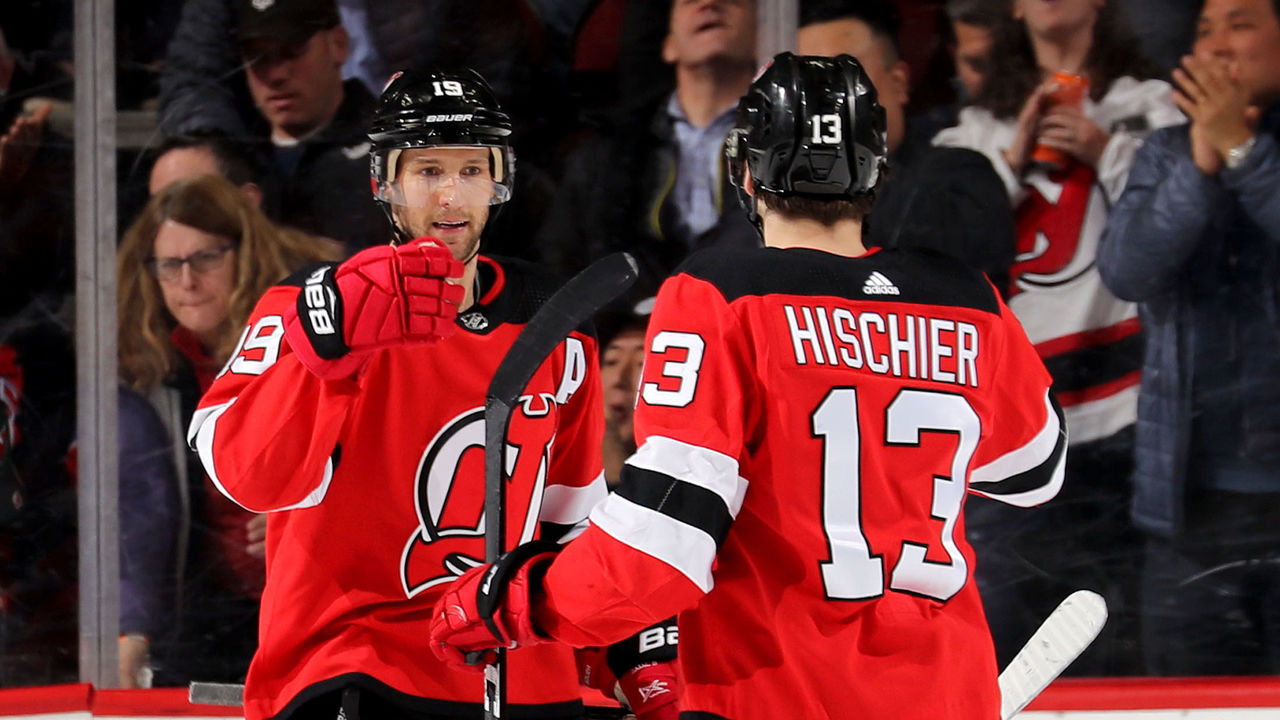
Nico Hischier seems destined to be the team's captain at some point, but he may have to wait to get the "C" stitched onto his jersey. He's still just 21 years old, so it's possible New Jersey would like to see Hischier mature first before putting that kind of pressure on him.
In order to give Hischier time to develop, the team could make veteran Travis Zajac the captain. The 35-year-old - who has just one season remaining on his current deal - has spent his entire 14-year career with the Devils. Giving him the captaincy would be a nice nod to Zajac's devotion to the club before it passes the torch to the future of the franchise.
New York Rangers
Jared Silber / National Hockey League / Getty
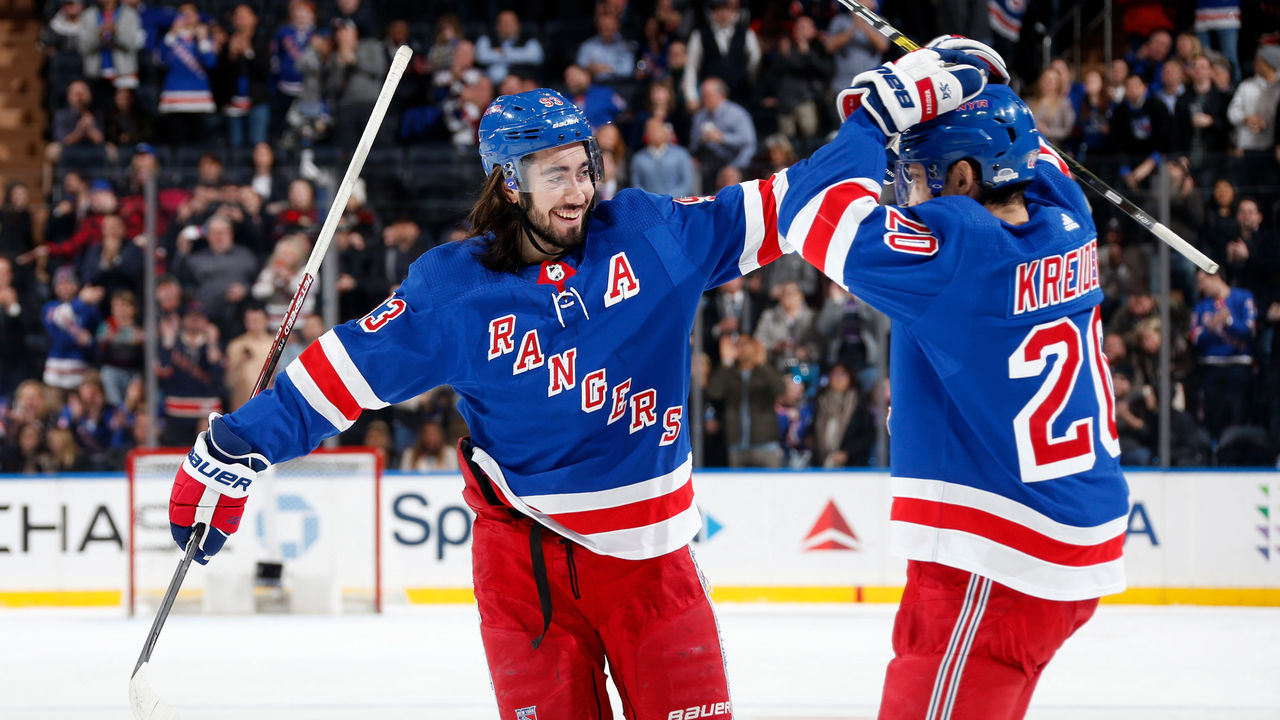
The Rangers have been without a captain since Ryan McDonagh's departure in 2018, but they have a number of good candidates to succeed him. Chris Kreider is a career Ranger who recently inked a seven-year pact. He could inspire the team as a respected veteran who wears his heart on his sleeve.
However, Mika Zibanejad seems destined to become New York's captain. He's one of the Rangers' top players, he's a fan favorite, and he's showcased his ability to step up in critical situations. Zibanejad has all the makings of a great captain in the Big Apple.
St. Louis Blues
Icon Sportswire / Icon Sportswire / Getty
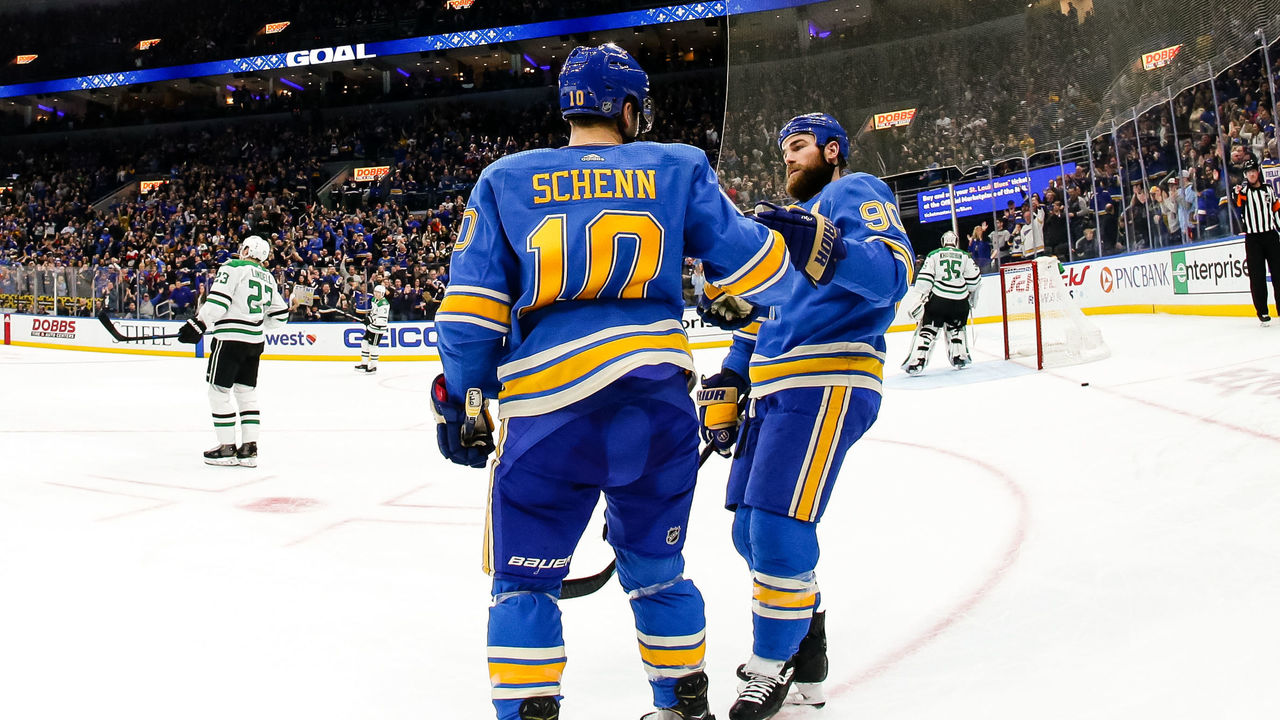
The Blues may not rush to name a captain for next season following Pietrangelo's departure. There are plenty of viable players that are ready to step in and fill the spot, including veteran Brayden Schenn. The 29-year-old is signed through 2027-28 and has been vital for the team throughout his career.
The player that many are pegging to be St. Louis' next captain, though, is Ryan O'Reilly. He's shown an improved attitude and a clear resurgence in play over the past two seasons since the Blues acquired him from the Buffalo Sabres. O'Reilly - who won the Conn Smythe Trophy after helping the Blues capture the Cup in his first season with the club - has all the qualities of a leader.
Detroit Red Wings
Icon Sportswire / Icon Sportswire / Getty
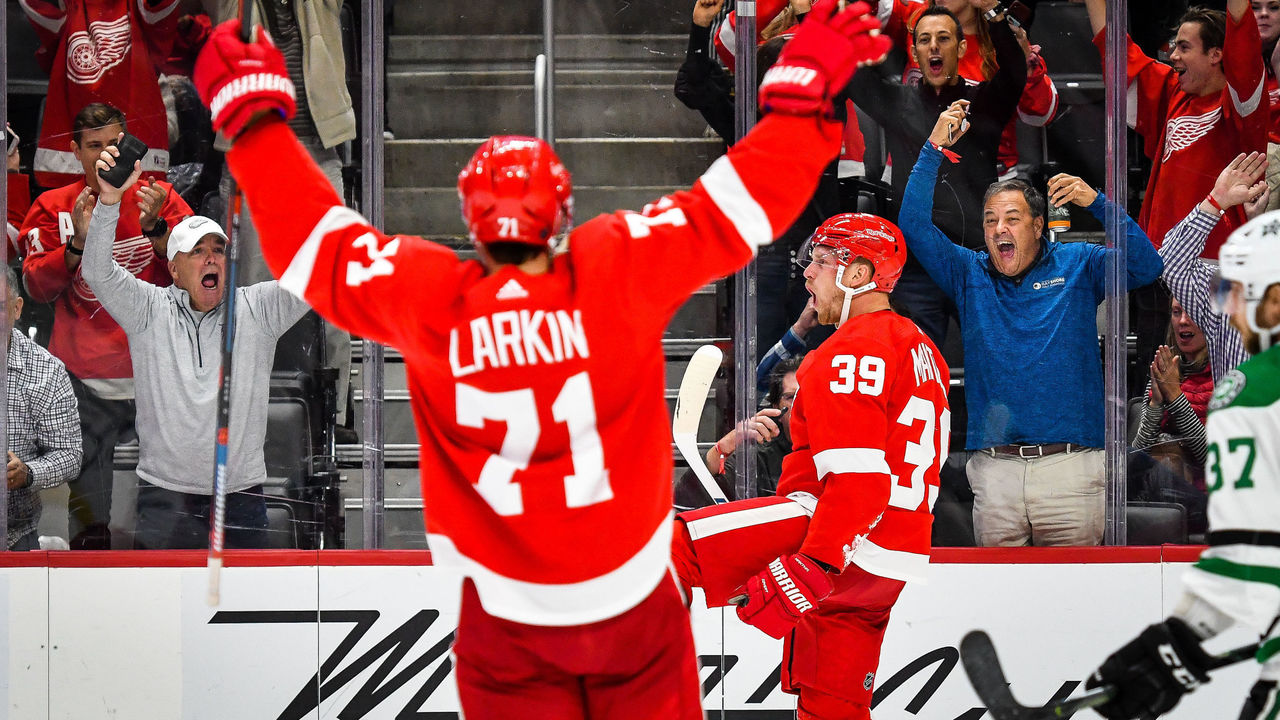
It's clear both Dylan Larkin and Anthony Mantha are set to spearhead a new era in Detroit. After a complete overhaul that's resulted in a ton of young talent, the Red Wings will need either Larkin or Mantha to guide the way.
However, all signs point to Larkin assuming that role. The Michigan native sported an "A" this past season, and he's Detroit's offensive focal point. The 24-year-old will be needed in the locker room to get his young teammates going.
Vegas Golden Knights
Icon Sportswire / Icon Sportswire / Getty
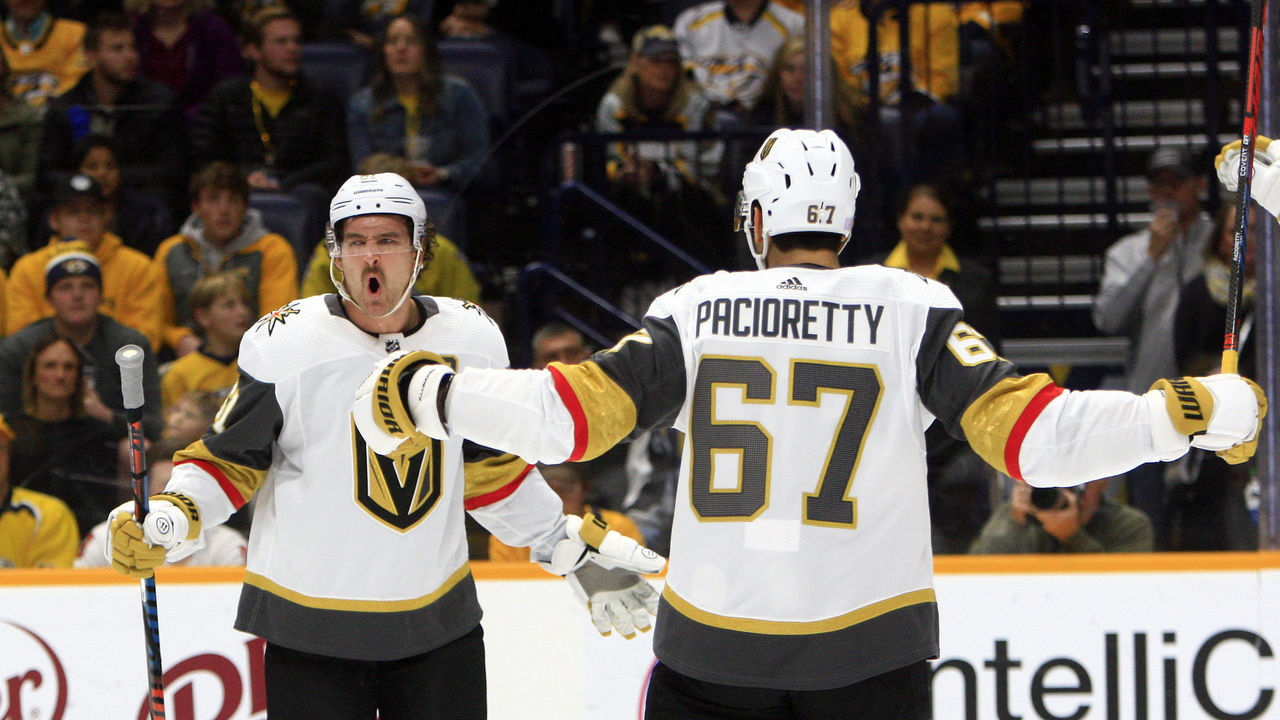
The Golden Knights' choices to be their captain are plentiful. Do they go with a Day 1 player? How about a past captain like Max Pacioretty, who's already spent two seasons with the team?
Mark Stone seems to make the most sense. He's arguably been Vegas' best player since arriving at the 2018-19 trade deadline, and he cemented himself with the team by immediately inking a monster eight-year, $76-million deal. Stone's an elite on-ice force who has previous leadership experience with the Ottawa Senators and Team Canada.
Minnesota Wild
Andy Devlin / National Hockey League / Getty
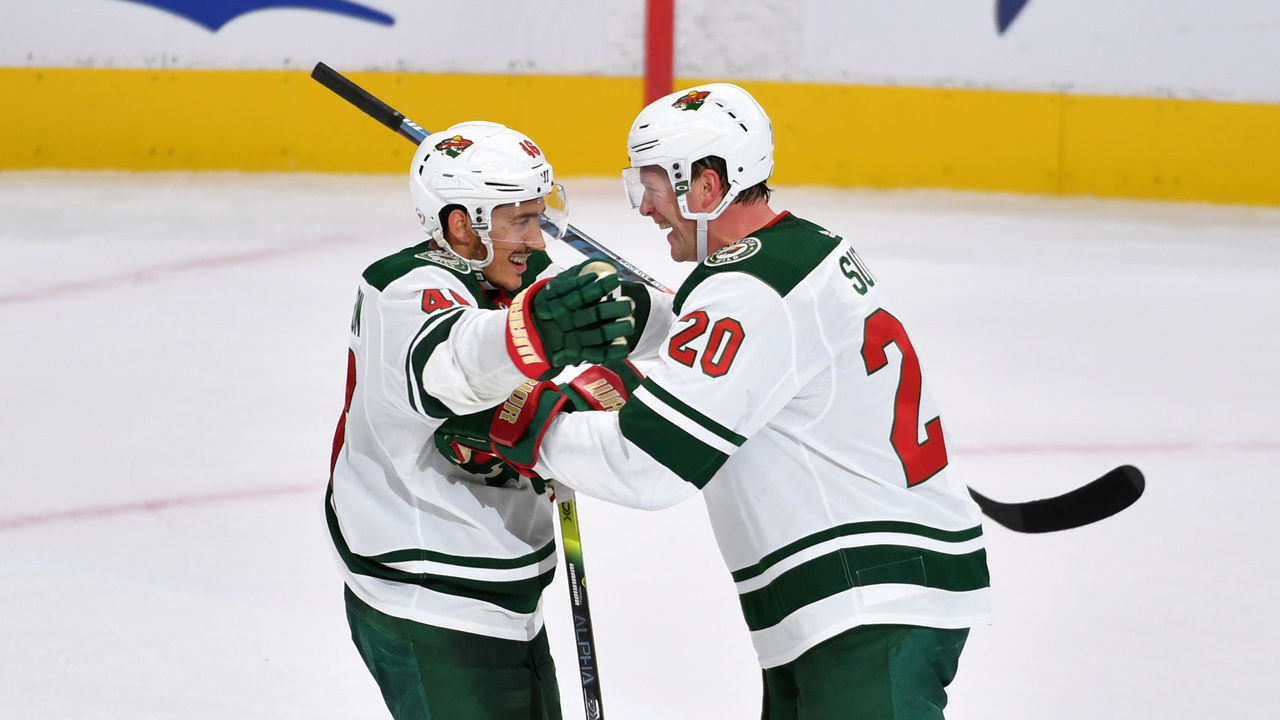
Minnesota will be without Koivu - the first permanent captain in Wild history - for the first time since his NHL debut in 2005. There may not be a rush to replace him, but Minnesota has a number of savvy veterans to choose from. One of them is Ryan Suter. He's been a pillar on the team since he signed his gigantic 13-year, $98-million deal in 2012. His play may have declined since, but his presence and leadership are still a big part of his role.
Another player to keep an eye on is Jared Spurgeon. The 30-year-old - who's signed through 2026-27 - figures to be the team's premier defenseman for the foreseeable future. He's played with the Wild for his entire career, which helps his case - only five active NHL captains haven't played their entire career for their current club.
Alex Ovechkin isn't done lighting up the NHL just yet, but the superstar recently confirmed he hopes to end his playing career in his hometown of Moscow.
"My career is not over yet. I'm still in my prime," Ovechkin told Russian Television International, as translated by Sportsnet. "I think I will definitely play for a few more years, God grant that my health is good. I would finish in Russia at Dynamo Moscow."
Ovechkin, 35, is fresh off posting 48 goals and 67 points this past regular season. The gargantuan 13-year contract he signed in 2008 is set to expire after the 2020-21 campaign, which would make him an unrestricted free agent for the first time.
However, Ovi assured he wants to finish his NHL career with the Washington Capitals.
"It's not a question of money. It's a matter of principle," he said. "I played for only two teams - Dynamo and Washington."
He added, "It is clear, in two, three, four years, maybe five, I will end my career in Washington," Ovechkin said. "I want to end on a beautiful note - to play my last match for Dynamo Moscow."
The nine-time "Rocket" Richard winner became the eighth player in NHL history to reach 700 career goals, finishing the campaign with 706. Ovechkin is currently 188 behind Wayne Gretzky's all-time record of 894; if he does end up playing five more NHL seasons, he'd need to average 38 tallies to finish atop the list.
Ovechkin spent four seasons with Dynamo before bursting onto the NHL scene in 2005-06. He also played there during the lockout stoppage in 2012.
Gavrikov made his NHL debut last season and tallied 18 points in 69 games while averaging about 19 minutes of ice time per contest. The 6-foot-3, 213-pound rearguard was deployed primarily in a shutdown role alongside veteran David Savard. He performed well at five-on-five and on the penalty kill despite the tough matchups, as evidenced by HockeyViz's isolated impact:
Positive is good in the offensive zone (top row), negative is good in the defensive zone and penalty kill (bottom row).
hockeyviz.com
"Vladimir Gavrikov was everything we hoped he would be during his rookie season last year, establishing himself as a top-four defenseman in the National Hockey League," said Blue Jackets general manager Jarmo Kekalainen. "He is still a young player that we expect will get better every year and continue to be an important part of our blue line."
Drafted by the Blue Jackets in the sixth round in 2015, Gavrikov spent five seasons in the KHL before joining Columbus for his age-24 campaign.
The Blue Jackets have $9.2 million remaining in projected cap space, per CapFriendly, but still have to sign fellow restricted free agent Pierre-Luc Dubois.
Strome's arbitration hearing was scheduled for Thursday. The two sides were reportedly set to enter the process over $2 million apart.
The 27-year-old had a breakout season in 2019-20, racking up 59 points in 70 games while primarily playing alongside Hart Trophy finalist Artemi Panarin.
Strome was originally selected fifth overall by the New York Islanders in 2011. He showed promise with 50 points in his sophomore campaign, but he averaged just 32 points over his next four seasons prior to 2019-20.
The Blueshirts acquired the pivot from the Edmonton Oilers in November 2018 in exchange for Ryan Spooner.
The Rangers have $6.4 million remaining in projected cap space, according to CapFriendly. However, they still need to sign restricted free agent Brendan Lemieux. The two sides are reportedly set to enter Friday's arbitration hearing roughly $1 million apart.
Earlier this week, theScore explored the writing and release of "Fabric of the Game," Chris Creamer and Todd Radom's deep dive into the history of the names and logos of every NHL team - plus 15 bygone franchises and the Seattle Kraken.
In a recent interview, the authors identified their all-time favorite NHL logos and broke down the design characteristics that make these emblems so appealing. Each expert's top five choices are listed alphabetically below, and their analysis follows.
Creamer: Buffalo Sabres, Colorado Rockies, Detroit Red Wings, Hartford Whalers, New Jersey Devils
Radom: Atlanta Flames, Boston Bruins, Minnesota Wild, Philadelphia Flyers, Winnipeg Jets (original)
––––––––––
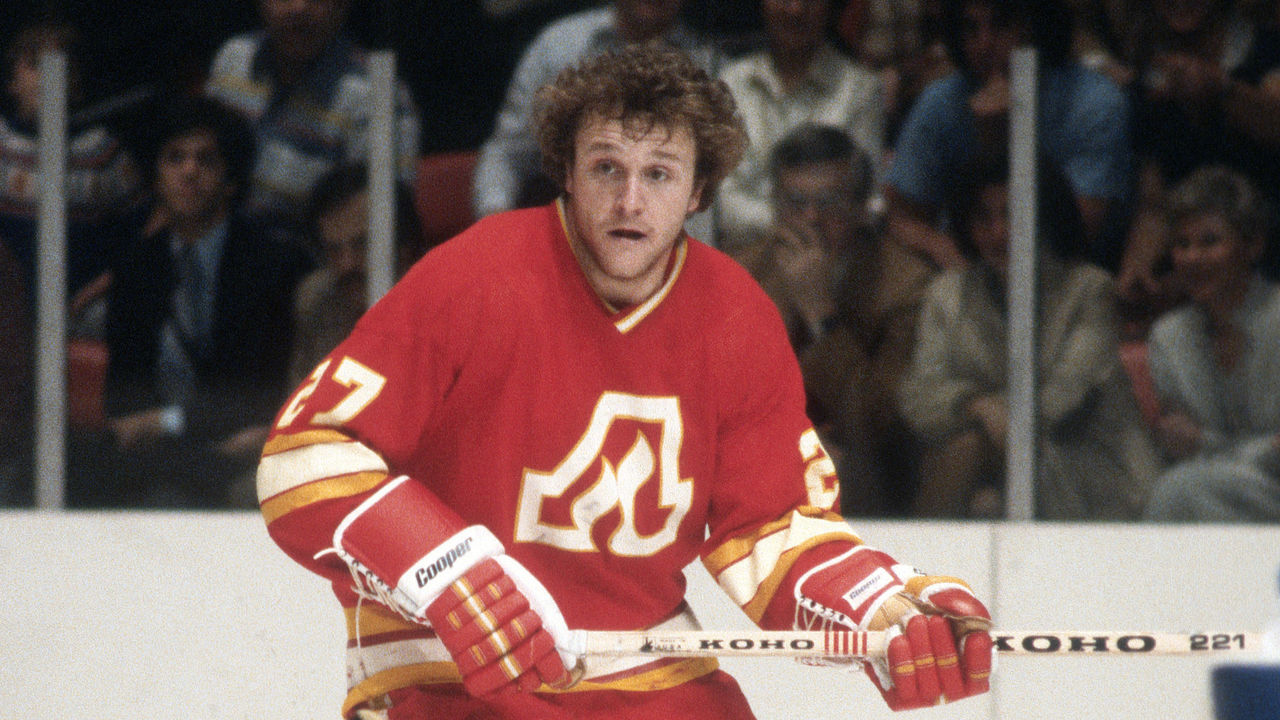
Atlanta Flames
Eric Vail, 1979. Focus On Sport / Getty Images
When new, Canadian ownership whisked this franchise north to Calgary four decades ago, the Flames' uniforms retained a dash of Atlanta: the Coca-Cola shade of red native to the soda giant's home city.
The simplicity and coherence of Atlanta's flaming "A" logo have long stuck with Radom, a renowned graphic designer: "It conveys a lot with a little, which is always my criteria."
Radom was 16 when, in 1980, he attended one of the Flames' first games as a Calgary-based team and came to appreciate the "C" variant on its own merits. It's just that the "A" set a high standard.
"Once you've seen the 'A' with the flame right in the middle, (the 'C' isn't) quite as elegant," Radom said. "But listen, 40 years on, the Flames are not only wearing them but reverting back to that original look. It holds up."
Boston Bruins
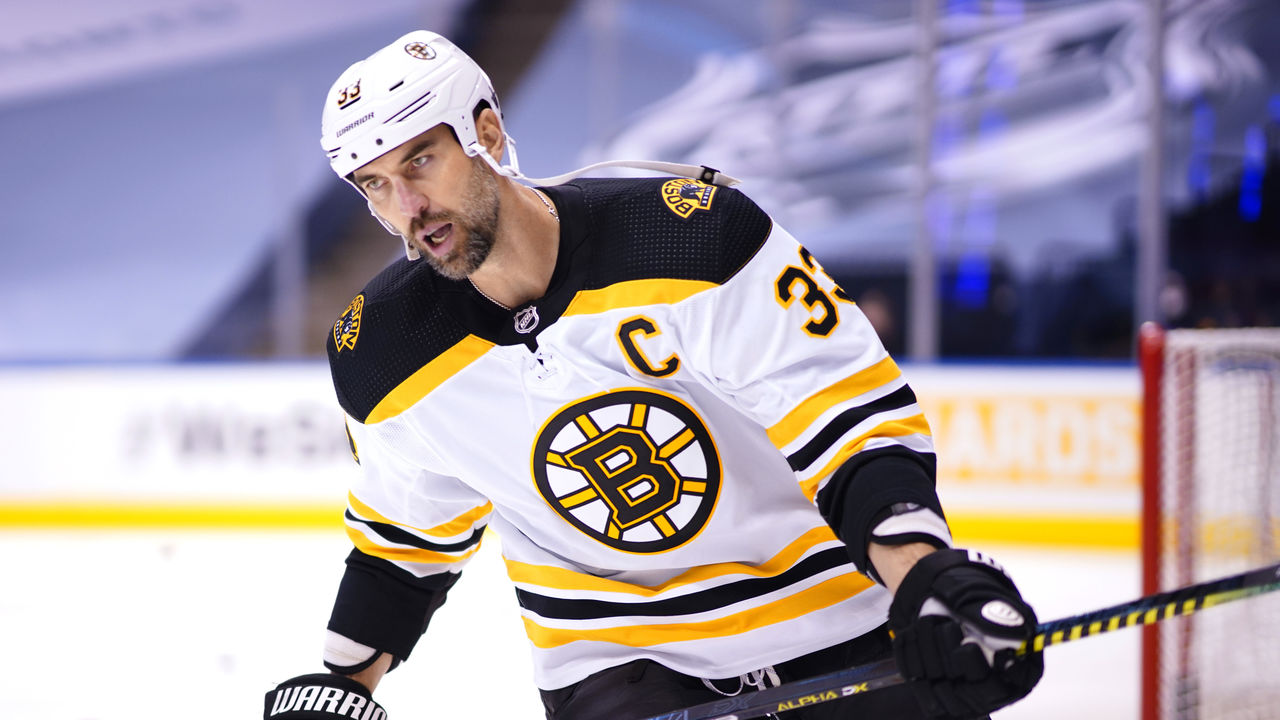
Zdeno Chara, 2020. Mark Blinch / NHL / Getty Images
"Fabric of the Game" dispels a well-worn tale about the Bruins' spoked "B": that the logo was designed in 1948 to assert Boston's status as the "Hub of the Universe," a voguish nickname for the city in the 19th century. The authors' research turned up no corroborating evidence, though Radom said they're still on the lookout.
Setting aside what the "B" isn't, Radom finds it easy to value what the mark is. It's solid, includes arresting colors, and remains faithful to the 72-year-old initial design despite minor font and outline tweaks. Badass teams donned the "B" in the 1970s, Radom said, and today, historical consistency begets instant recognition.
"They look like the Bruins," Radom said. "You flip on a game, look at your screen: They are the Bruins."
Buffalo Sabres
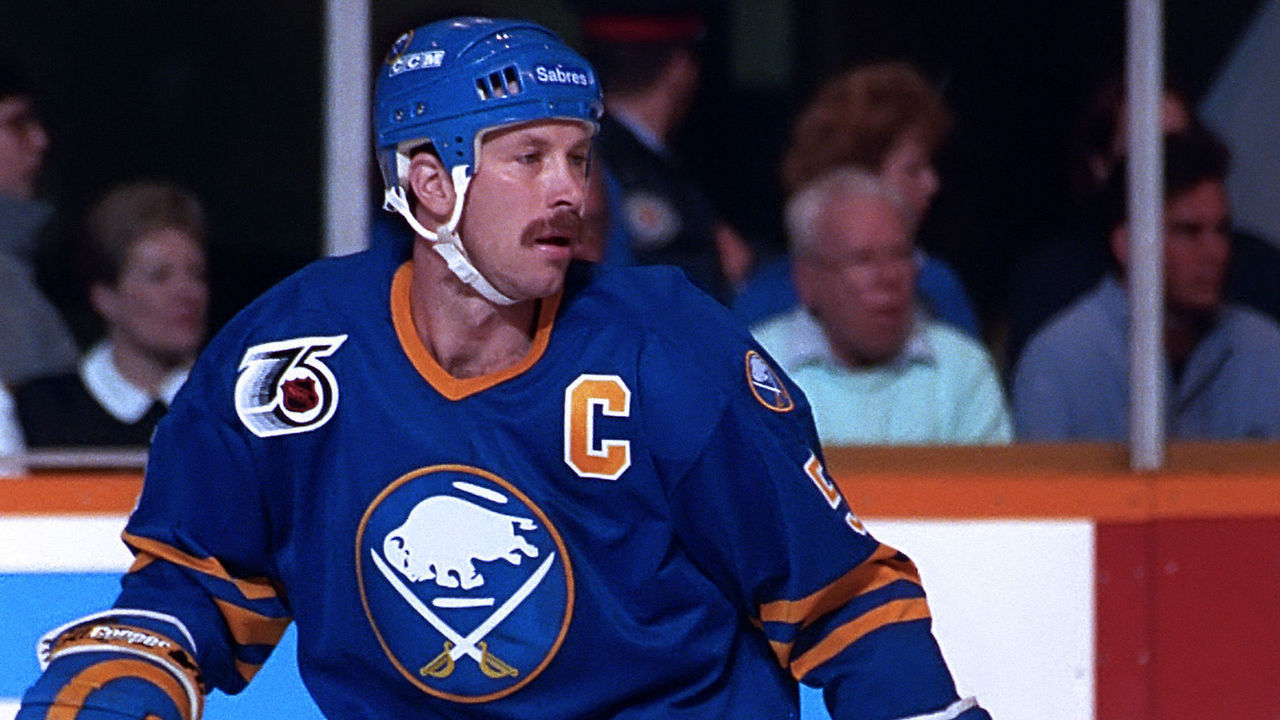
Mike Ramsey, 1991. Graig Abel / Getty Images
"Extraordinarily clever" is how Creamer, the editor of SportsLogos.net, describes the balance Buffalo struck with its 1970 expansion logo. The jersey crest features a buffalo and crossed sabers. "It says it all," Creamer noted. Chef's kiss. 'Nuff said.
Why meddle with perfection? Seymour Knox III, the Sabres' founding owner, voiced that sentiment during the mid-1990s rebrand that completely changed the club's appearance. If Original Six teams don't overhaul their logos, he argued, Buffalo shouldn't feel the need, either. Only in 2010 did the Sabres ditch the maligned "Buffaslug" to revive the original design, vindicating Knox 14 years after his death.
Next season, the crest will again be royal blue rather than dark blue, completing the return to roots.
"We can look back on this now and think, 'This guy was onto something,'" Creamer said of Knox. "If only he could see what's happening now."
Colorado Rockies
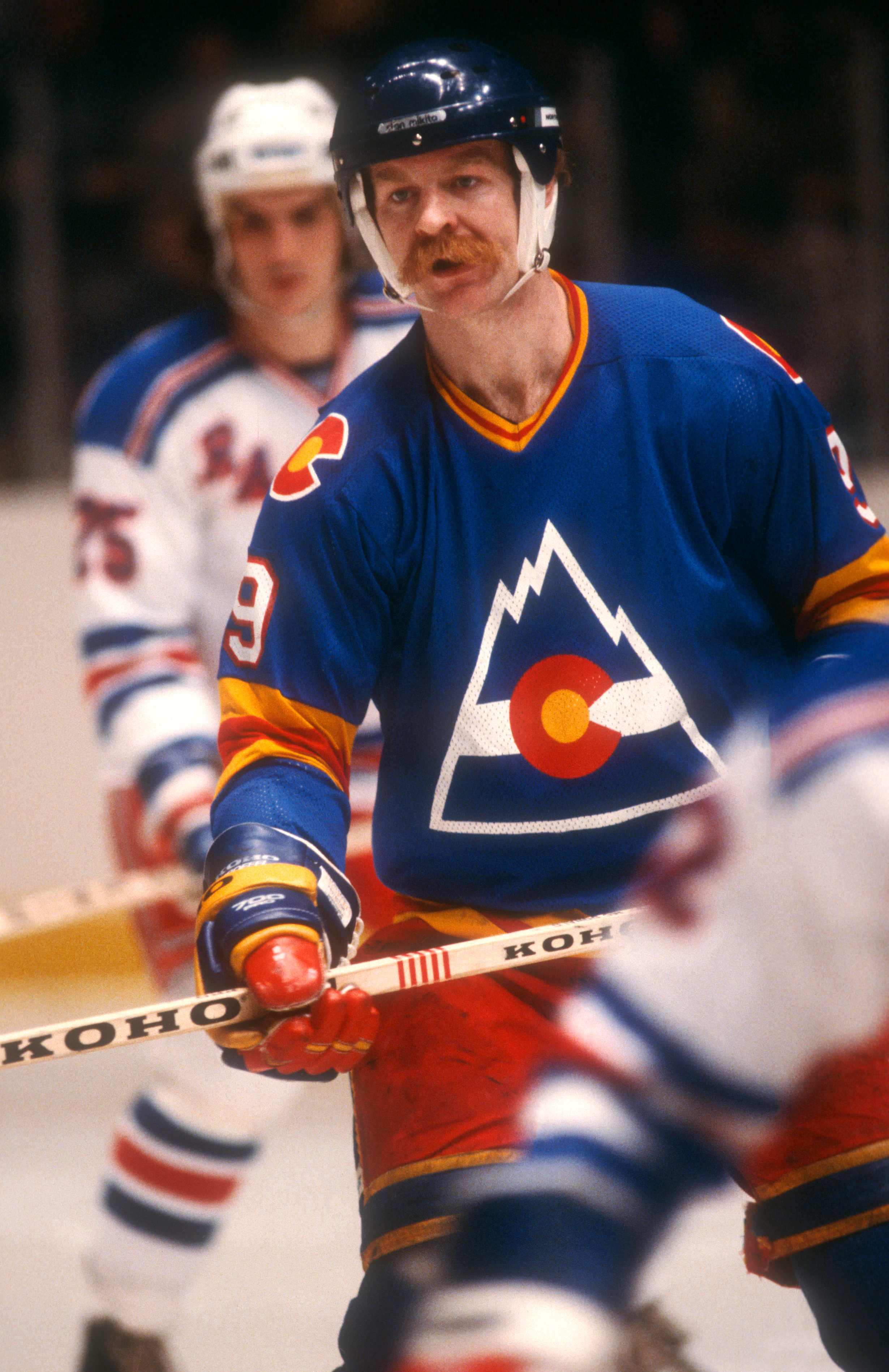
Lanny McDonald, 1980. Bruce Bennett / Getty Images
It's Creamer's belief that blue-red-yellow color schemes should get far more play across North American sports. The NCAA's Kansas Jayhawks swear by such a pattern. The same goes for the NBA's Denver Nuggets, though red isn't paramount in their motif.
From 1976-82, before the Rockies moved to New Jersey and an expansion MLB team picked up the name, this NHL club rocked a tricolor, white-striped Rocky Mountain logo crafted in the image of Colorado's state flag.
"An amazing, remarkable thing to do," Creamer said, praising the decision to meld two signature state symbols.
It's only fitting that the Colorado Avalanche, recognizing their heritage, now trot out a similar mountain icon as an alternative logo.
"In the wrong colors, but still," Creamer said.
Detroit Red Wings
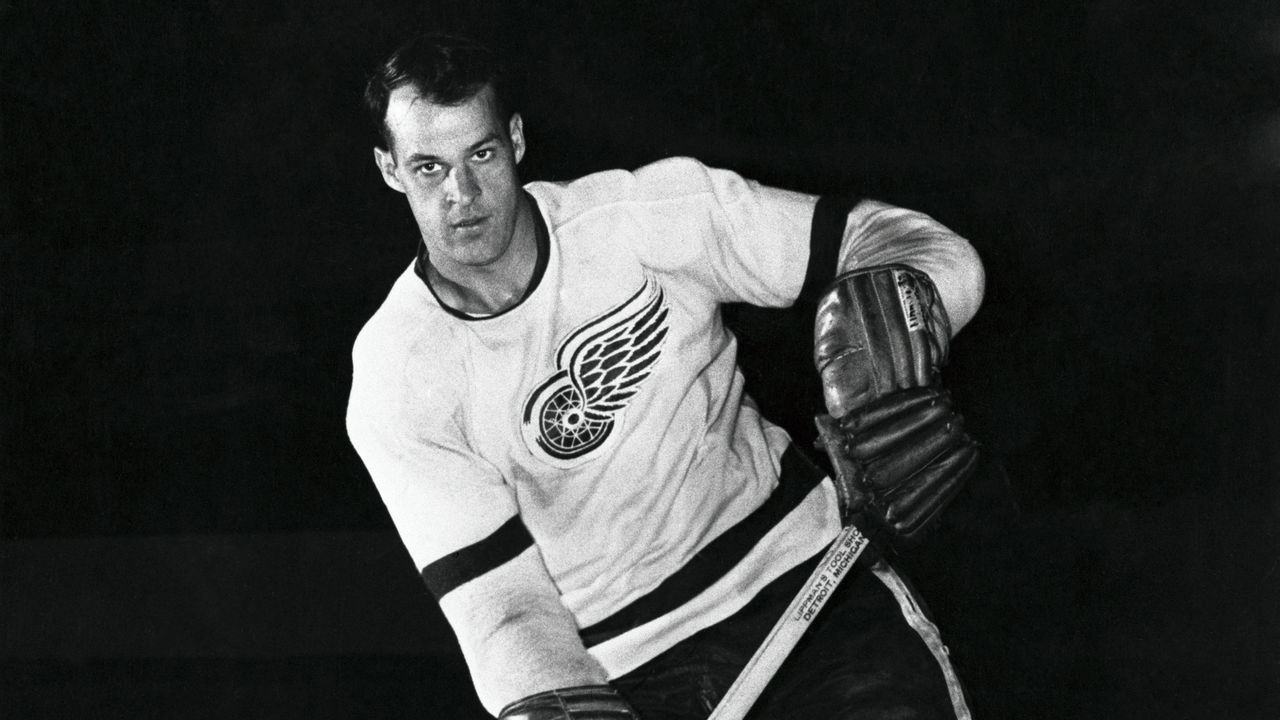
Gordie Howe, 1956. Bettmann / Getty Images
As with the Bruins, Creamer applauds Detroit for riding with the same logo through the eras. Save for the occasional cosmetic update, no one has touched or sullied the winged wheel that Ted Lindsay, Gordie Howe, Steve Yzerman, and Nicklas Lidstrom each sported in turn.
Longevity is one thing, but how's this for added historical significance: Detroit's famous emblem is a tribute to the first winners of the Stanley Cup, the amateur Montreal Hockey Club's "Winged Wheelers." That outfit lifted the chalice in 1893, a full 115 years before the Red Wings celebrated the most recent of their 11 titles.
"To me, that alone - the history attached to it, to the origins of hockey - make it one of the greatest logos in the NHL," Creamer said.
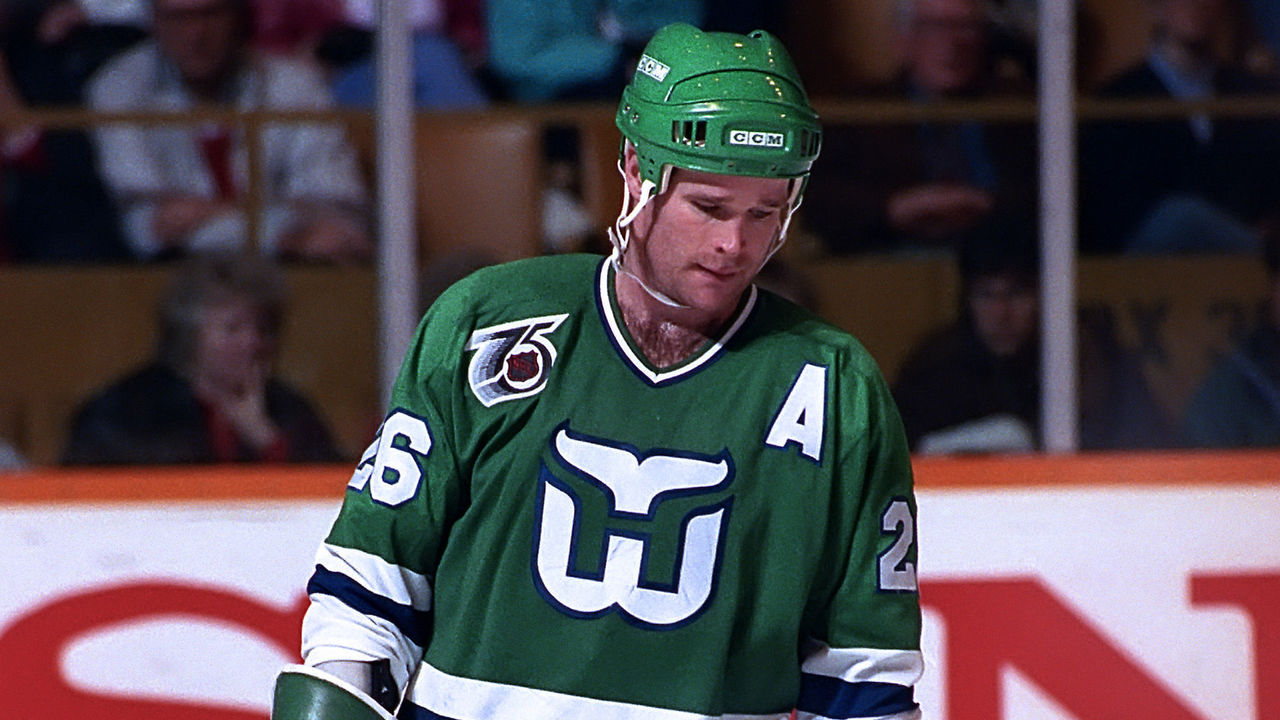
Hartford Whalers
Mark Hunter, 1991. Graig Abel / Getty Images
Creamer named his top logos in no particular order, but this one might be his favorite, partly because of a childhood lesson his dad imparted. He recalls browsing old sets of Upper Deck hockey cards and mocking team insignias he didn't understand, Hartford's trademark whale tail among them.
He'd never noticed the hidden green "H" just above the Whaler "W." When his dad pointed this out, it was a lightbulb moment for Creamer - the realization there's more to some logos than immediately meets the eye.
The whale tail is at once nuanced and straightforward, he said, not to mention pleasantly colorful. It depicts the franchise's identity through an illustration a kid could replicate.
What else explains the logo's enduring charm?
"The team doesn't exist anymore," Creamer said. "That doesn't hurt."
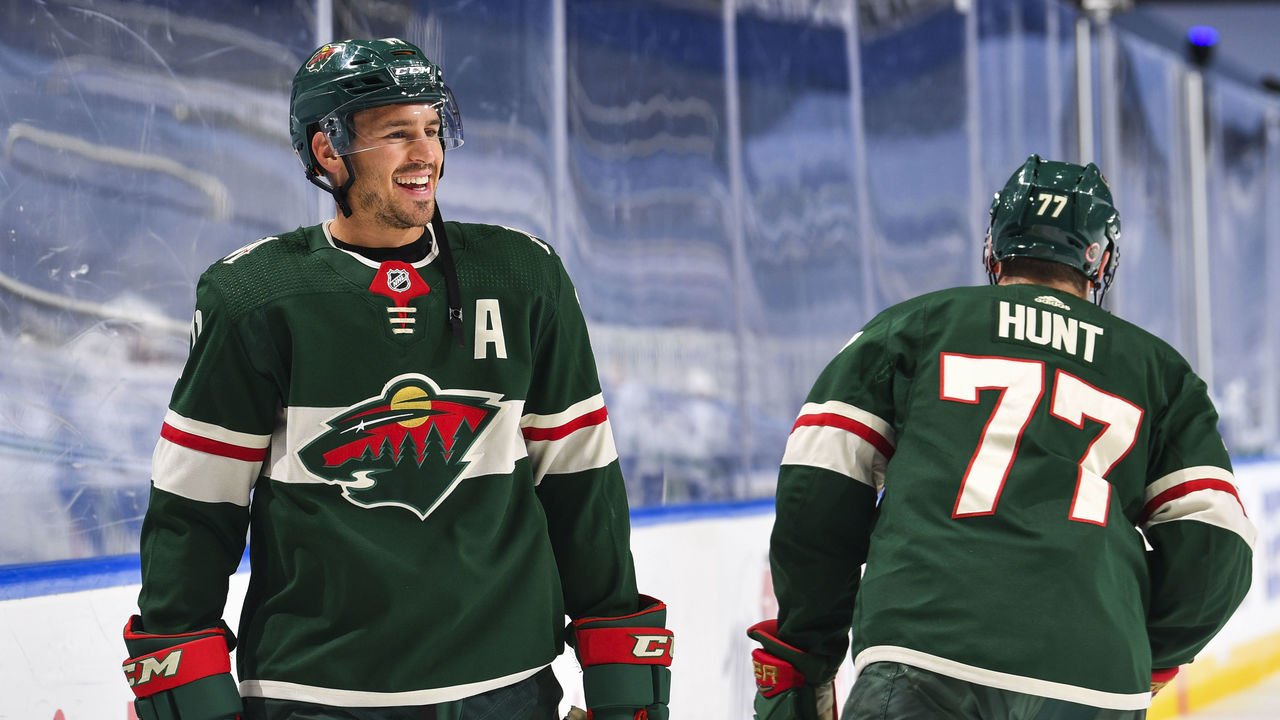
Minnesota Wild
Zach Parise and Brad Hunt, 2020. Andy Devlin / NHL / Getty Images
"How do you embody something that is a Wild?" Radom wondered when this franchise settled on a name in the late 1990s. Unlike a saber or a whaler, unlike a flame or a mountain range, Minnesota saddled its designers with an abstract muse: something rugged or picturesque, sure, but without a readymade or obvious form.
Happily, Radom said, the end product nails the look and feel of venturing off the grid in the State of Hockey: "It takes you to a certain place."
At the top of the logo, the sun sets above green trees and a handsome red sky. A river winds into the forest from the bottom right corner. The scene unfolds within the contours of an animal head, the creature's eye represented by the north star that salutes Minnesota's first NHL club.
Radom believes the logo has "gained equity over the past two decades," even though the Wild have iced few great teams in that period.
"That's a hard thing to pull off, but they pulled it off," he said.
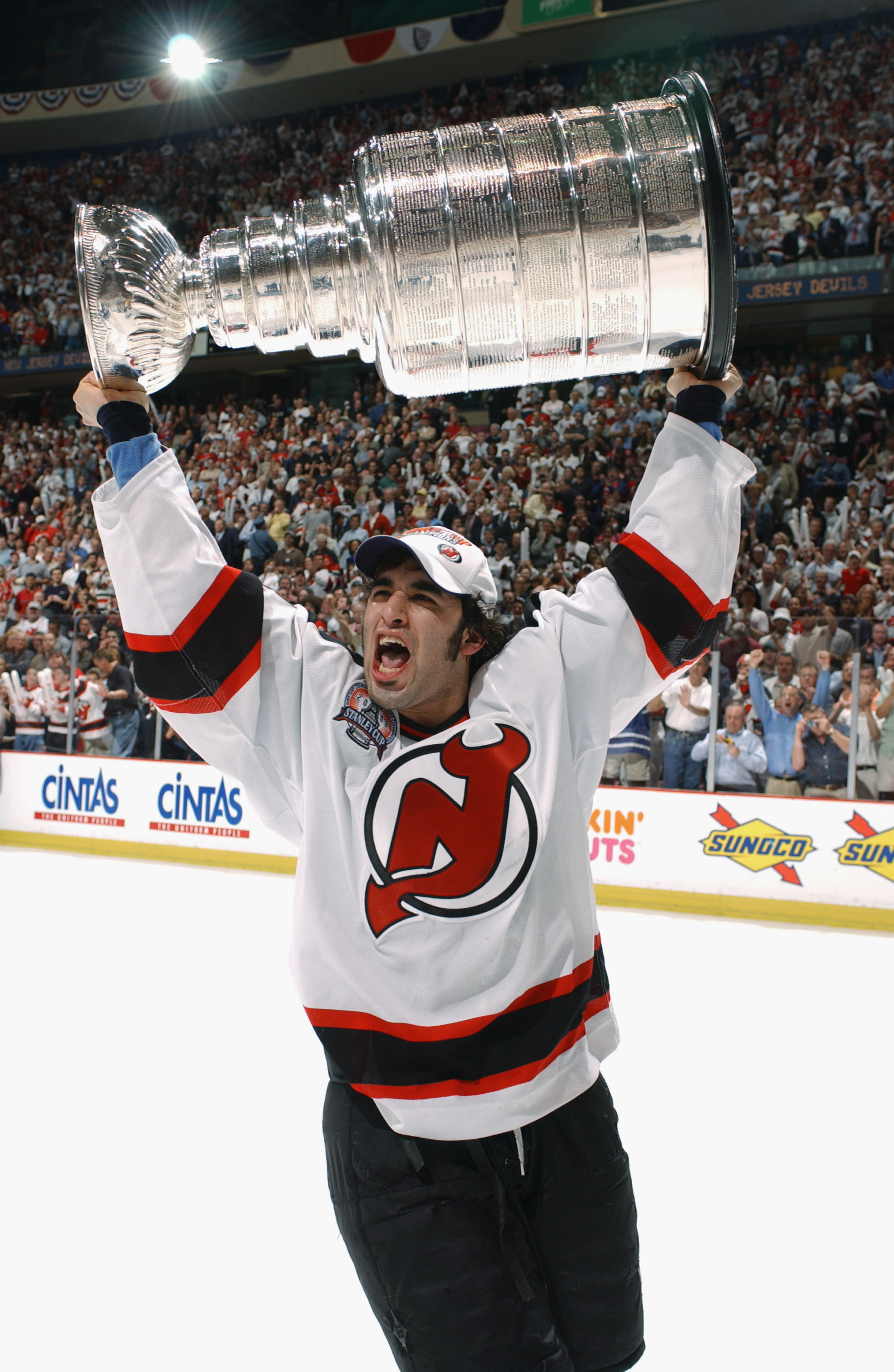
New Jersey Devils
Scott Gomez, 2003. Dave Sandford / Getty Images
Like Hartford's whale tail, camouflaged "H", and foundational "W", elements in the Devils' logo fuse to produce a harmonious whole. There's power in being direct, Creamer said. New Jersey's creation - interlocked initials that contort into a devil's tail and horns - certainly fits the bill.
The Devils released the mark in 1982, not long before Creamer was born, and the only notable edit in 38 years has been a change in the color of the background circle: a shift from green to black for a more assertive, less Christmassy motif. The organization wore black trim in its three championship seasons, a coincidence that strengthened the brand.
"Some logos are elevated by success," Radom said. "(The Devils) become a little dynasty, and that logo is elevated by virtue of the fact that they have those Stanley Cups."
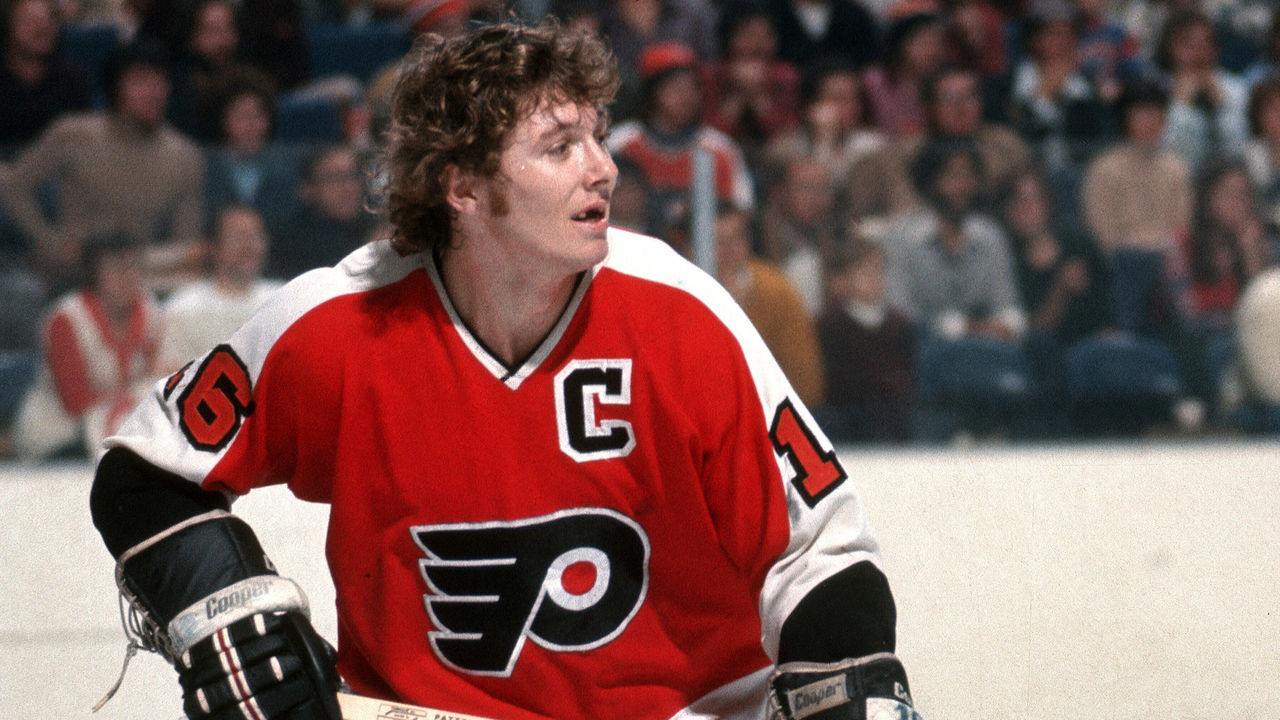
Philadelphia Flyers
Bobby Clarke, 1975. Focus On Sport / Getty Images
Fundamentally, Radom likes the shapes Philadelphia has used to brand itself since 1967: the slanted "P" that sprouted wings; the central orange dot that imitates a puck. The Flyers helped kick-start the league's expansion era, but their commitment to visual tradition is reminiscent of an Original Six club. Like Boston and Detroit - and unlike Buffalo - they've stayed the course.
Spiritually, Radom has long appreciated that the Flyers wear orange and black, verging off-trend in the cradle of U.S. independence.
"Where 1776 rules all, the Flyers are not red, white, and blue, and there are no stripes or stars," he said.
Apart from brief experiments with silver and gold trim, Philly's logo has remained untouched, its aesthetic distinctive.
"It looks as good now as it did when Bobby Clarke was out there with no teeth," Radom said.
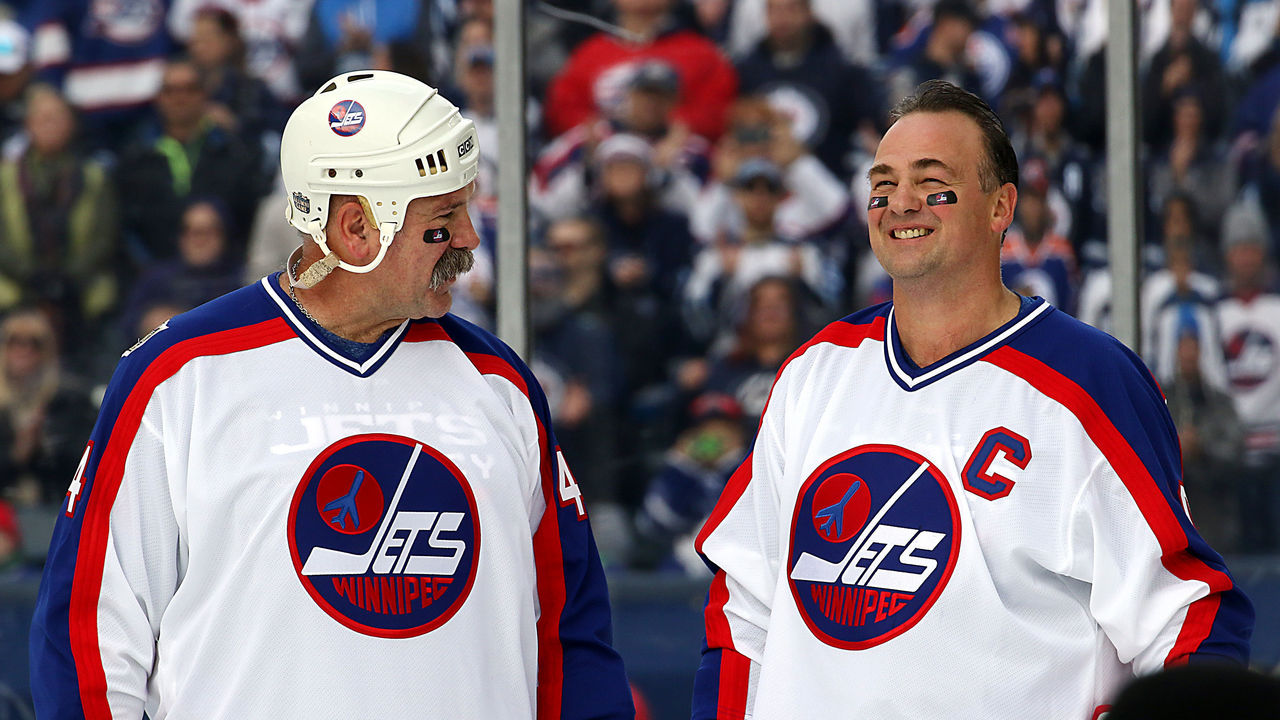
Winnipeg Jets (original)
Dave Babych (left) and Dale Hawerchuk, 2016 Heritage Classic. Jonathan Kozub / NHL / Getty Images
Winnipeg's original hockey team, a three-time World Hockey Association champion in the 1970s, took what Radom characterizes as a "kitchen sink" approach to its emblem.
"It has everything," he said. "It says Winnipeg. It says Jets. It has a picture of a jet. It has a hockey stick. But you put all that together, it's only two colors, and there's something about it that is kind of goofy and '70s."
Those Jets wore the logo in the NHL until 1990. Long after they departed for Phoenix, the current name-holders reprised the style - airplane silhouette and all - for the Heritage Classic in both 2016 and 2019. The tributes looked great, Radom said, and they reminded him of a fond teenage memory: requesting a pocket schedule from the WHA by mail.
"The WHA sent me back these decals, which I still have, all these years later," Radom said. "Among them is this Winnipeg Jets logo. It makes me feel warm inside."