Pierre McGuire will not be the Arizona Coyotes' next general manager.
The NBC broadcaster is no longer a candidate for the position, a league source told NHL Network's Craig Morgan on Wednesday.
It was reported Saturday that McGuire had spoken with the team about the job.
McGuire has been a full-time analyst with NBC since 2011 and a broadcaster since 1997. He has coaching, scouting, and front-office experience, but he also carries baggage.
NBC temporarily demoted McGuire last fall after he had a series of awkward on-air exchanges with fellow broadcaster Kendall Coyne Schofield in January 2019.
After the Hartford Whalers fired McGuire following his brief tenure as their head coach in 1994, team captain Pat Verbeek called it the best thing that could have happened to the club. Verbeek also revealed that other teams mocked McGuire, and that his teammates had no respect for the then-32-year-old bench boss.
The Coyotes have reportedly interviewed several other candidates, including former Arizona goaltender, coach, and executive Sean Burke, and Pittsburgh Penguins assistant GM Jason Karmanos. However, interim GM Steve Sullivan has apparently made calls with other clubs about possible trades while the Coyotes were looking into hiring his potential replacement.
Arizona's previous GM, John Chayka, terminated his contract in July, prompting the club to accuse him of quitting on the organization ahead of the postseason.
NHL general managers and a panel of league executives and media voted for the award upon the conclusion of the second round of the 2020 Stanley Cup Playoffs. The winner will be announced on Saturday.
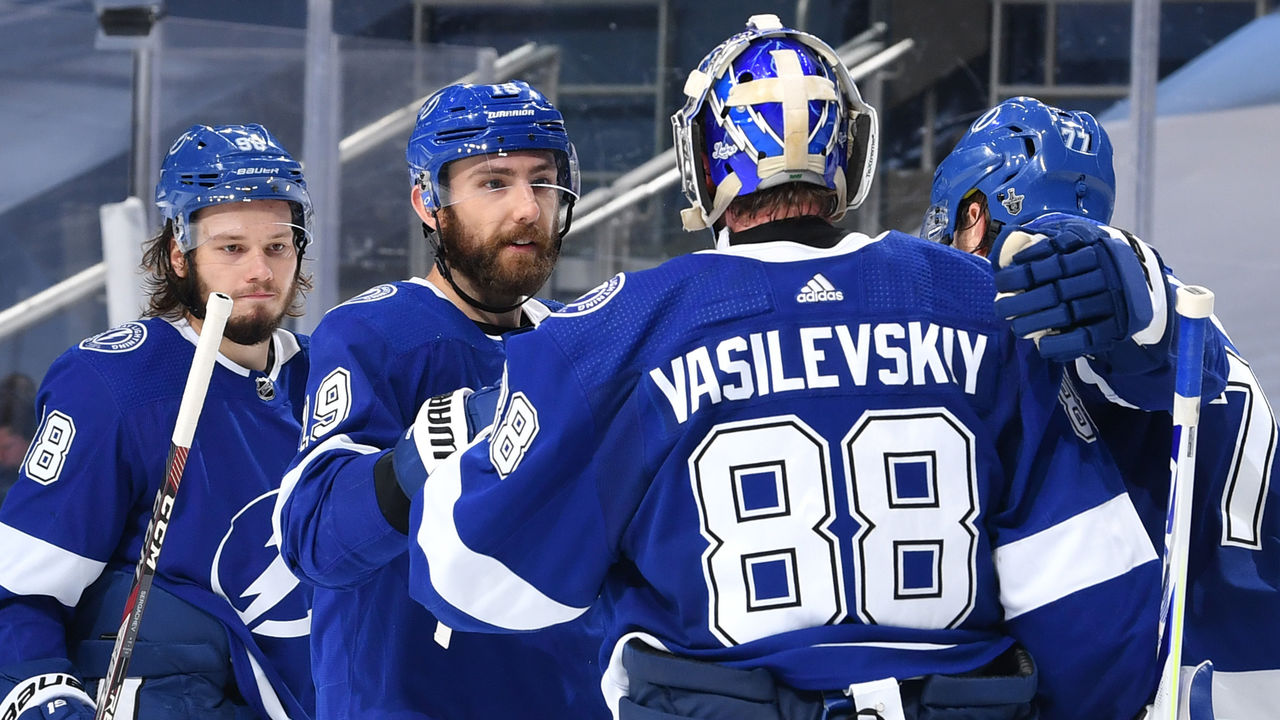
The Lightning reached the Eastern Conference Final this campaign after recording a historic 62-win regular season last year. BriseBois brought in the likes of Patrick Maroon, Kevin Shattenkirk, and Luke Schenn and signed cornerstone players Brayden Point and Andrei Vasilevskiy to long-term deals during the offseason. He also acquired depth forwards Blake Coleman and Barclay Goodrow prior to the 2020 trade deadline.
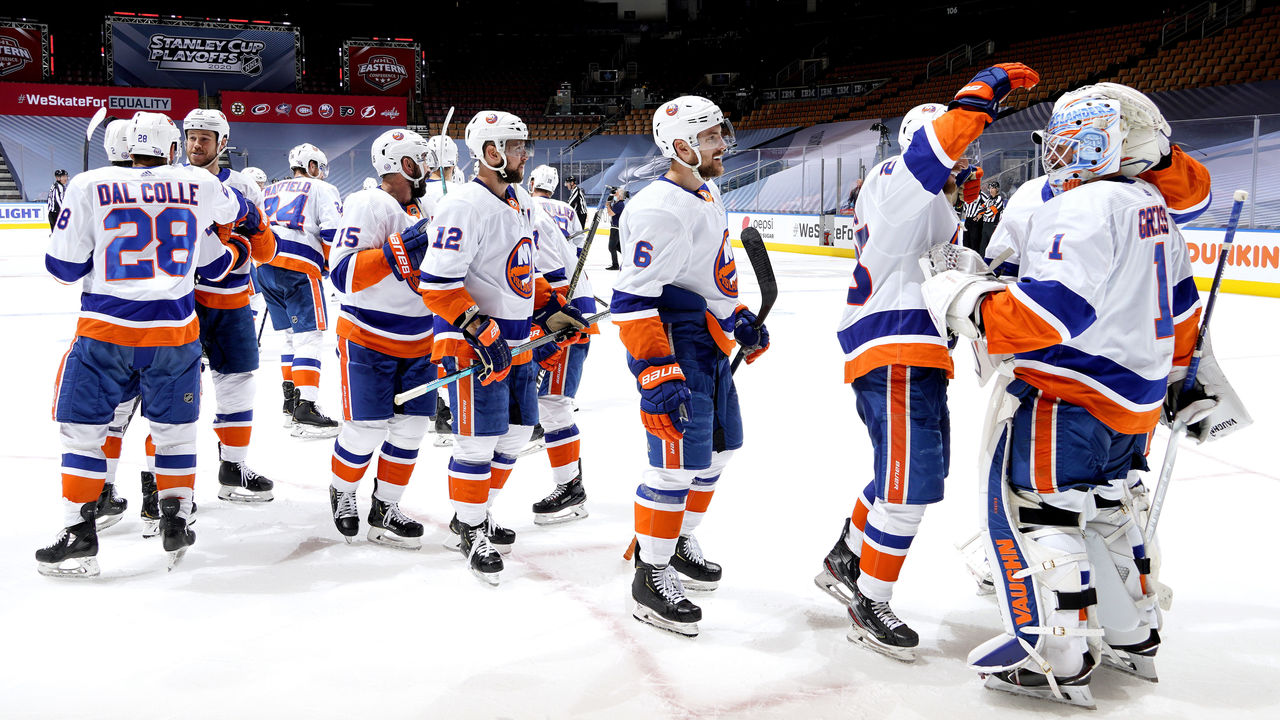
New York has had tremendous success in Lamoriello's first two seasons with the team. The Islanders reached the conference finals this season after advancing to the second round last year. Lamoriello hired head coach Barry Trotz - who had just won the Stanley Cup with the Washington Capitals - shortly after his own hiring.
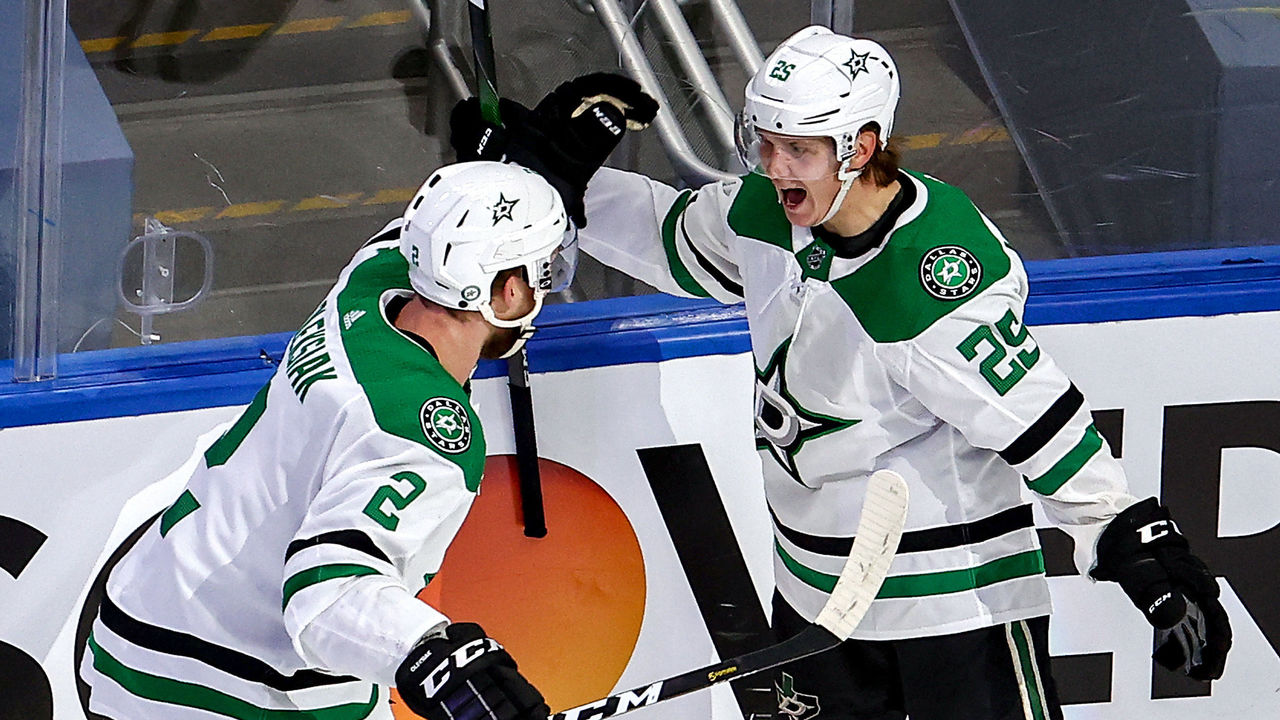
Nill's Stars reached the Western Conference Final this season for the first time since 2008 and have steadily increased their points percentage over the last few years. He signed veteran forwards Corey Perry and Joe Pavelski last summer, as well as defenseman Andrej Sekera. This is his second nomination for the award.
Four teams remain in the hunt for the Stanley Cup, and the storylines that contextualize those club's pathways through the NHL bubbles are plentiful.
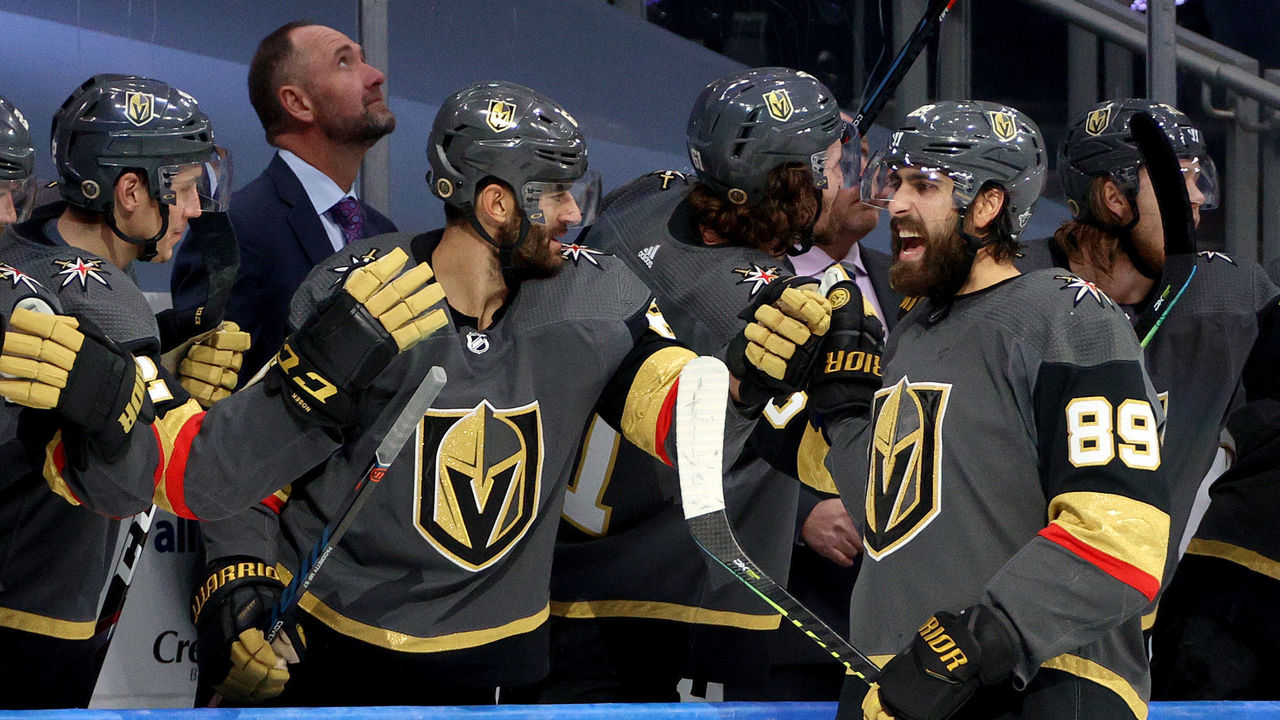
The two secure zones have kept COVID-19 at bay, with no positive tests reported since teams gathered in Edmonton and Toronto six weeks ago. Now the Golden Knights and Avalanche are squaring off for the Western Conference title, while the Lightning and Islanders have joined them at Rogers Place to determine the Eastern Conference finalist.
Here's a rundown of six league-wide trends catching our attention this postseason.
Chaos has reigned
Bruce Bennett / Getty Images
Counting the play-in and seeding stages, the events so far have made this much clear: Whichever club captures the Cup will deserve the honor not only for withstanding the mental strain of the bubble, but for also emerging triumphant from such a chaotic tournament.
Let's recap the weirdness chronologically. The unique format enabled each conference's lowest-ranked team, the Canadiens and Blackhawks, to qualify for the first round after seismic upsets - Montreal of Sidney Crosby, Evgeni Malkin, and the Penguins; and Chicago of Leon Draisaitl, Connor McDavid, and the Oilers. Both of those upstarts won on the first night of games. The second night featured Nazem Kadri winning the Avalanche-Blues seeding-round game from the foot of the crease at the last possible tenth of a second.
Only one play-in series went the distance, and that matchup was plenty hectic. Columbus and Toronto combined for three shutouts and two overtime games in which the losing side blew a 3-0 lead - the Blue Jackets in the last four minutes of what could have been a series-clinching Game 4 victory. They turned the tables on Toronto in Game 5, then immediately played the fourth-longest playoff game ever, a five-OT slog against the Lightning that set individual save and time-on-ice records.
No best-of-seven has concluded in a sweep so far, which is rare, and for a time it appeared this would be the first postseason of the salary-cap era to feature no Game 7s in Rounds 1 or 2. Instead, the Islanders, Stars, and Golden Knights blew 3-1 series leads concurrently before averting collapses in Game 7s, one of which was played as the second of back-to-back contests. Vegas-Vancouver advanced that far because Canucks backup goalie Thatcher Demko denied 123 of 125 shots over his first three starts since March.
Colorado's Game 7 defeat to Dallas was the only playoff contest in which Nathan MacKinnon didn't record a point. Meanwhile, there were zero points to Andrej Sekera's name before he assisted on Joel Kiviranta's OT winner - the finishing touch on the NHL's first Game 7 hat trick since Wayne Gretzky did it in 1993. Decent company for the Finnish rookie, who grabbed the spotlight in only his third game in the bubble.
And Tampa just dropped eight goals on the typically airtight Islanders, the most in a conference-final game since 1992. What twists and turns lay ahead? - Nick Faris
Defensive teams are winning, and scoring
Mark Blinch / NHL / Getty Images
Heading into this unprecedented restart, many, including us, wondered what the on-ice product would look like and which types of players and teams would shine after nearly five months off.
You could talk yourself into the highly skilled, star-driven squads - such as the Penguins and Maple Leafs - plowing through the competition since talent doesn't suddenly get rusty. You could also make the case for structured and disciplined teams - like the Coyotes or Blues - thriving in chaotic times.
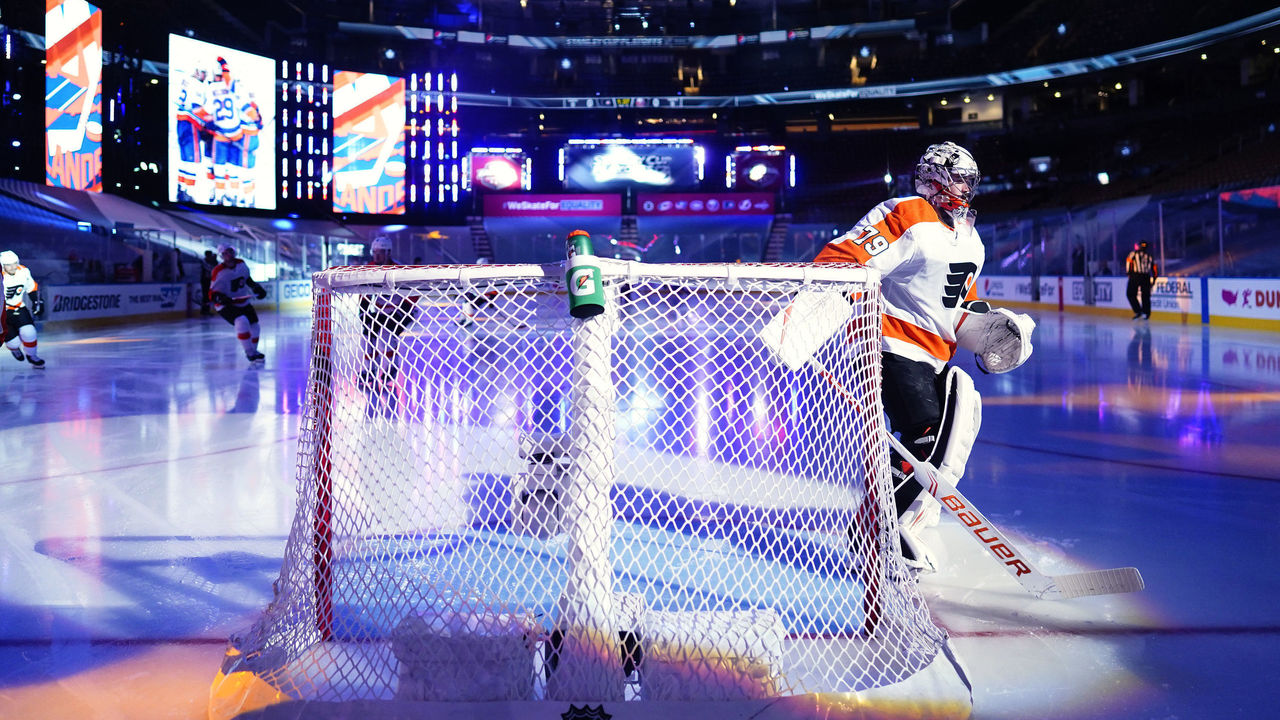
Well, a few days into Round 3, the Stars and Islanders - two of the best defensive clubs in hockey, playing under Rick Bowness and Barry Trotz, respectively - are among the four squads still standing in a 24-team tournament. Supporters of the old adage "defense wins championships" can gloat.
Dallas, which trailed only the Bruins in regular-season defense, is exceptional at forcing opponents to shoot from the perimeter. New York, which ranked ninth, suffocates and frustrates the opposition with its tireless forechecking and backchecking. Both clubs crowd the front of the net to block shooting lanes, doing a tremendous job of insulating the goalie. And when pucks manage to squeak through all the bodies, rebounds are swept away.
(Side note: The Golden Knights and Lightning are strong defensively, too. But, in terms of playing style and team identity, both are under the "well-rounded, surefire Cup contender" label, and not in the "defense-first, fringe Cup contender" category.)
Interestingly, an unrelenting attack is propelling the Islanders and Stars to great heights since the restart (Game 1 of New York's series against Tampa Bay notwithstanding). The Islanders have bagged 3.3 goals per game (about half-a-goal better than their regular-season average) while scoring four-plus goals seven times in 17 playoff games. Dallas, meanwhile, has notched 3.2 tallies per game (also about half-a-goal better than the regular season), while scoring four-plus goals eight times in 17 contests.
In a league obsessed with flash and dash, a pair of blue-collar teams are excelling. - John Matisz
Depth has eclipsed star power
Dave Sandford / Getty Images
When the Avalanche, Canucks, and Bruins were eliminated, it meant that 22 of the league's top 25 regular-season scorers would be excluded from the conference finals. A 23rd player, Steven Stamkos, might miss the whole postseason because of injury.
Apart from Max Pacioretty, the only such stud who's healthy is Nikita Kucherov, a fitting exception given that the Lightning are the lone finalist who really buck this trend. Brayden Point, Victor Hedman, and Andrei Vasilevskiy are terrific players who drive Tampa's success. Though the prowess of Mark Stone, Shea Theodore, and Miko Heiskanen is undeniable, the Golden Knights, the Stars, and, certainly, the Islanders have won on the strength of collective contributions.
This phenomenon cuts two ways. On one hand, consider the reams of household names and perennial all-stars whose teams exited the playoffs early.
Crosby, Malkin, Draisaitl, McDavid, Artemi Panarin, Auston Matthews, Mitch Marner, Jonathan Huberdeau, Roman Josi, and Connor Hellebuyck didn't make it out of the qualifying round. Alex Ovechkin, John Carlson, Carey Price, Sebastian Aho, Patrick Kane, Jonathan Toews, and Ryan O'Reilly were gone before Round 2. The most recent eliminations included the David Pastrnak-Patrice Bergeron-Brad Marchand trio, Vancouver young guns Elias Pettersson and Quinn Hughes, fellow Calder Trophy favorite Cale Makar, and MacKinnon, who still tops the playoffs in scoring.
In their stead, unlikely names have shot up the goals leaderboard. Bo Horvat continues to lead the NHL with 10 markers in his 17 games. Kadri left the bubble with nine. Denis Gurianov and Joe Pavelski pace Dallas with eight apiece. Alex Tuch's eight are the most for Vegas. Anthony Beauvillier, Brock Nelson, Anders Lee, and Jean-Gabriel Pageau have each registered at least seven for the Isles.
For all but Pavelski and Pageau, these totals are significant career playoff highs that are benefitting their clubs greatly. - Faris
Goalies, goalies, goalies
Andy Devlin / NHL / Getty Images
A piece of trivia to impress your hockey-loving friends: Tampa Bay is the only conference-final team to have used just one goalie during its 2020 playoff run.
Vasilevskiy's dominance in the Lightning's net is not without precedent, but it runs counter to what's unfolded elsewhere. Stars backup Anton Khudobin has already appeared in 15 games, filling in for Ben Bishop, who has been unfit to play for the majority of the tournament. The Islanders, meanwhile, have rotated between Semyon Varlamov (15 games) and Thomas Greiss (four games, including Game 1 of the Eastern final). And, of course, Robin Lehner has started 12 of 16 Golden Knights games, a controversial development that's relegated future Hall of Famer Marc-Andre Fleury mostly to backup duties.
The abundance of back-to-back games, several No. 1 and No. 2 options sidelined for various reasons, and Boston's star netminder Tuukka Rask leaving the bubble in the middle of a series combined to create some unexpected goaltending storylines.
In the 2019 playoffs, five of the final eight teams used two goalies, while the other three used one. This time around, five of the final eight teams have again used two goalies, but two teams have used three. That's four extra playoff goalies in 2020, and there's still plenty of hockey left.
Goalie depth was really put to the test in the Western Conference's two second-round series, as 30-year-old journeymen Pavel Francouz and Michael Hutchinson started six of seven games for Colorado, and Demko almost single-handedly took Vancouver to the conference finals after Vezina Trophy finalist Jacob Markstrom was ruled unfit to play.
Given all of this, perhaps Vasilevskiy should be garnering Conn Smythe Trophy buzz. - Matisz
No rest for the wicked
Mark Blinch / Getty Images
In the lead-up to Aug. 1, the first day of meaningful NHL games during the restart, there was this notion that some teams were playing with house money, and that decision-makers within certain front offices couldn't possibly take the results from this postseason at face value.
There had been a long layoff, and the postseason now featured 24 teams involved with this weird qualifying round. Some assumed the reality of participating in a pandemic postseason would reduce the typical offseason fallout.
Yet the last few weeks have proved the opposite. Teams were in fact taking the results very seriously.
Penguins general manager Jim Rutherford didn't brush off his team's poor showing in Toronto, which ended after a 3-1 series loss to the Canadiens. He fired three assistant coaches and then acquired Kasperi Kapanen in a seven-piece blockbuster with the Maple Leafs.
Washington fired head coach Todd Reirden after the Islanders dismantled the Capitals in five first-round games. The Caps had captured the Metropolitan Division title before the hiatus, yet they never seemed to find their groove in the bubble. GM Brian MacLellan clearly thought Reirden was at least partially responsible.
The Panthers pulled the plug on Dale Tallon's decade-long reign as GM following Florida's unceremonious exit. A four-game series loss to the Islanders, in which the Panthers scored seven goals, was apparently the last straw for ownership. Tallon may have been on a short leash coming out of the hiatus, but the disappointing result prompted a shake-up.
It'll be fascinating to watch the Bowness situation unfold in Dallas. Promoted from assistant coach to head coach last December, Bowness is still working under an interim tag. It's possible Stars GM Jim Nill is simply waiting for the end of the postseason to negotiate a proper deal. However, there's still a chance Bowness isn't brought back for 2020-21, despite the team's success since the restart. - Matisz
Quick hits
Elsa / Getty Images
Here are a few statistical nuggets of note.
Goal scoring: One major question entering the playoffs was whether the abrupt return to play would give shooters or goalies an advantage. By now, any such built-in edge has evened out. These playoffs have featured 5.57 goals per game, down from 6.04 in the regular season. The 2018-19 playoffs also yielded 5.57 goals per game, down from 6.03 that campaign. It seems scoring always declines this time of year, whether the Cup's awarded in June or September, and with or without fans.
"Home-road" splits: We can officially declare the home-visitor distinction a bubble nonfactor. The nominal host, whose coach gets to dictate line matchups through the last change, has won a mere 52 of 115 games (45.2%) through Monday's action. Some record distributions appear totally random, too. The Canucks went 7-2 as the away team and 3-5 at "home." All three of Tampa Bay's losses have come as the home club, and the Stars hold a losing record (3-4) as hosts. None of those squads were deterred from authoring standout runs.
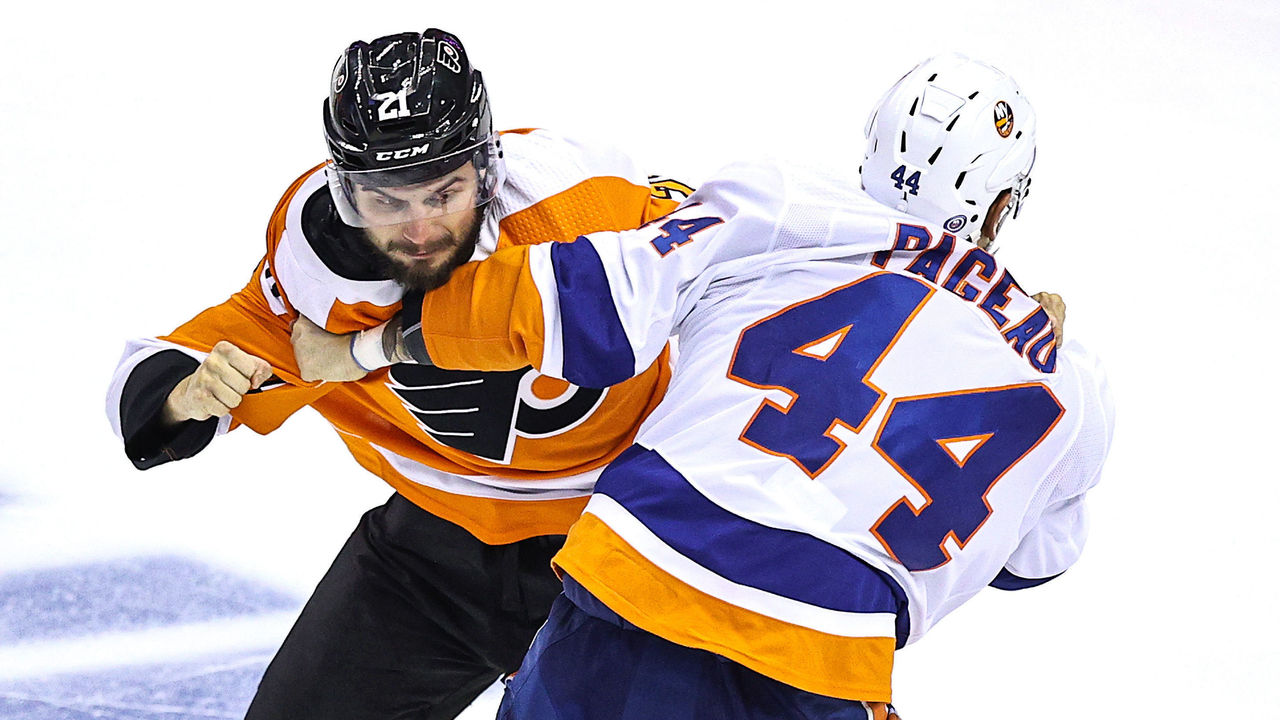
Fighting: According to Hockey Fights, 14 sets of combatants have traded blows throughout the playoffs, the most of any postseason since 2013 (15), and nearly quintuple last year's total (three). Of those 14 fights, eight took place during the play-in and seeding stages, suggesting some players were inspired to cast aside the gloves following the restart in an attempt to provide an early spark. Matters have mostly cooled over time, with only three fights recorded since Aug. 14, a few days into Round 1. - Faris
Despite pulling Anton Khudobin for the final 20 minutes of the Dallas Stars' 3-0 loss to the Vegas Golden Knights in Game 2 of the Western Conference Final on Tuesday night, Rick Bowness says his veteran goaltender isn't at fault for the defeat.
"Oh gosh, not at all," the Stars head coach told the assembled media, including Fox Sports Southwest, postgame. "We (gave him) a breather."
"Anton was the only reason it was 3-0," Bowness added. "Without Anton, (it's) 6-0 after the second period."
The Golden Knights outshot the Stars 27-12 through two periods, including a 19-7 edge in the middle stanza.
Khudobin stopped 24 of those 27 shots, but Bowness gave him the rest of the night off with Dallas trailing 3-0 in the second intermission. Jake Oettinger made his NHL debut in relief, recording five saves on as many shots over the final 20 minutes.
The Stars have ridden Khudobin in these playoffs. Including Tuesday's game, the 34-year-old has played 16 of Dallas' 18 postseason contests, starting 15 of them. He was 9-5 with a .914 save percentage in the 2019-20 playoffs entering Game 2.
Golden Knights netminder Robin Lehner made 24 saves for his second straight shutout and the fourth clean sheet in his last seven games.
Game 3 of the series - which is now tied at one win apiece - is scheduled for Thursday at 8 p.m. ET.
Dallas Stars goaltender Jake Oettinger saw his first official NHL action Tuesday night, entering Game 2 of the Western Conference Final against the Vegas Golden Knights for the start of the third period.
The rookie relieved Anton Khudobin, who allowed three goals on 27 shots over the opening 40 minutes. The Stars trailed the Golden Knights 3-0 after two periods, and Vegas held on to win by the same score.
Oettinger became the first netminder in 55 years and the only puck-stopper since the start of the expansion era in 1967-68 to make his NHL debut in the round preceding the Stanley Cup Final.
The Boston University alumnus played 38 games for the AHL's Texas Stars during the 2019-20 season, leading all AHL rookies with a .917 save percentage. Dallas drafted the 21-year-old 26th overall in 2017.
Including Game 2, Khudobin has played 16 of the NHL club's 18 postseason contests in 2020, starting 15.
On Aug. 3, the third day of the 2020 NHL playoffs, a thunderstorm ripped through Edmonton, one of two cities playing host to the bubbled postseason.
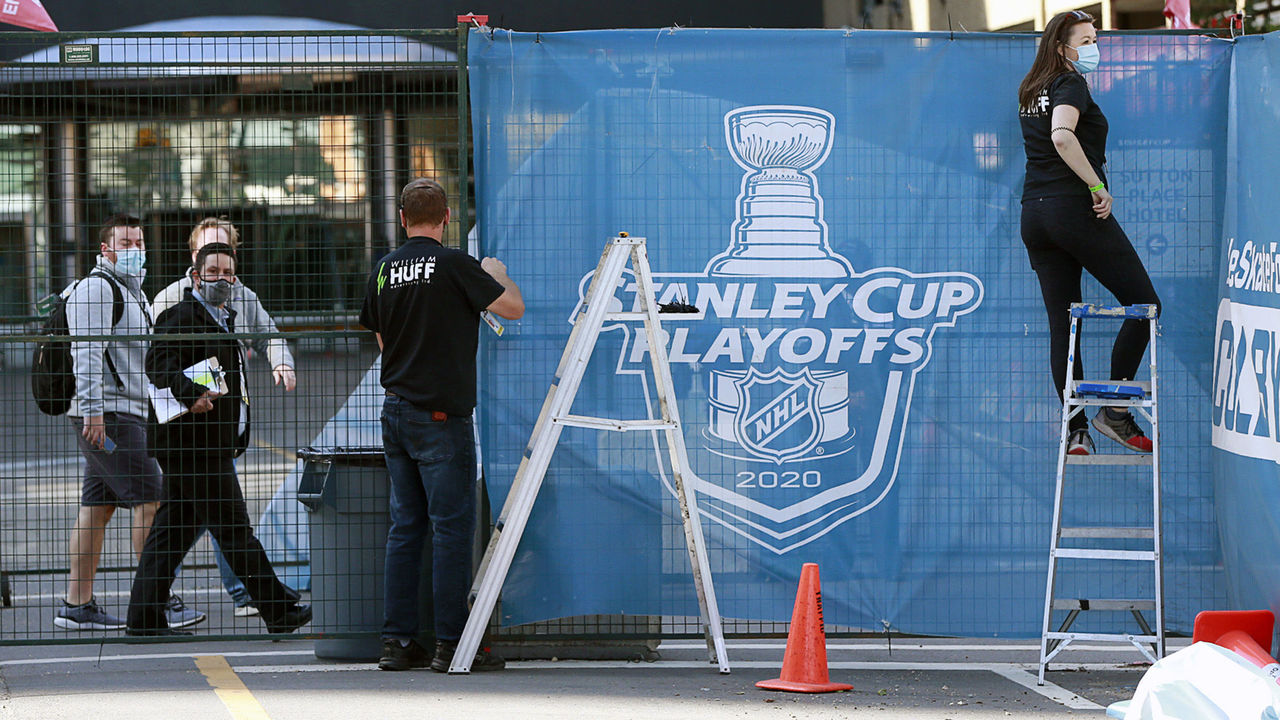
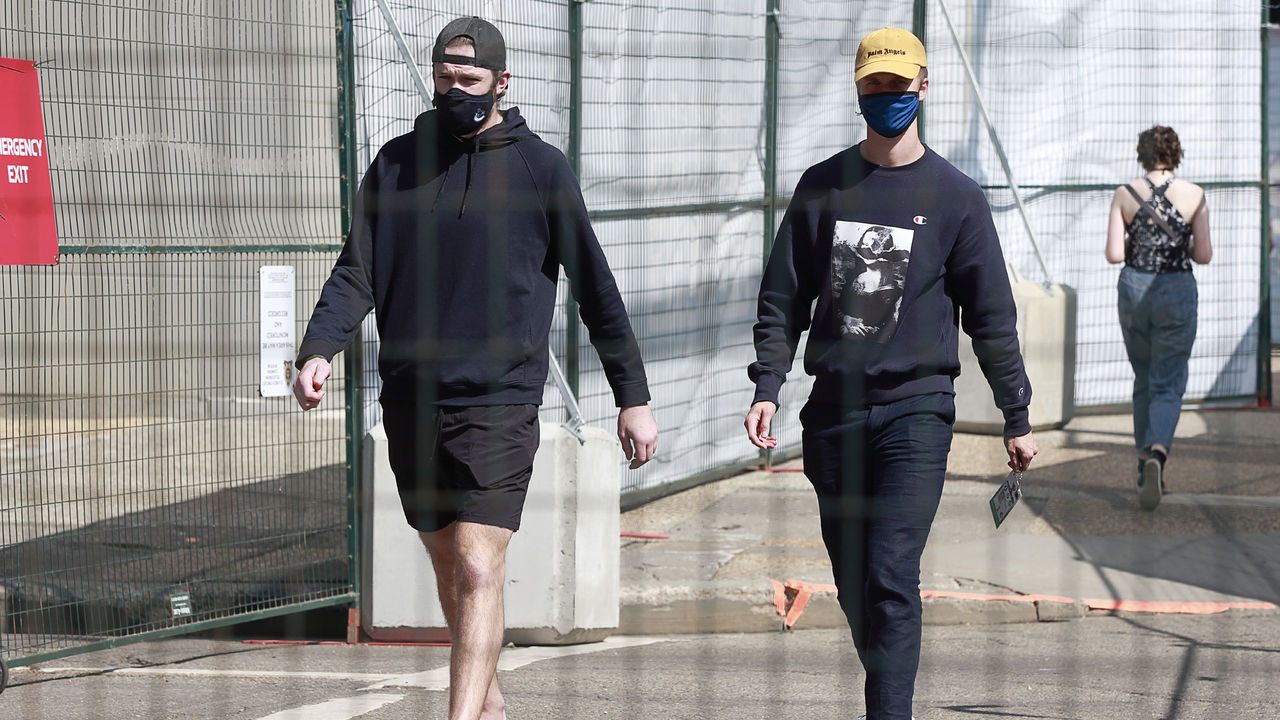
Among the damage was a section of fencing near the Sutton Place, the high-end hotel housing half of the Western Conference playoff teams. Since a downed piece of infrastructure could potentially threaten the integrity of the Edmonton operation, security personnel quickly formed a human fence to stop any intruders. Not long after, the crisis was averted as new fencing was installed.
Jeff Vinnick / Getty Images
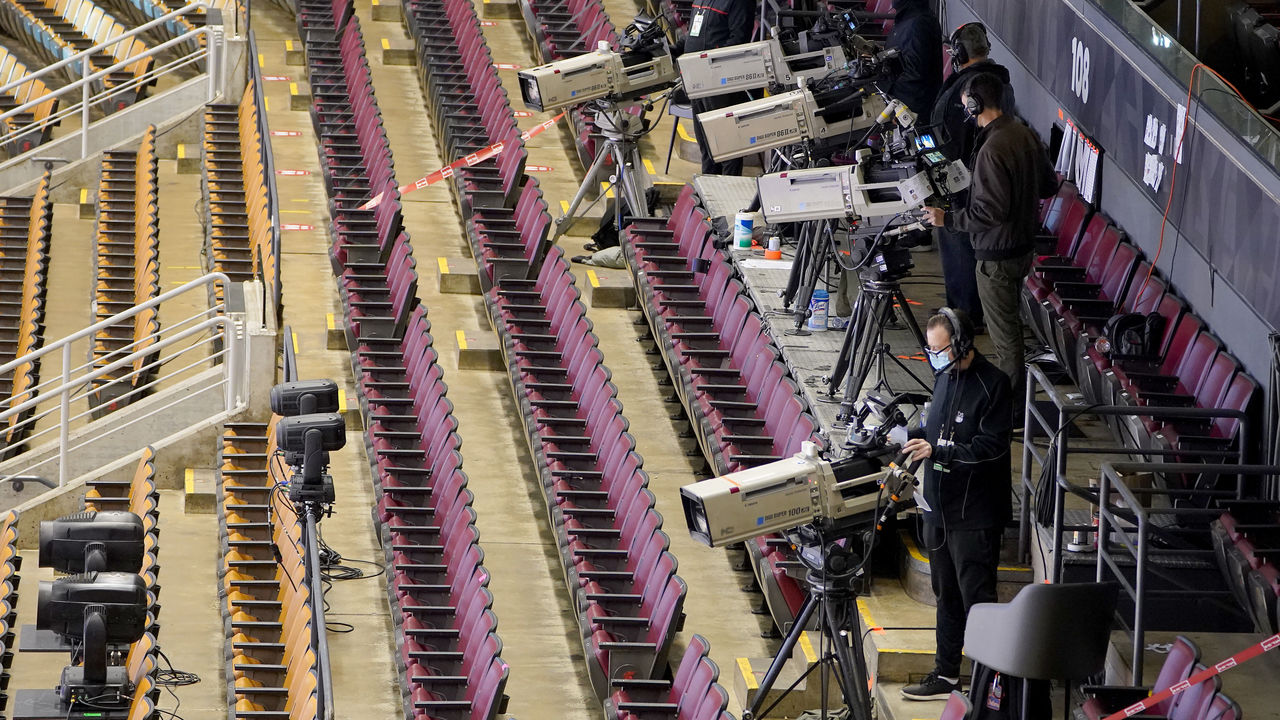
These are the types of problems Steve Mayer, the NHL's chief content officer, is tackling. Somehow, with the Toronto bubble disassembled and the conference finals underway inside Edmonton's Rogers Place, there still hasn't been a single positive case of COVID-19 reported by the NHL following six weeks of frantic activity in both places.
"It's a mini miracle that we've had no positive tests. Sorry, but it is," Mayer said in a phone interview late last week.
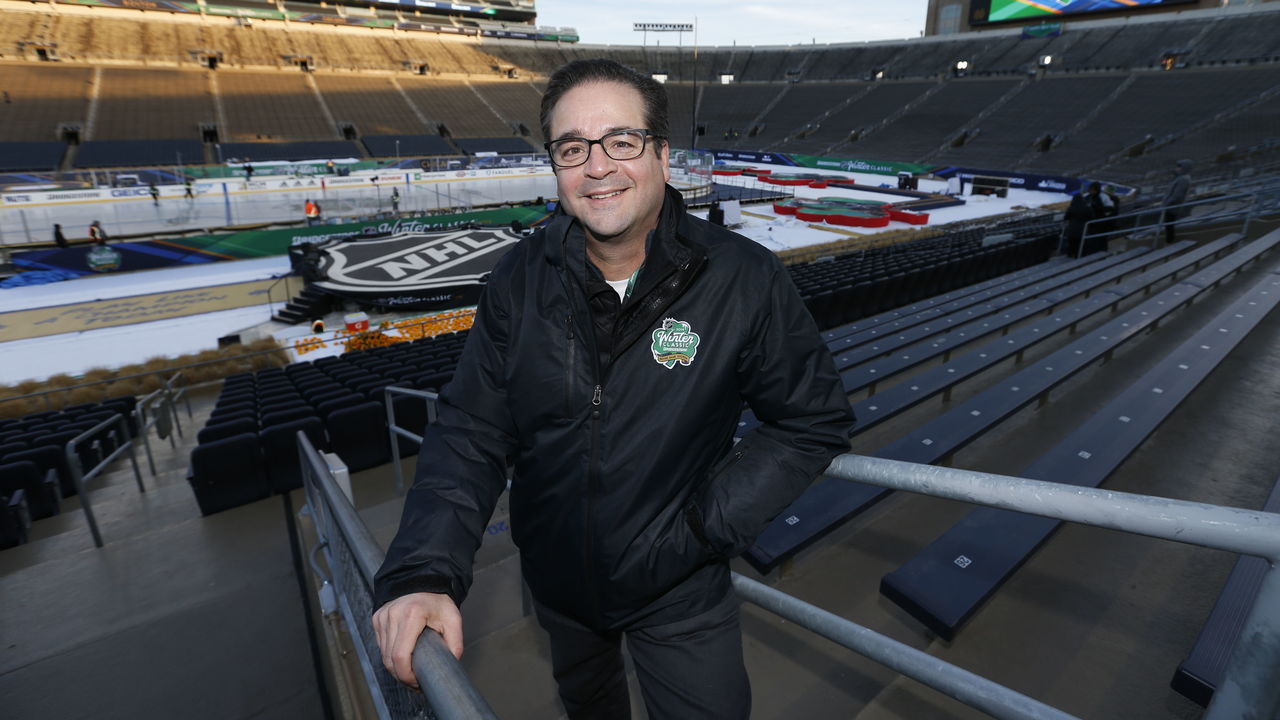
Hired in 2016, Mayer is the NHL's point man for two essential areas of the restart: the development and maintenance of the bubbles, and game presentation. He's also an executive producer for the ESPN+/YouTube docuseries "Quest For The Stanley Cup." It's not a stretch to suggest Mayer - whose last name is appropriately pronounced "mayor" - is on the short list of most influential (and busiest) people involved in the 24-team tournament.
"You know what, I'll sleep in October after the draft. We'll find some time then. You're running on fumes and adrenaline," Mayer joked from Edmonton, where he's been stationed with his team since the middle of July.
theScore chatted with Mayer about what's unfolded behind the scenes during the restart. Below is an abridged version of that conversation.
Eliot J. Schechter / Getty Images
theScore: You're a seasoned vet in the sports and entertainment business. You've seen just about everything over your career. I'm wondering, what has surprised you about this totally unique, unprecedented experience?
Mayer: I never understood how confining this could be. Listen, we all knew we were going to be in a bubble. But when you're in one place for this amount of time, where you can go left, you can go right, but you can't go backwards and forwards, it's tough for everyone.
We've been trying to add things, whether it's something simple like changing a menu or adding a new activity to an outdoor area. We're constantly trying to come up with what, from an experiential standpoint, is going to feel different.
I don't think much surprised me. I felt like we were pretty well prepared and understood what setting up a bubble meant and how it might be perceived. I say this a lot, and I truly mean it: I was nervous that we would set this up and the teams and players - who are used to luxury and going on the road and going to a hotel and owning that hotel and having things at their beck and call - would be tough (to win over), that they're going to be a tough critic.
(But) the No. 1 thing I hear on a daily basis is, 'This is so much better than I thought it would be, thanks.' And so, expectations, for one reason or another, weren't that high. And I think we have done a good job of getting it to the point for everybody where it's a liveable bubble. There's a lot of options. If you were in the greatest resort in the world for this long of time, yeah, it would get to you after a while.
Andre Ringuette / Getty Images
theScore: Is there anything that's been introduced during the restart - the way the game is being presented on TV, the logistics behind the scenes, anything of that nature - that the league could possibly carry over to "normal times" when we're back to the regular flow, look, and feel of the NHL?
Mayer: There are camera angles that are subtle but really effective.
We changed little things that a lot of people might not know but in some ways, in your mind, you'll understand it's better. We've changed the tone of the music. We've gone from classic rock to pop and hip hop a little more.
Some of the ways we're highlighting our stars (is another transferable element) … When Bo Horvat has a giant picture of himself and his name in lights, that goes a long way in developing star players. Those are things that I think we will push when we come back to fans. How do we keep that momentum going and that presentation going in some form, even in arenas that are filled?
Mark Blinch / Getty Images
theScore: Why do you think it took the bubble environment for that to happen? Was it simply a matter of wanting to fill those giant sideline screens with something? What was the train of thought in pumping up the stars more?
Mayer: We've heard the criticism. We have a sport that's team over individual. We looked at this as an opportunity since the focus is so on the players, on the games, where we could highlight the guys on that ice and really start to develop these star players. That was one vehicle we knew would be effective.
We're a very local, regional sport in many ways, and we want people in New York to tune into Vegas-Vancouver because they now know all of the players, they're familiar with the guys, they know the names, and they want to watch Vancouver with Horvat and (Quinn) Hughes and (Elias) Pettersson. That's the goal.
We've found this was an amazing opportunity, given how many games we were playing in such a short period of time and how we were presenting the game as a television show and not as a fan-facing, in-arena event. We had this wonderful opportunity to build stars, so it is something we've focused on heavily from Day 1 of this tournament. We think it's going well and we think that certain players have emerged as the next wave of stars in the NHL and we're hoping we're just beginning the promotion of those players.
Jeff Vinnick / Getty Images
theScore: On the flip side, what's something you and your team won't be doing ever again? Maybe something you didn't quite hit out of the park and are looking forward to retiring after this postseason wraps?
Mayer: No more bubbles! I don't want to do a bubble again! I'm done with bubbles! Ah, no, I'm joking. Well, we may have to do a bubble again, who knows …
Would I have liked to have been able to get people out of the (secure zones) we're in and outside to do things that are unique but controlled? (Yes), I'd like to do that a little more. It's been very, very difficult to get approvals. Because things are going so well, we've been very averse to risk, and so have the governments in Alberta and Ontario.
We get beat up by players a bit, (who say), 'I want to play golf, I want to do this.' And it's just been very, very difficult to get approvals … I'm just trying to think out loud. The players want movies, for instance, and we had a real movie theater in Toronto but we didn't have one in Edmonton. Would I make sure we did it the next time around? Sure.
And these are things we just didn't realize. We had a player committee that we engaged with in the days and the weeks leading up to here. But until you're in the bubble, you don't understand what the players want to do, what their interests are, what makes them happy, what makes them not happy.
There are things that aren't perfect. They're not. At the same time, there isn't anything here where I'm like, 'Wow, that's embarrassing, we should never have done that.' I just think we could have expanded on certain things or added certain things if we had the right amount of time. Or, we could really have been a little more choicey - I don't even know if that's a word - on where we went. We went to the safest place, period, and we said we're going to make this work. Period.
I truly believe this is the absolute, one-million-percent way that it should be done for all businesses, for schools. It works. We feel very safe. Every one of us here in the bubble, we're tested every day, we've followed protocol, we wear masks, we social distance, and no one complains. Everybody has bought in. Players, staff, coaches.
At the end of the day, I think what we're most proud of - and we're not done, we have so much more to go, close to 30 days - is that we all see the end of the tunnel and we don't let up and everybody is in the same boat.
Elsa / Getty Images
theScore: The game operations crew has dropped a few jokes on the in-arena screens, thrown hats on the ice following a hat trick. How important has it been to break the tension, keep a sense of humor through all of this?
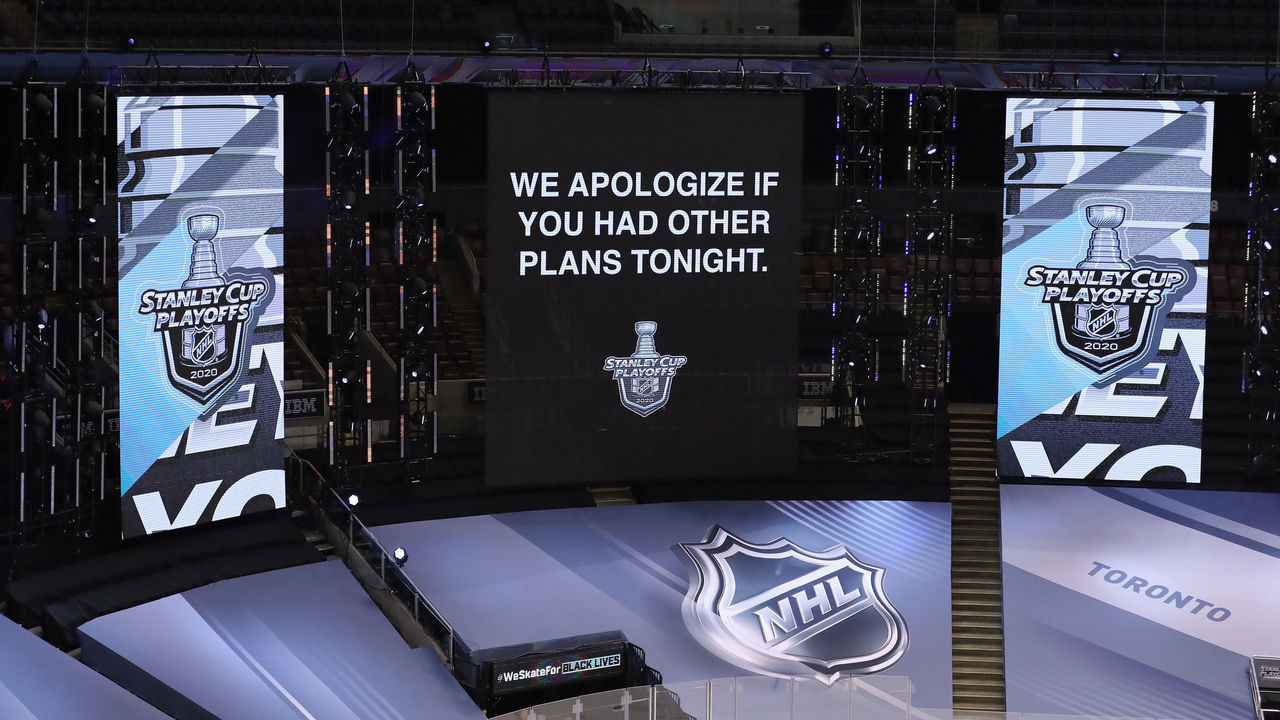
Mayer: We are of the mindset that you can't always take it so seriously. You've got to have some fun with it. The 'Tonight's Attendance: 0' (on-screen joke) was the first one we did. I have to admit, many of them come from my crazy, dad-joke mind.
One of the misconceptions of the NHL is that we're just too serious, the No Humor League. I say just the opposite. If you watch our awards show, if you watch a lot of the things that we've done over the course of the last few years, there are plenty of opportunities where we either poke fun at ourselves - like Chance The Rapper, Lazlo Holmes, did - or just have some fun. We're not afraid to do that and we think it's fine.
We have about 10 more (jokes) lined up and ready to go, including noise meters, kiss cams, and 'This Date In NHL History' - obviously we've never played games at this time - to just have fun with all of this. So there's a time and a place, but we're really happy with the response. I think it leads to us having a lot more fun in the future with our content and our presentation and being OK with that.
Andre Ringuette / Getty Images
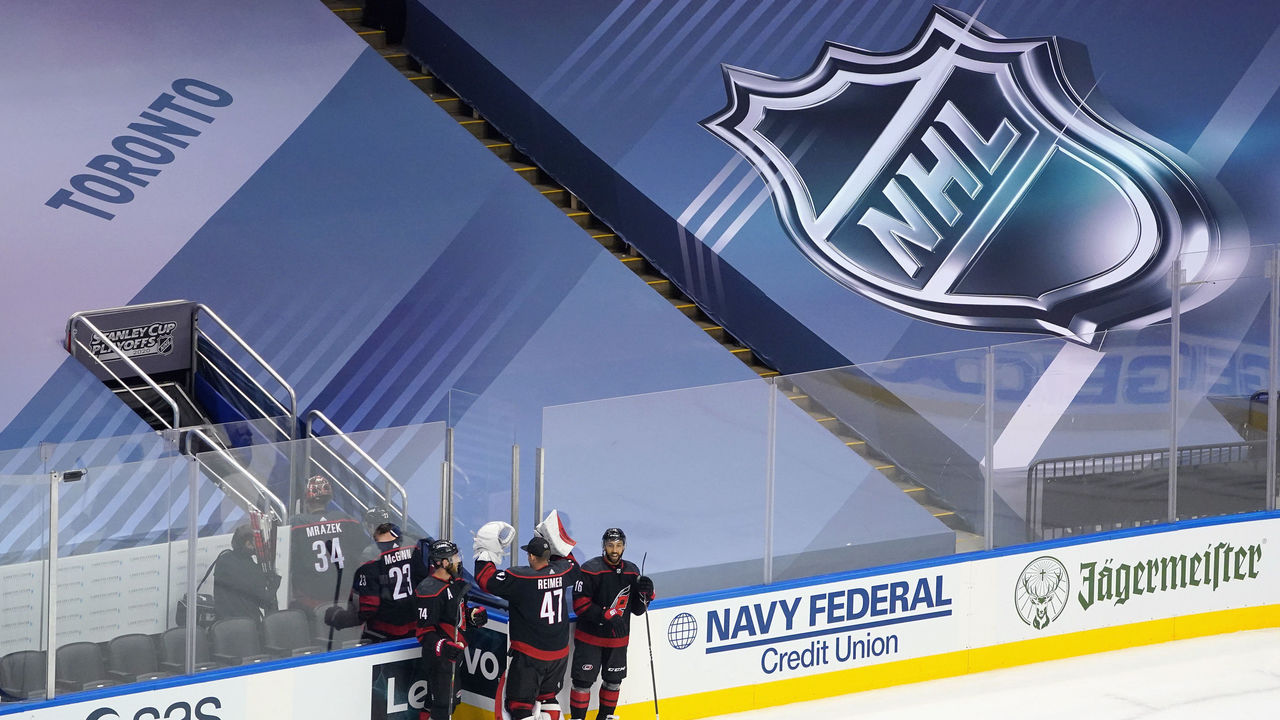
theScore: Given the tight schedule of putting this whole thing together, how much time and energy was spent on the little details? Say, the diagonal lines on the tarps that are covering the lower-bowl seats. Were the lines a big discussion within the NHL offices or was it a quick sign-off? How much did you care about that stuff?
Mayer: To know how I operate and how our team operates is to know how detail-oriented we are. The difference between this (tournament) and, say, one of our outdoor games was the timeline. Talk about not sleeping. We worked around the clock. I have the best team in the entire world. We made quick decisions. We had to. There was no other choice.
It was like, 'We're getting on a Zoom call. We're going to leave this call and this is what we're going to do.' We didn't have the luxury of going back and forth 10 times. I have to admit, we're pretty proud to have made some good decisions.
With the seat covers, we understood clearly that we had to go to a neutral color so you could pick up the puck and the goalie wouldn't be (distracted). Knowing that, we knew that on television there needed to be something, those lines, that gave it a little more feeling, a little more depth so it wasn't just plain light blue or grey.
Knowing we were going to come back in this environment (amid a pandemic and with no fans), I knew that I wanted to do something that was a television set. We were working on that for a while. It didn't matter where we went, we knew that was going to be the design. But all of these decisions, everything that we've done, we just made them quickly. We've trusted everybody on our team to lean on their experience and just go for it. We've been right more than we've been wrong, but I think the amount of experience we all have has led to being able to put this together as quickly as we have.
Dave Sandford / Getty Images
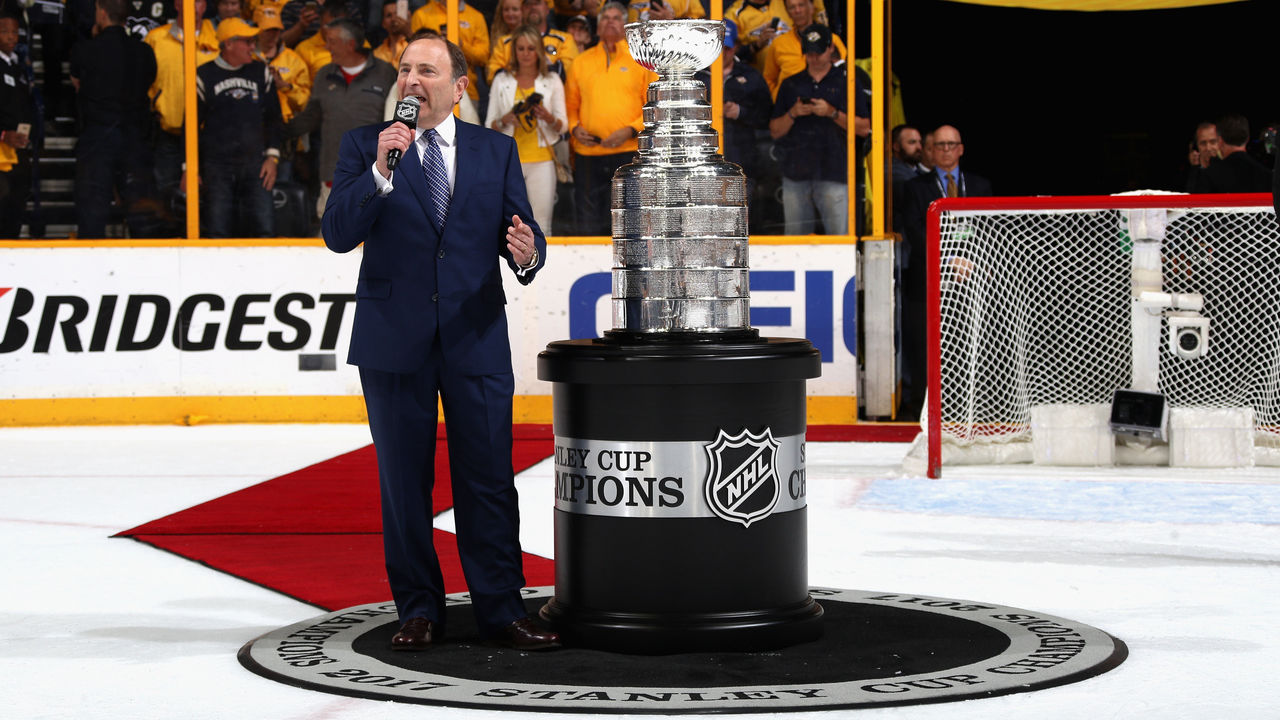
theScore: Lastly, it's my duty as a representative for hockey fans everywhere to follow up on an important matter: What's the latest on Gary Bettman getting the boo-bird treatment during the Stanley Cup trophy presentation?
Mayer: There's been a lot that's happened over the past six months. A lot. I cannot say enough unbelievable things about our commissioner and what he's done and how he's led all of us to this position that we're in, where we're less than a month away from handing out the Cup. I actually believe - and this is me - public sentiment has gone from booing to potentially cheering. If there's ever a year to stop the booing, it could be this year, with all that's happened and the fact that we've come back and we're all safe. In a minor miracle, we're so close to getting to that position where he hands the Cup to the captain of the winning team.
We have a sound effect (to pipe in through the speakers), we have a booing sound effect, we do. I hope we don't use it. But, if he wants to keep up the humor, hey, listen, we can play along. Right now, there are no plans to use it. In fact, you'll hear a lot of crying and emotion because when we get to that moment, I think that's where my team will become very emotional, for all that we've gone through and all of the sacrifices that they've made to be away from their families and how hard they've worked. That'll be a very emotional time for everyone here in the bubble.