Tag Archives: Hockey
How these player protests stack up historically and why they matter
About 24 hours after the Milwaukee Bucks didn't take the court in the NBA playoff bubble, Kenneth Shropshire got to thinking about the sports world's mass boycott of apartheid South Africa, the biggest mobilization of activist athletes in history. The segregated nation was barred for decades from international competition, including the 1968 Summer Olympics in Mexico City, where U.S. sprint medalists John Carlos and Tommie Smith each raised a fist in support of human rights.
Shropshire, a distinguished professor of global sport at Arizona State University, brought up 1968 to make a point: even that worldwide action didn't cascade quite like the Bucks' refusal to play Wednesday.
The players were protesting the latest exhibition of American police violence against Black people: the shooting of 29-year-old Jacob Blake in Kenosha, Wisconsin, last weekend, which followed the killings of George Floyd, Breonna Taylor, and so many others. The NBA's entire active playing corps soon sat out in turn. So did the WNBA's whole bubble, MLB and MLS clubs, and tennis star Naomi Osaka, scrubbing multiple days' worth of matchups across the sporting spectrum.
"It's going to be at the top of the list of athlete activism in the history of man," Shropshire said of the sit-outs. "The Olympic protest in 1968, and Muhammad Ali, and Colin Kaepernick - all those individually were something. This (was momentous) in terms of the snowball effect."
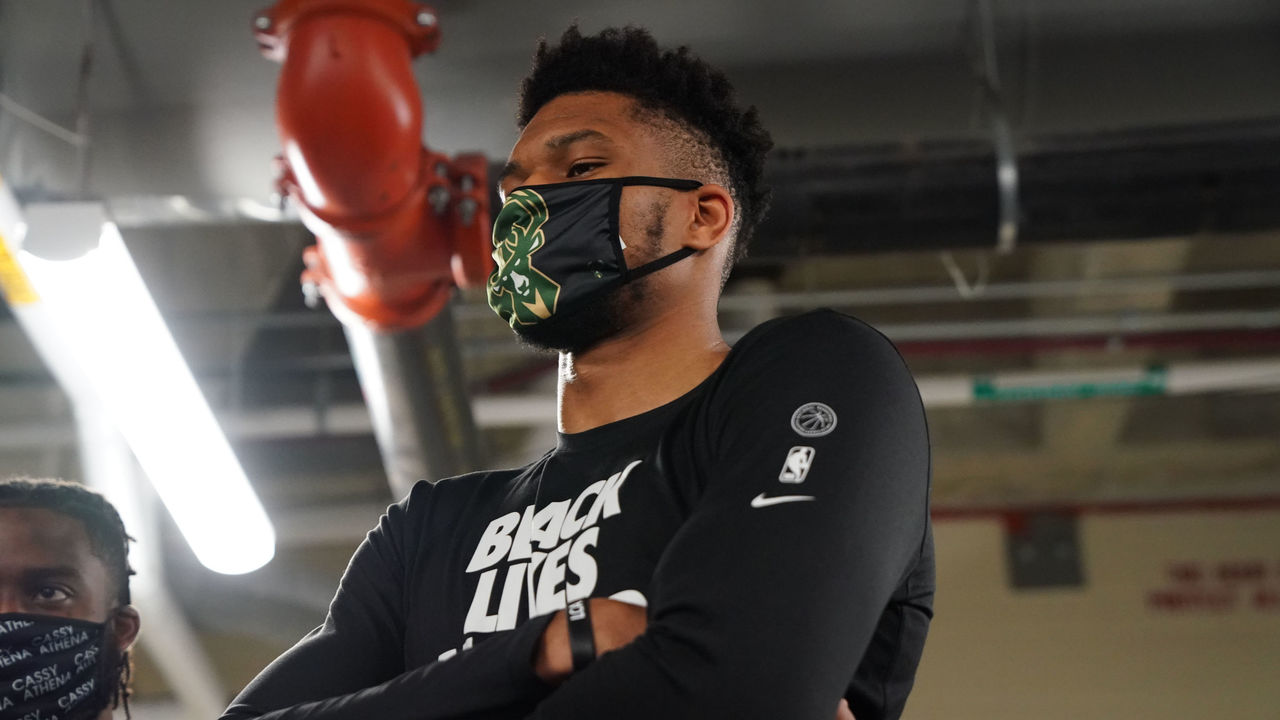
As several NFL teams canceled practice and NHL players forced their league to postpone playoff games Thursday, theScore spoke with four race and sports scholars about the significance of the sit-outs, the power this form of protest confers, and the rich legacy of Black athletes taking stands against racism. The scholars are:
Akilah Carter-Francique, professor of African American history at San Jose State University and the executive director of the school's Institute for the Study of Sport, Society, and Social Change.
Louis Moore, associate professor of history at Grand Valley State University and the author of the 2017 book "We Will Win the Day: The Civil Rights Movement, the Black Athlete, and the Quest for Equality."
Theresa Runstedtler, professor of African American history at American University and the author of a forthcoming book on how Black players transformed pro basketball on and off the court in the 1970s.
Shropshire, who wrote the 1996 book "In Black and White: Race and Sports in America."
Their thoughts, shared in separate phone conversations, have been condensed and edited for clarity.
How will Aug. 26, 2020, be remembered? When you think about sports and what athletes have done to oppose anti-Black racism, how momentous a day was it?
Carter-Francique: I think it will be a day that we remember as a day of solidarity. We have the collective efforts of these professional athletes, men and women, using their platform to speak for the voiceless. They've come together to speak out for social justice, for the lives lost due to police violence and police brutality.
Moore: It's huge because we were all watching. Everybody was tuned in and everybody was talking about it. It's not the first (athlete) strike, or however you want to say it. Unfortunately, we've forgotten a lot of those, outside of maybe the Olympic Project for Human Rights in 1967-68.
The way memory works now, people are going to remember not necessarily that it was Aug. 26, but that time the Bucks had a strike or a boycott. And then what followed next: MLB, WNBA, tennis, even the NHL.
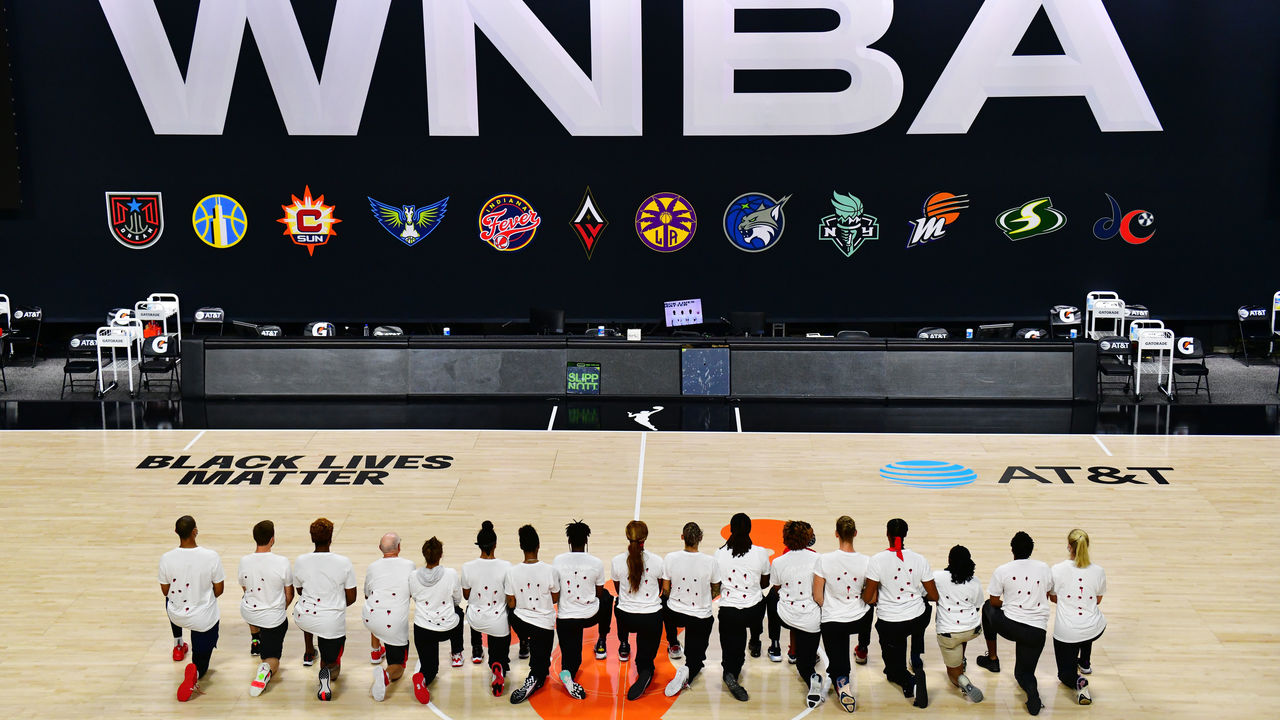
This all started not with the NBA, but in the NBA, with Bucks players opting not to play Wednesday after the Raptors and Celtics discussed doing that for Thursday's game. What does that say about these players and the NBA's workforce generally - that they took the initiative to sit out?
Runstedtler: The league has to actually listen to them. The NBA having this image as being a "woke" league, it's a consequence of the players having a certain degree of power in order to make it woke. It's not just the benevolence of the team owners and NBA administrators. The players are driving it.
Shropshire: (In the NFL in recent years), there were real and believed banishments of players because of their involvement in social activism. That hasn't, in this recent time, happened with players in the NBA. They've been able to speak freely without even the shrouded version of, "How did this person end up not in the league anymore?"
Part of that is the superstar status that led the way: LeBron James, in an unprecedented way, being by many calculations the best player in the league, speaking out in the way that he has.
Moore: You think of (Fred) VanVleet. He's known, because he's a hustler, but he's not a super-duper star. I think that's big. (He's) very good, by the way, for Canadian folks, but an average player in the NBA was able to say something that gets the ball rolling. And then, boom, the Bucks did what they had to do.
Fred VanVleet today pic.twitter.com/yqtGMFsZrI
— James Herbert (@outsidethenba) August 25, 2020
Outside of the NBA, WNBA players, from Maya Moore on down the line, have long been at the forefront of social activism. MLB and MLS players and Naomi Osaka followed the Bucks' lead by sitting out in solidarity. What message is sent when athletes across sports decline to compete?
Shropshire: That's the part that's truly unique. It resonates with the old adage: There's strength in numbers.
Wherever there is some fragility - "Is my job in danger if I do this?" - the idea of initially an entire team and then an entire league joining in makes it much more powerful and provides greater leverage for changes that they seek. That it catapulted into other leagues, that's the amazing thing of the day: how rapidly it spread.
Carter-Francique: Black bodies have been used as labor and entertainment for so long. Sport, much like movies, often provides a space of escapism. The push to get those players to play and to participate (in the resumption of sports) was part of that urge. But in that same vein, as Black entertainers, this is the platform they have to present themselves and share their voice.
(What they're voicing now) is something very special. It's not just one voice or one athlete or two athletes, as we think of Tommie Smith and John Carlos having that historical 1968 stand. Today we have this collective voice to support the voices of others who are also doing the work: legislators, educators, those who are promoting diversity, equity, and inclusion.
Moore: You can talk and talk and talk, but now, it's like, "We're going to withdraw our labor," at a time when (the leagues) are banking on it to make back the money that they lost. Moving forward, anytime something like this comes up, the owners are going to have to listen. The next step is not just, "Oh, we want to wear T-shirts." It's, "Oh, we might not play tonight."
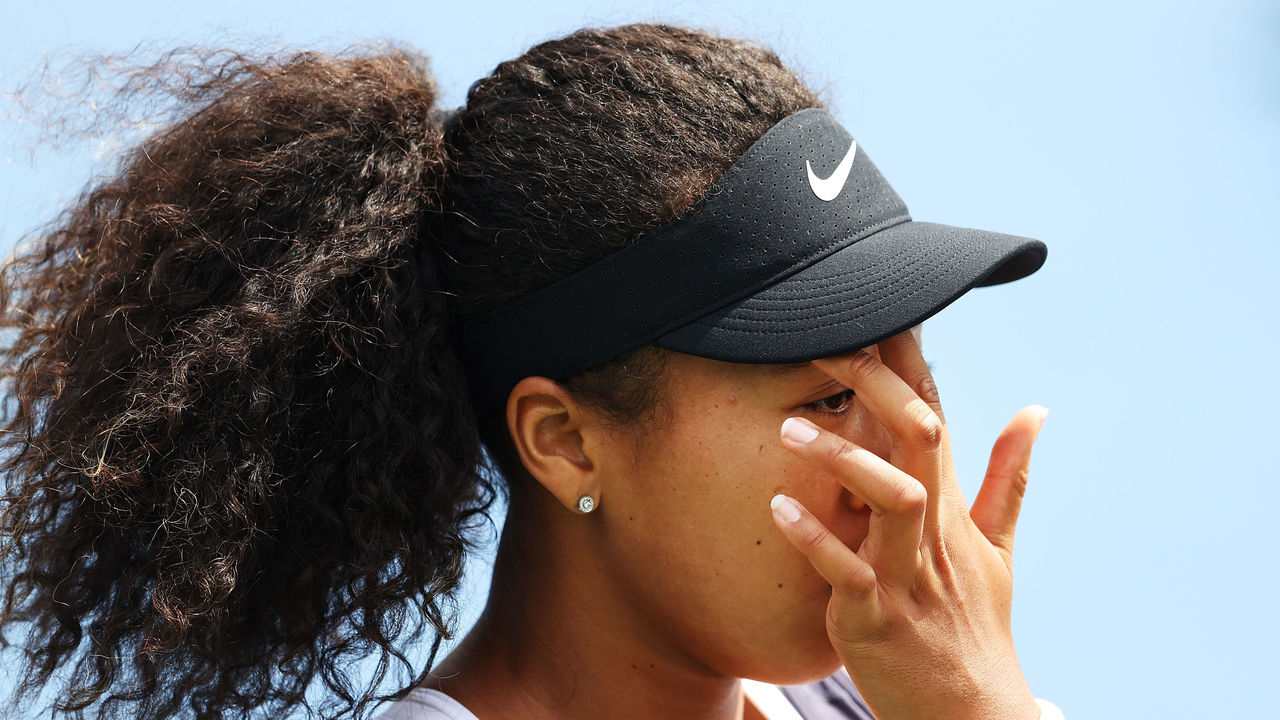
If play resumes in each sport after a couple of days, what impact do you think the players' actions will have? Who needs to step up and what needs to happen from here for their sit-out to set in motion the change they desire?
Runstedtler: That's the million-dollar question. It's symbolic, in some ways: they're withholding their labor to make a point that, "We are not going to be entertaining America and pretending that everything is OK while, literally, people are being shot in the streets."
What is the connection between that and the kind of policy change that we need? I'm not entirely sure. But I do think that athletes have a certain level of cultural and social capital. If they are willing to take a stand very visibly in the media, it adds emphasis to whatever is happening out in the street. It adds to this sense of urgency - that things need to start changing.
Carter-Francique: The opportunity to have this pause is really good. It's an opportunity for athletes to sit and be at the table with the owners and the GMs. That's a rarity. They can work together - (with) the NBA and WNBA already promoting some of these social justice initiatives and symbolism - to begin to move forward with actionable items.
I have to commend the WNBA and their statement: talking about voting, pushing the agenda of voting in 2020, or calling your legislators and making your voice heard in the census report. Athletes, coaches, sponsors, all those that are involved, (need) to find ways they can contribute to push the needle forward when we talk about social justice and social change.
Center @E_Williams_1 reads statement on @espn as the representative for all @WNBA players. Tonight's games have been cancelled. pic.twitter.com/xDz4uCQSiD
— Atlanta Dream (@AtlantaDream) August 26, 2020
In the wake of George Floyd's death and again this week, a lot of NBA players wrestled with the decision to resume the season during this reckoning over racism and police brutality. On Wednesday, of course, they were in the bubble when they made the call to halt play. What leverage or power does that setting - the platform of this bubbled postseason - give them?
Shropshire: It's like a convention. They're all in one place. They're all right there and have the opportunity to work together.
Runstedtler: If there's any situation that's going to facilitate action on the part of all of the players in the league, it's that. Having them all together in that one space and seeing more Black trauma and Black death, and they're all there together in isolation, only compounds the sense of urgency to do something and the ability to organize and get everybody on the same page.
Moore: It's a lot easier to speak about these things than to text about these things. The communication for them is clear.
They're a unified force. That's a significant chunk of players who are still there willing to put their reputations on the line to fight for justice. Being there gives them some power still.
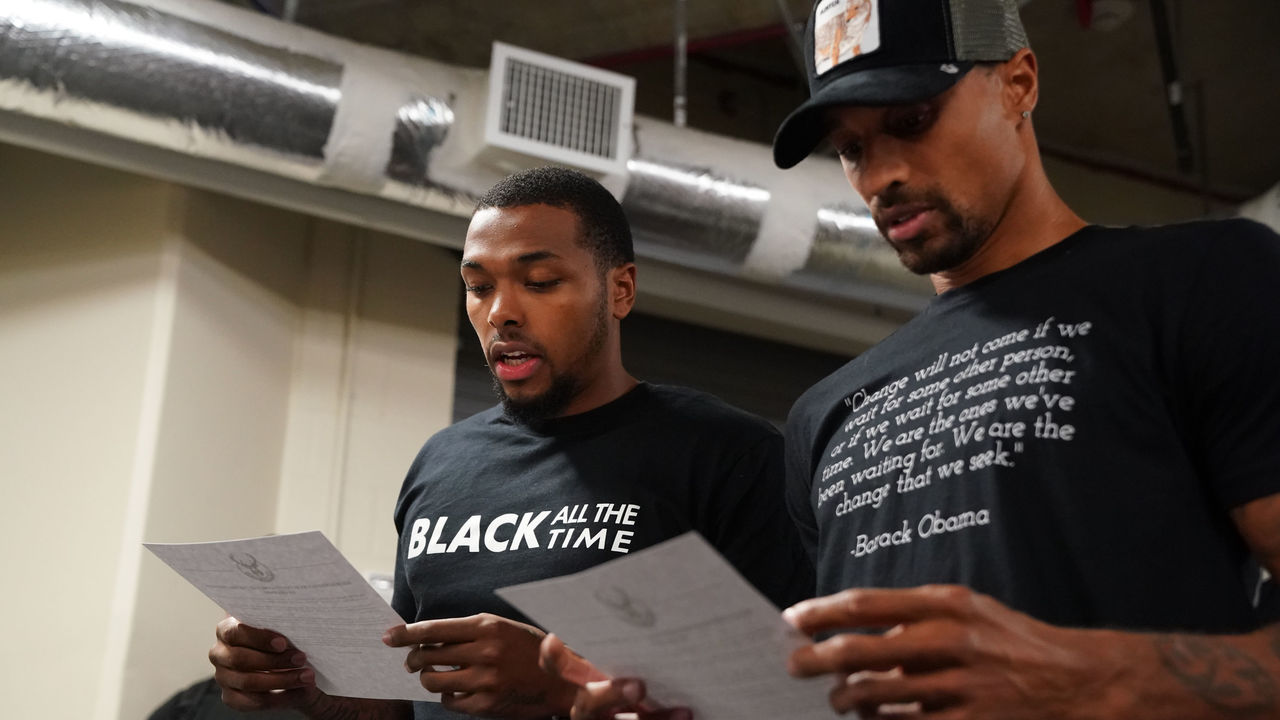
Louis, you spotlighted on Twitter on Wednesday the history of police brutalizing Black athletes, from Jack Johnson and Jackie Robinson all the way to the Bucks' Sterling Brown by Milwaukee police in 2018. How do you think that history, both distant and recent - personal, even - shaped what players have done this week?
Moore: I'm not sure if they know that history. They knew Sterling Brown and what some players have been through. But one thing I guarantee they know is people in their communities. Policing, for a lot of these guys, is always present in their lives. I think what they realize, especially with someone like Sterling Brown, is that you can never escape it.
It doesn't matter how famous you are. If we look at police protests in America, it always starts over just some guy. The way these things work is it doesn't really matter who that guy is. It's the realization among Black folks that that could be them at any time.
There's a rich history of Black athletes taking initiative to sit out of competitions or to protest racial injustice in other forms. When you were processing Wednesday's events, did you get to thinking about any particular retired athlete who took such a stand? What does their story say about what's happening now?
Moore: Specifically for the NBA, it's Bill Russell. He was part of the boycott in 1961 among Black basketball players for the Celtics and the Hawks. It's the last time you saw this in the NBA.
In general, you have somebody like Jackie Robinson, who spoke out against police brutality a number of times. The first time you see it publicly is in front of Congress in 1949.
Jackie's Mount Rushmore, and Bill's up there, too. These are major athletes who have been involved in a boycott and/or (opposing) police brutality. My job, (on Twitter), I always try to quickly give that context: here's the history of this that we should know. Jackie and Bill always come up.
In 61 I walked out if an exhibition game much like the @nba players did yesterday. I am one of the few people that knows what it felt like to make such an important decision. I am so proud of these young guys. It reminded me of this Pls RT @MSNBC @CNN pic.twitter.com/70VAIFxhtf
— TheBillRussell (@RealBillRussell) August 27, 2020
Runstedtler: Kareem Abdul-Jabbar. He was a Buck for many years, but even before that, one thing he decided when it was time for Team USA to be put together for the '68 Olympics - he chose not to be part of that at all. He went back home and did some community work. When they interviewed him after the fact, he basically said, "I can't compete for a country that's not mine. There's too much injustice in the U.S. for me to participate."
The fact the players were able to (sit out this week) so quickly and so forcefully, and in large part have been supported by the teams, owners, and also their fans, is a testament to the shifting terrain of professional sports and how much more power Black players actually do have in this moment to go off script - to not just, quote-unquote, shut up and play.
Shropshire: The four people I always think of are John Carlos, Tommie Smith, Peter Norman, and Muhammad Ali, all in that one space and what they had to suffer after the fact to allow these athletes today to do what they do. Jack Johnson, the first Black heavyweight champion, and Joe Louis were transitional figures.
The one I think is undercovered as having taken courageous steps, when he delivered a letter (about) the plight of Black Americans when the Chicago Bulls went to the White House after winning a championship: Craig Hodges, who was a great 3-point shooter and who many say as a result of his political activism, before Kaepernick, was not able to get a job in the NBA after he took his political stance.
It's people like that. It is Hodges. It is certainly Kaepernick. It's those people who came before those who are doing the heavy lifting today.
Carter-Francique: Here at San Jose State, we think immediately of (SJSU alumni) Tommie Smith and John Carlos, but even those during the '68 time period who chose not to go to the Olympic Games.
There are multiple ways to address such a complex issue, just as there's multiple ways to address social change. Whether it be through demonstration and boycott, whether it be through education, whether it be through legislation, or using your social media platform, we've got to really embrace that and understand that all actions, all efforts to be on the right side of history, are important.
We have to use all of our energies, efforts, and resources to combat this issue of racism.
Nick Faris is a features writer at theScore.
Copyright © 2020 Score Media Ventures Inc. All rights reserved. Certain content reproduced under license.
NHL Morning Coffee Headlines – August 28, 2020
Coyotes working to turn Gila River Arena into polling station for election
The Arizona Coyotes are taking action in the fight against racial injustice.
"We are committed to being a part of the solution to drive positive change and are working with the City of Glendale to make Gila River Arena a polling station for the 2020 election," the club said in a statement Thursday night.
The Coyotes added their full support of NHL players and the Hockey Diversity Alliance, and the team embraces their "responsibility to all communities of color to not stay silent."
NHL players, in partnership with the HDA, drove the league to postpone its games through Friday in response to similar actions taken by players in several leagues, including the NBA, WNBA, and MLB. The Milwaukee Bucks started the historic movement following the police shooting of Jacob Blake in Kenosha, Wisconsin.
Voter suppression, which often includes the elimination of polling stations, has disproportionately affected Black and other minority voters, according to the ACLU.
Last year, the Leadership Conference on Civil and Human Rights found southern U.S. states have closed nearly 1,200 polling places since 2013 after the Supreme Court struck down part of the Voting Rights Act, according to Reuters' Andy Sullivan.
LeBron James and the Los Angeles Dodgers also partnered recently to create a polling place at Dodger Stadium for the upcoming federal election.
Copyright © 2020 Score Media Ventures Inc. All rights reserved. Certain content reproduced under license.
Report: NHL games expected to be postponed through Friday
One day after an NBA player-led walkout forced the league to postpone games and led to other leagues doing the same in response to the police shooting of Jacob Blake, the NHL appears to be following suit.
The NHL is expected to postpone games through Friday, with all eight remaining teams affected, reports TSN's Darren Dreger, who adds that the league is finalizing Saturday's schedule.
On Thursday night, the New York Islanders were scheduled to play the Philadelphia Flyers in Game 3 of their second-round series, followed by Game 3 between the the Vancouver Canucks and the Vegas Golden Knights. On Friday evening, the Boston Bruins and Tampa Bay Lightning were scheduled to play Game 4 of their matchup, which was to be followed by Game 4 between the Colorado Avalanche and Dallas Stars.
More to come.
Copyright © 2020 Score Media Ventures Inc. All rights reserved. Certain content reproduced under license.
Report: NHL players being told to prepare for cancellations
The NHL may join the NBA and other leagues in postponing play to protest racial injustice, as players are being told to prepare for game cancellations Thursday, reports Sportsnet's Elliotte Friedman.
Players in at least one dressing room have voted to not play their game Thursday, according to TSN's Frank Seravalli.
The Hockey Diversity Alliance, led by Evander Kane and Akim Aliu, asked the league to suspend play Thursday.
Over 100 players in the Edmonton and Toronto bubbles had a phone conversation with Kane and Matt Dumba (another HDA member) Thursday, according to TSN's Pierre LeBrun.
There are two NHL playoff games scheduled for Thursday. The New York Islanders are set to face the Philadelphia Flyers in Game 3 of their second-round series at 7 p.m. ET, while the Vegas Golden Knights and Vancouver Canucks are scheduled to play the third game of their series at 9:45 p.m. ET.
Copyright © 2020 Score Media Ventures Inc. All rights reserved. Certain content reproduced under license.
Hockey Diversity Alliance asks NHL to suspend Thursday’s playoff games
The Hockey Diversity Alliance has made a formal request to the NHL to suspend all Thursday playoff games, group co-head and San Jose Sharks forward Evander Kane announced.
We the @TheOfficialHDA have formally requested the @NHL to suspend all playoff games today. We strongly feel this sends a clear message that human rights take priority over sports.
— Evander Kane (@evanderkane_9) August 27, 2020
There are two NHL playoff games scheduled for Thursday. The New York Islanders are set to face the Philadelphia Flyers in Game 3 of their second-round series at 7 p.m. ET, while the Vegas Golden Knights and Vancouver Canucks are scheduled to play the third game of their series at 9:45 p.m. ET. Both series are tied 1-1.
The NBA suspended all of its postseason games scheduled for Wednesday and has reportedly postponed all tilts scheduled for Thursday. Players from several teams refused to play Wednesday's contests after Rusten Sheskey, a police officer in Kenosha, Wisconsin, shot Jacob Blake, an unarmed Black man, several times in the back during an arrest Sunday. The NBA playoffs will reportedly resume Friday.
A handful of MLB teams also chose not to play Wednesday, though all three NHL playoff games went ahead as scheduled.
Copyright © 2020 Score Media Ventures Inc. All rights reserved. Certain content reproduced under license.
2020 NHL Playoffs: Bruins Need Halak To Be Better Against Lightning
Jonathan Marchessault’s trademark tenacity defines the Golden Knights
Every group of friends has that person who just doesn't shut up. The chatterbox, the one who invites himself or herself into any and all discussions.
For the Vegas Golden Knights, that person is Jonathan Marchessault.
"Marchy is in the middle of every conversation and of every argument that anyone on the team has," head coach Peter DeBoer reported last week, a few days before the 5-foot-9 forward scored the series-opening goal in Round 2 against the Vancouver Canucks.
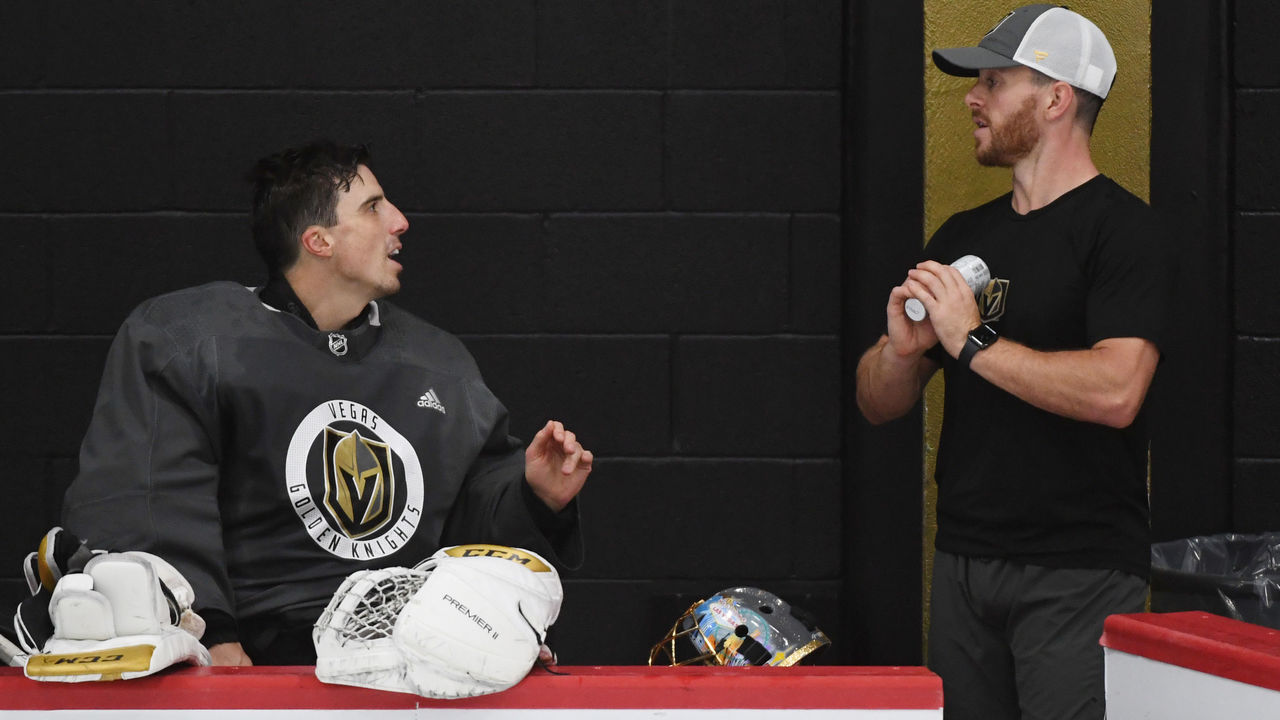
This isn't a newfound social skill for Marchessault, who turns 30 in December. The 30-goal forward rarely kept quiet in his years with the Florida Panthers before they foolishly left him unprotected ahead of the 2017 Vegas expansion draft. He gabbed his way through his first six pro seasons, too, paying his dues for three other clubs - the New York Rangers, Columbus Blue Jackets, and Tampa Bay Lightning - while skating mainly in the AHL.
"When he was sitting by me on the plane playing cards, it was like he was a kid brother," former teammate and retired NHL defenseman Matt Carle recently said by phone, shedding light on the 2015-16 Lightning season, in particular. "You wanted to slap him sometimes. Like, 'Shut up, Marchy!'"
Added Carle, who's six years Marchessault's senior: "I was an older guy at the time, so it was kind of a breath of fresh air that he was himself all the time, not shy - although sometimes you did want to put a muzzle on him."
Others around the hockey world who know Marchessault well offer nearly identical responses to questions about the feisty Quebec City native's place within the team structure. "There's some days where you're tired around the rink and he's just bouncing off the walls, wanting to play pingpong," said Dalton Smith, Marchessault's former roommate and teammate for four seasons split between AHL Springfield and AHL Syracuse. "It's nice. It helps you get out of those funks. You can't help but laugh and be happy as well."
Marchessault's exuberance can get on the nerves of some team members and land him in hot water on social media, as in the case of the incident chronicled Wednesday by the Las Vegas Review-Journal. Marchessault apologized during a press conference later that day, calling his Instagram responses to critics "childish, immature, and not professional."
But his personality can also diffuse tension in the dressing room. As a star talent with a sunny disposition and plenty of confidence, he's one of the rare off-ice "glue guys" - that's DeBoer's label - who's also vitally important on the ice.
"I'm a pretty positive guy," Marchessault said in an interview between the first and second rounds of the postseason. "If I lose a playoff game, the next morning I'll be pissed off. But it's going to go away with the day.
"Life is too short to be frustrated and mad. At midnight, it's always a new day. Everybody should regroup and be positive and keep going with your day, and do whatever you can to be a good person and be a better version of yourself."
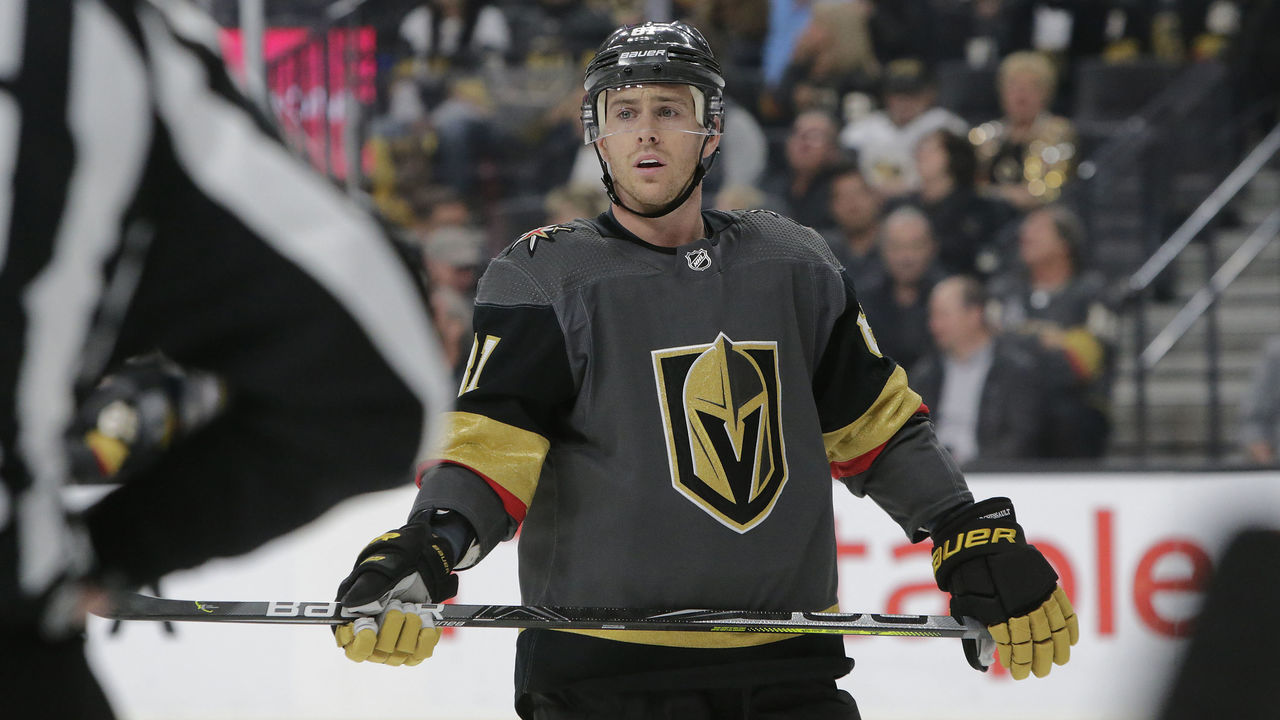
The Golden Knights have experienced a fair amount of turnover since debuting in spectacular fashion three years ago, replacing Gerard Gallant with DeBoer behind the bench in January and changing several names on the roster through signings and trades. Of the 22 players who have appeared in a 2020 playoff game for Vegas, 12 have been with the franchise for the entirety of its existence. Newcomers include key forwards Mark Stone, Max Pacioretty, and Paul Stastny, as well as current No. 1 goalie Robin Lehner.
Despite the changes, the personality of the group has stayed intact thanks to a strong core that includes Marchessault, Marc-Andre Fleury, Nate Schmidt, Shea Theodore, Ryan Reaves, Reilly Smith, and a few others. But no one, not even the affable Fleury, a fan favorite since Day 1, seems to embody the identity of the Golden Knights quite like Marchessault.
He enters Thursday's Game 3 against Vancouver (the series is tied 1-1) as his team's all-time leading scorer, having recorded 216 points in 262 regular-season and playoff games. His playing style, which combines strong skating, shooting, and offensive instincts with a high hockey IQ and attention to detail on the defensive side of the puck, blends perfectly with the way Gallant and now DeBoer have asked the team to play. Underused or underappreciated by four different NHL organizations before arriving in Vegas, he and his journey fit the "Golden Misfit" mold nicely.
Assessing the composition of Vegas' roster, Marchessault's boldest on- and off-ice traits can be found in some form or another elsewhere in the lineup. Fleury boasts the same no-bad-days outlook on life; Schmidt has a similar reputation as a goofball and is a fellow leader of Vegas' so-called "fun committee" within the Edmonton bubble; Stone competes with a comparable inner fire and intensity; Reilly Smith is just as dedicated in his attention to defensive assignments; bruising winger William Carrier also rarely passes up an opportunity to finish a body check.
"We're just trying to show up every night and give everything we've got. He does that," Carrier said of Marchessault. "And, you know what, he actually plays pretty physical. He's got a couple of good hits, and he gets involved."
Marchessault rubbed out Chicago Blackhawks star Patrick Kane in Round 1 and delivered healthy licks on a few Canucks players through the first two games of Round 2, most notably Elias Pettersson in the first period of the opener. In 10 postseason games, he's racked up 27 hits (fourth on the Golden Knights) and eight points (tied for fourth) while averaging 16:23 of ice time a night, his action split between even-strength play and Vegas' power-play opportunities.
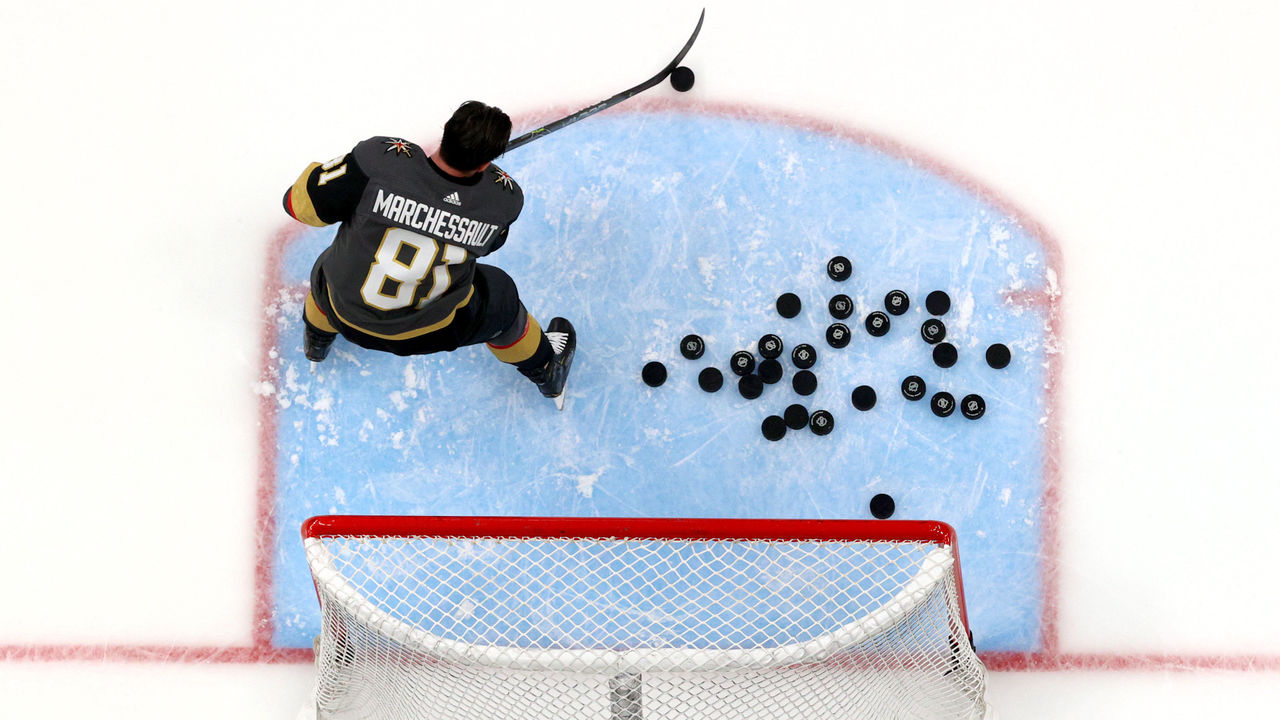
It wasn't that long ago when Marchessault was without a full-time spot on an NHL roster. Heading into the 2015-16 season, Marchessault, then a 24-year-old dad of two with an expiring contract, posed a question to his wife Alexandra: Should we continue here or head overseas to carve out a lengthy career in a top European league?
"We were spending a couple of months at the (Tampa) hotel, and I told her I'm giving myself one more chance to make the NHL," Marchessault said. "That year, the Lightning had three or four injuries up front, so I was able to get a bigger role for them and I started doing well and I made the team." He dressed for 45 NHL games, a career high at that point. There were low moments as a healthy scratch - "there were certainly days when he'd get frustrated," Carle said - but, overall, it was the progress he needed.
It snowballed into a two-year, $1.5-million contract with the Panthers. Then, an injury to Jonathan Huberdeau in October 2016 put Marchessault on a line with two-way master Aleksander Barkov and living legend Jaromir Jagr. He took full advantage, scoring 11 points in the first month of the season and 51 over 75 total games.
"It takes an opportunity, a break, the right timing, the right person, for most players to succeed, you know?" said CAA Hockey's Pat Brisson, who became Marchessault's agent midway through his first season with Florida. "Not everyone is Sidney Crosby or Connor McDavid or Patrick Kane. He's got an amazing story of perseverance and resilience."
Making it that far was an incredible feat considering Marchessault's career almost stalled years earlier in junior, where he butted heads with Hall of Famer Patrick Roy. Marchessault would often come to the rink upset about hockey or something in his personal life. Roy, the owner, general manager, and head coach of the Quebec Remparts, wouldn't tolerate the negativity and entitled attitude. In hindsight, it was both a reality check and a turning point, though Tuesday night's social media outburst showed Marchessault can still struggle to let go of a loss.
"He made my life tough, but he made me realize as well that you have to do everything you can do to be better every day," Marchessault said of Roy. "Life's a grind, so you've got to work every day."
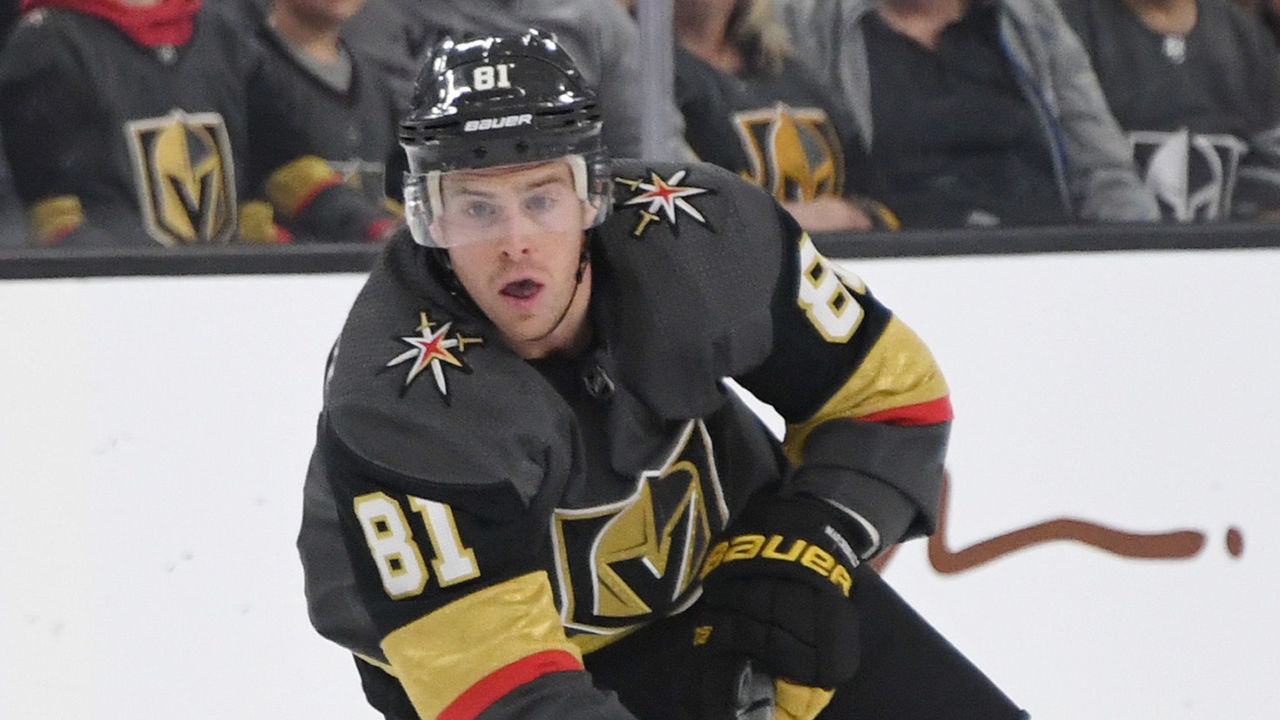
Ten years later, Marchessault finds himself in a bubble in Alberta competing for the Stanley Cup. In the middle of a pandemic, he's about to finish the second season of a six-year deal with the Golden Knights that pays him $5 million a campaign. Alexandra and the kids (the couple now has four little ones) are back in the Vegas suburb of Summerlin, though they may make the trip north if Dad makes the conference finals and health and safety protocols allow for such a visit.
"You talk to them every day and, also as a parent, you miss a lot of things. My 1-year-old started walking and … my two oldest, they started school. It's all stuff that you miss, and it's really unfortunate as a parent to miss those (moments)," he said. "They're asking me how many (days) before they're going to see me. It's hard for me to give them an answer. It could be possible later in the playoffs, but (the current protocol is) not necessarily adequate."
In the meantime, Marchessault is making the most of bubble life after years on the bubble. Vegas' fun committee - tailor-made for a chatterbox like Marchessault - is a welcome distraction as the team tries to navigate a once-in-a-lifetime situation. The talented "glue guy" has never really changed, even as he's settled into his tenure with the Golden Knights.
"He's always got something to say. He's always got a lot of enthusiasm around the rink, loves being at the rink. I feel like he's a perfect guy for it," Vegas forward Nick Cousins said of Marchessault's involvement in the committee. "He always wants to play cards, he always wants to do something. I don't think he can sit in his room for more than five minutes."
John Matisz is theScore's national hockey writer.
Copyright © 2020 Score Media Ventures Inc. All rights reserved. Certain content reproduced under license.