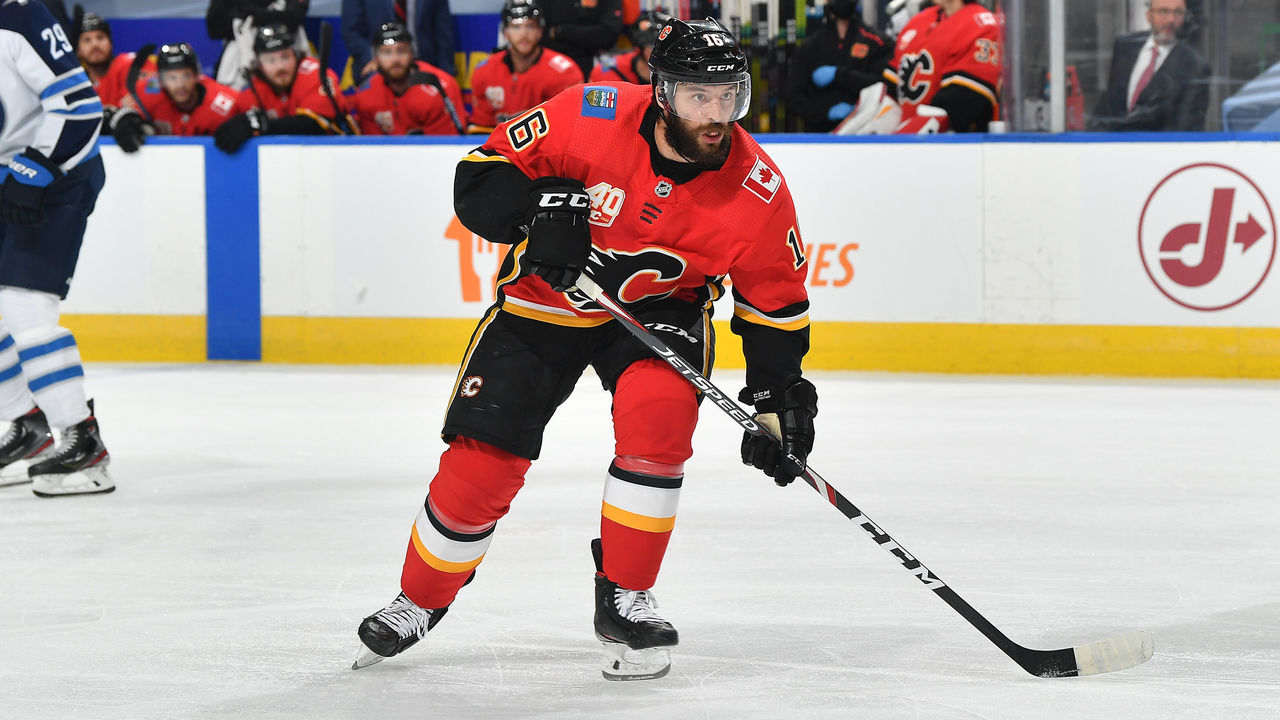
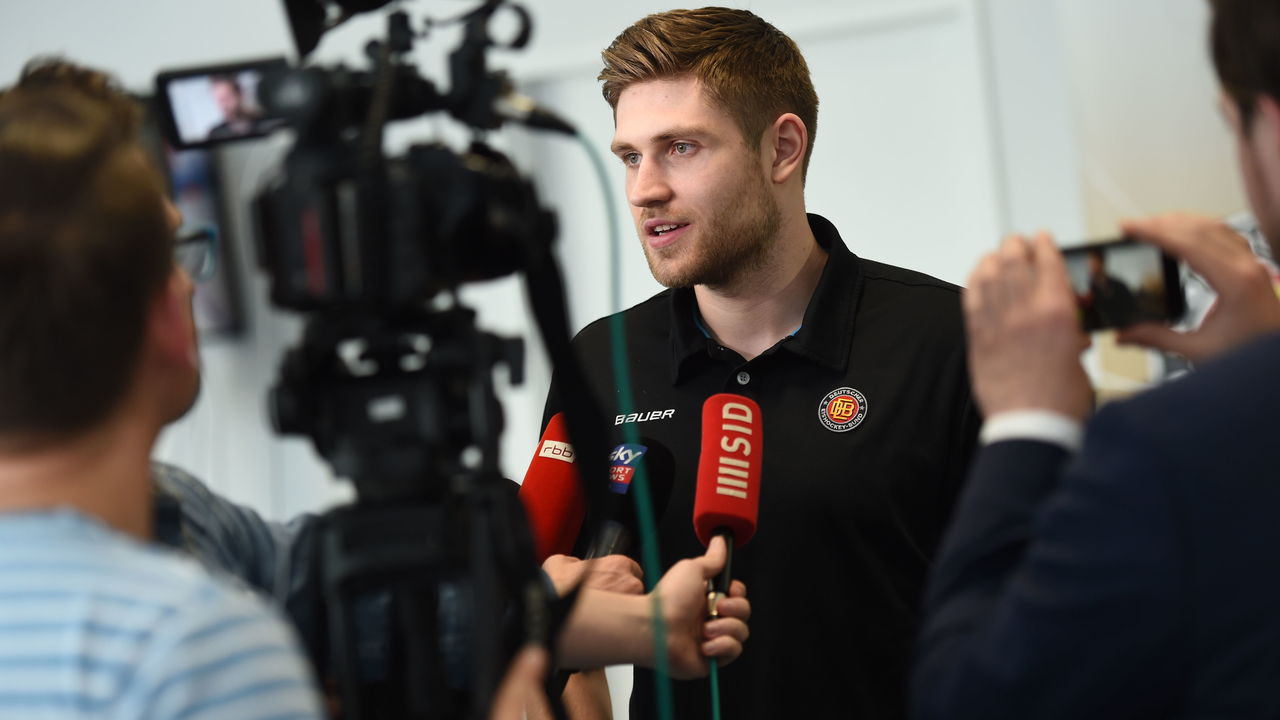
The New York Rangers won the draft lottery Monday night and will get the No. 1 selection in the upcoming 2020 NHL Draft.
The Rangers haven't selected at the top of the draft since 1965 when they drafted Andre Veilleux. They picked Kaapo Kakko with the second overall pick in 2019.
Each team participating was given an equal 12.5% chance to win the lottery. The Rangers finished with the league's 18th-best regular-season record at 37-28-5.
QMJHL phenom Alexis Lafreniere is the consensus projected top pick. He was named CHL Player of the Year in each of the past two seasons after accumulating 72 goals and 217 points in 113 games across both campaigns.
Here's the full order for the first 15 picks in the draft:
Pick
Team
1
Rangers
2
Kings
3
Senators (via Sharks)
4
Red Wings
5
Senators
6
Ducks
7
Devils
8
Sabres
9
Wild
10
Jets
11
Predators
12
Panthers
13
Hurricanes (via Maple Leafs)
14
Oilers
15
Penguins*
*Pittsburgh has seven days to decide whether it will keep the 2020 pick or transfer it to the Wild. Minnesota would get the Penguins' 2021 pick if Pittsburgh keeps its 2020 selection.
The Maple Leafs traded their first-round pick to the Hurricanes along with Patrick Marleau last summer. The pick was top-10 protected, which means Carolina now owns the 2020 selection.
Pittsburgh's pick was sent to the Wild in exchange for Jason Zucker prior to this season's trade deadline. The Penguins now get the choice to keep it because the pick fell between Nos. 1-15.
The 2020 NHL Draft is set to take place Oct. 9-10.
Find line reports, best bets, and subscribe to push notifications in the Betting News section.
The favorites were tough to bet against in our Western Conference preview, but that couldn't be further from the truth in the East, where the chaos factor is off the charts.
Which giants are poised for an early postseason exit?
Philadelphia Flyers (-240) vs. Montreal Canadiens (+195)
This isn't going to be a walk in the park for the Flyers. The Canadiens are an excellent team at five-on-five - they finished third in expected goals percentage this season - whereas Philadelphia is more middle of the road in that regard. The Flyers have more elite talent, but the Habs make up for that in skill.
Nick Suzuki and Jesperi Kotkaniemi give the Canadiens a lot of flexibility down the middle, with Claude Julien able to play around with matchups. The Flyers were a great team during the regular season, but it's going to be tough for them to keep up that level of play against a Montreal side that won't just sit back and let them play with the puck.
Philadelphia is the better team - and has an answer to the Carey Price conundrum in Carter Hart - but this series will be a lot closer than the line suggests, and there's plenty of value in Montreal at this price.
Pick: Canadiens (+195)
Tampa Bay Lightning (-225) vs. Columbus Blue Jackets (+185)
Even without the injured Victor Hedman and Steven Stamkos, the Lightning should be too much for the Blue Jackets. Any offensive, defensive, or goaltending stat flatters Tampa Bay, which has few weaknesses. However, we've seen this before.
The Blue Jackets are a tenacious, physical, and relentless bunch who are completely committed to the cause. Defensively, they have a proven ability to slow elite offenses and the goaltending to match.
Puck luck will have to be on Columbus' side if it's to win this series, though it'll be interesting to see how quickly Tampa Bay can ramp up its intensity following a lackadaisical round robin. The Lighting are the easy choice if you're picking a winner straight up, but I'm not willing to pay -225 to find out if they're ready to exorcise their playoff demons.
Pick: Blue Jackets (+185)
Washington Capitals (-167) vs. New York Islanders (+140)
Barry Trotz leads his Islanders into battle against his former team, which will know exactly what to expect. The Isles have a clear identity: they suppress chances, block a lot of shots, and make teams fight for every inch. They are deep down the middle and on the blue line, which will be a real test for the Capitals' elite forwards, who were quiet during the round robin.
Still, the Capitals are excellent at driving play and keeping possession. They have an abundance of high-end talent who will ensure the bulk of this series is played in the Islanders' end. It's unlikely that Semyon Varlamov, who's largely sheltered by New York's strong defensive play, is capable of stealing the series from Washington.
John Carlson's health will be a major factor, but all signs point to him being ready for Game 1, in which case Washington - provided Braden Holtby is solid enough between the pipes - will outlast the Islanders in a tight series.
Pick: Capitals (-167)
Boston Bruins (-137) vs. Carolina Hurricanes (+116)
This is going to be a ton of fun. The Bruins are a strong defensive team with talent up front and stellar goaltending. The Hurricanes are an elite offensive team with a stacked blue line that will include Dougie Hamilton. This pair of powerhouses shine both on paper and the ice, but the price feels inflated.
Boston's top line is superior, but Carolina is deeper up and down its lineup. The Hurricanes get greater offensive contributions from their bottom six and have the best defensive corps in the NHL. The Bruins hold the edge in goal, though, and they might actually need to lean on Tuukka Rask more than they'd like to during this series.
This Carolina team is a much stronger and less naive group than the one the Bruins swept last season. It rolled through the New York Rangers in the play-ins while Boston was largely uninspiring, finish 0-3 during round-robin play. Having a healthy Hamilton - the best defenseman in this series - is a huge bonus for the Canes, who have all they need to pull off the upset.
Pick: Hurricanes (+116)
Alex Moretto is a sports betting writer for theScore. A journalism graduate from Guelph-Humber University, he has worked in sports media for over a decade. He will bet on anything from the Super Bowl to amateur soccer, is too impatient for futures, and will never trust a kicker. Find him on Twitter @alexjmoretto.
After failing to make it past the qualifying round, Minnesota Wild general manager Bill Guerin knows that he will have work to do in his first full offseason at the helm.
"I think we’re a good team, but there definitely have to be changes,” Guerin said, according to The Athletic's Michael Russo. "We haven’t had success here. Things need to get better, that’s just the way it is."
The Wild have made the postseason four times in the last five years, but have failed to advance past Round 1 each time. Last week, they lost their qualifying round matchup against the Vancouver Canucks in four games.
In his first season as general manager, Guerin made several big moves, including trading out veteran Jason Zucker to bring in Alex Galchenyuk, Calen Adisson, and a first-round pick. He also fired head coach Bruce Boudreau in his fourth season with the team.
Guerin pointed to the fact that the team has been lacking a true No. 1 center, and says he will do what he can to fulfill that need this offseason.
“Teams don’t trade No. 1 centers. They just don’t,” Guerin said. “Usually it’s got to be done in the free-agent market or through the draft. It’s a position that I think this organization has needed for quite some time, and we’re going to try to address it. It’s not the easiest thing in the world.”
The Wild only have five players on their roster that need new contracts ahead of the 2020-21 season, so Guerin very well may have his hands full in the near future.
"He's out. I'm not sure how long," the head coach told assembled media, including team reporter Jeff Svoboda, on Monday.
Tortorella did not elaborate on why the talented rookie goaltender will miss time.
Merzlikins opened Columbus' qualifying-round matchup against the Toronto Maple Leafs as his team's backup netminder but replaced Joonas Korpisalo in Game 3, helping the Blue Jackets erase a three-goal deficit en route to an overtime victory.
Merzlikins then started Game 4, making 49 saves in a 4-3 overtime loss that included a three-goal rally by the Maple Leafs with less than four minutes left in regulation.
Tortorella tabbed Korpisalo as Columbus' starter for Game 5, saying before the contest that Merzlikins was hurt but offering no specifics. Korpisalo ultimately shut out the Maple Leafs to help the Blue Jackets clinch the series.
Merzlikins burst onto the NHL scene in a big way during the regular season. The 26-year-old posted a .923 save percentage and 12.1 goals saved above average in 33 games before the league halted play. He went 13-5-5 with a .935 save percentage and an NHL-best 13.11 GSAA at five-on-five after taking over as the Blue Jackets' No. 1 goalie on Dec. 29.
The NHL's bubbles remain effective in combatting the coronavirus.
Zero positive COVID-19 tests were recorded in the second week since the return-to-play plan was initiated, the league announced Monday.
More than 7,000 daily tests were conducted on all members of each teams' 52-person traveling group from Aug. 2-8.
The NHL also found no positive test results during the first week of the restart (July 27-1), which followed clean results during the week leading up to the return (July 18-25) as players began reporting to the hub cities.
Columbus Blue Jackets head coach John Tortorella is well-known for his unapologetic attitude, but this time he's showing support for first-year Toronto Maple Leafs head coach Sheldon Keefe after his squad fell in the qualifying round to the Blue Jackets.
"I just can't get over people ripping Sheldon Keefe and his staff as far as the job he's done with that Maple Leafs team," Tortorella said, according to The Athletic's Aaron Portzline. "They have done a terrific job with that team."
"Some of the things I read, some of the things I watched last night ... it just pisses me off for a fellow coach in the league, and I know it's Toronto, a great city, great hockey town, love being here," he added. "But some of the things he's criticized for are beyond belief, and it just shows that people have no clue what's going on in this game. I just want to support him."
After shutting out Toronto on Sunday in the decisive Game 5, many fans and critics began pointing fingers at Keefe and the coaching staff for the loss. The Leafs have now failed to advance past the first round of the postseason since 2004.
The two coaches have a history together before the series. The Tampa Bay Lightning drafted a 19-year-old Keefe in 1999, right as Tortorella came in as head coach for the 2000-01 season. Keefe spent time between the NHL and AHL while playing for Tortorella, totaling 125 NHL games.
Keefe, who took over as head coach of the team in November, recorded a 27-15-5 record before the season's pause on March 12.
Columbus will now take on the Tampa Bay Lightning in the first round of the playoffs. Last season, the Jackets shocked the hockey world by sweeping the No. 1 ranked Lightning in the opening round.
Find line reports, best bets, and subscribe to push notifications in the Betting News section.
The NHL wasted no time jumping from the play-ins to Round 1, so we won't either.
Let's get right into these Western Conference matchups.
Chicago Blackhawks (+225) @ Vegas Golden Knights (-278)
The Blackhawks did well to upset the Oilers, but Edmonton doesn't hold a candle to Vegas. The Knights are unbelievably deep from top to bottom. They get production from all four lines, are stacked on the back end, and have two goaltenders capable of carrying this team to the Cup.
The Knights are a powerhouse when it comes to puck possession and pose a huge mismatch for the Blackhawks, who will need to play flawless hockey to even stand a chance. The issue for Chicago is that their weaknesses on the back end will be exploited by Vegas' depth - something Edmonton lacked. Corey Crawford is capable of some big nights, but he can't steal a series for the Hawks.
I hate the idea of laying -278, and it's not something I'll be doing personally. However, if you're looking to make a series bet here there's just no justifying a flier on the Hawks.
I was on the Coyotes in the first round as one of my favorite series bets, but that was a byproduct of it being a good matchup for them against the Predators. A date with the Avalanche is anything but.
Arizona allowed 2.65 expected goals against per game versus Nashville - only the Blackhawks had a worse mark in the play-in round. Colorado's loaded forward group will feast in this series, while the Coyotes' offensive shortcomings will be amplified against an Avs blue line with no real weakness.
Unless Darcy Kuemper stands on his head - which is certainly possible given the season he's had - there's just no other edge the Coyotes hold here to inspire much confidence they can pull off the upset. The Avalanche have eyes on making a legitimate Cup run and Arizona simply lacks the firepower or depth needed to deny them.
Pick: Avalanche (-250)
Calgary Flames (+100) @ Dallas Stars (-118)
It's hard to put much stock in the Flames' play-in win over the Jets, who were playing significantly shorthanded from the jump. There's nothing about this club that jumps off the page - they do nothing particularly well, and nothing particularly bad. They were a middling team all season and remain average. They may have beat the Stars twice in the regular season, but won't give Dallas too much trouble in this series.
Playoff hockey suits the Stars, who were among the best defensive clubs all season. They have depth and star power at every position, rarely getting the respect they should. Dallas was fifth in the NHL this season in expected goals for percentage at five-on-five - the Jets were dead last - and created the fifth-most high-danger scoring chances per 60 minutes, while allowing the seventh-fewest over the course of the regular season. The Stars were also second in the NHL at five-on-five save percentage, armed with a pair of excellent goaltenders capable of giving Calgary's scorers fits.
The Flames went out without a whimper in the first round last season and there's little evidence to suggest this year will be any different. The Stars are an absolute bargain at this price, and are my favorite series bet.
Pick: Stars (-118)
Vancouver Canucks (+165) @ St. Louis Blues (-200)
These two teams couldn't be more different. The Blues possess the sort of experience and grit that's really lacking from the Canucks. Vancouver has plenty of star power up front, but their lack of depth at forward and on defense leaves a lot to be desired.
The Blues are also the only one of the top four seeds Vancouver doesn't hold an edge over in goal. Jacob Markstrom is capable of stealing a few games for the Canucks, as we saw against the Wild, but Jordan Binnington can steal an entire series.
Vancouver will be a popular underdog pick in Round 1, but this team has a lot of people fooled. There are too many deficiencies on the roster and to its game, and the Blues are well-equipped to exploit them.
Pick: Blues (-200)
Alex Moretto is a sports betting writer for theScore. A journalism graduate from Guelph-Humber University, he has worked in sports media for over a decade. He will bet on anything from the Super Bowl to amateur soccer, is too impatient for futures, and will never trust a kicker. Find him on Twitter @alexjmoretto.
The 2020 Hockey Hall of Fame induction weekend is postponed until further notice due to the COVID-19 pandemic, the Hall announced Monday.
The induction ceremony, originally scheduled for Nov. 16, was set to follow the rest of the weekend's festivities, including the annual Hall of Fame Game hosted by the Toronto Maple Leafs.
The Hall's board of directors plans to discuss rescheduling the induction events when it convenes on Oct. 29. The most probable scenario, according to chairman Lanny McDonald, is delaying the 2020 events until November of the following year.
"While it's possible, the class of 2020 could be inducted on alternative dates during the modified 2020-21 NHL season, the most likely scenario is to postpone to November 2021, either by waiving the 2021 elections or in combination with the 2021 induction class involving adjusted category limits," McDonald said.
"Since the magic of the induction from the honored members' perspective is experiencing several days of close interaction with family, friends, former teammates, and fans, the board ruled out any means of holding the 2020 inductions virtually," he added.
Jarome Iginla, Marian Hossa, Ken Holland, Kevin Lowe, Kim St-Pierre, and Doug Wilson were elected to the Hall in the class of 2020 in late June.
Moritz Seider can pinpoint precisely when and where he fell in love with hockey. It was a Monday some 14 winters ago in the small town of Zell in western Germany. He and his kindergarten pals, all new to the sport, had been invited to the local arena for a private skate with the best adult players in the area.
"I can remember walking in with my mom and all the pros were waiting to skate with us, these little kids," Seider said in a recent phone interview. "I had no words in that moment. Since then, there's no other sport hitting me that hard in my life."
Moritz Seider Kevin Light / Getty Images
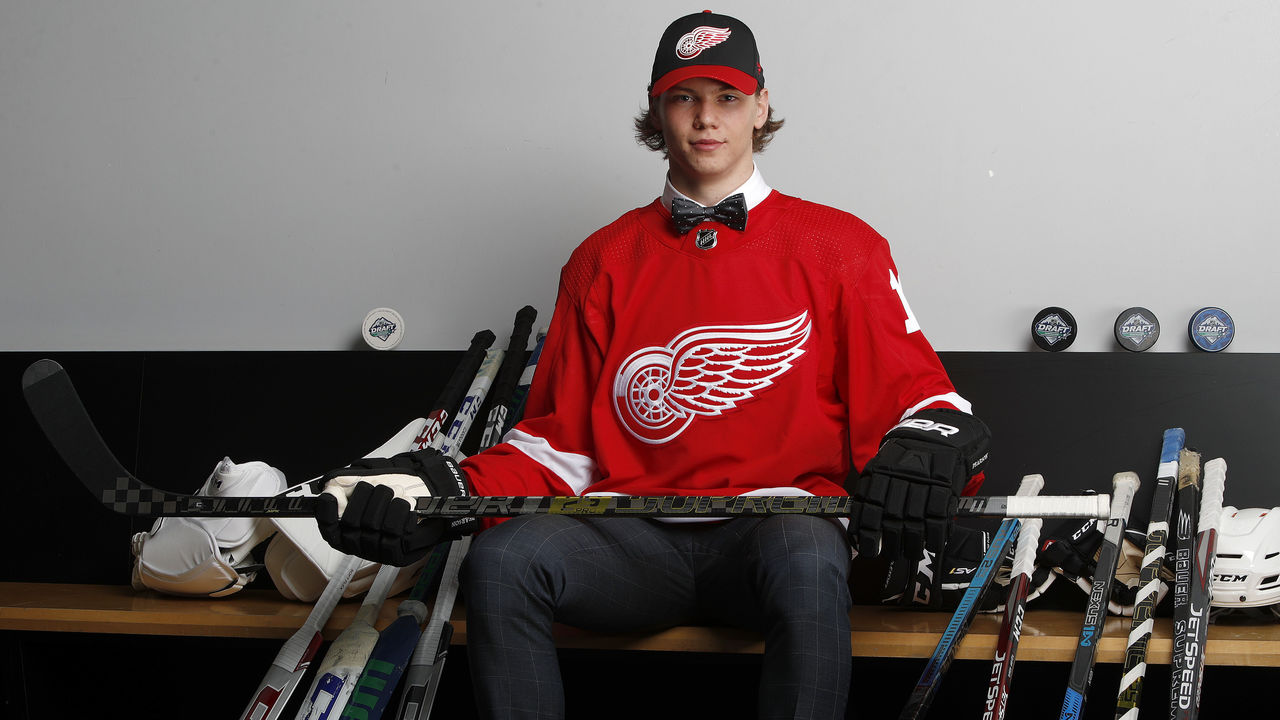
Seider, now 19 years old and listed at 6-foot-4 and 207 pounds, has developed into one of the top prospects on the planet. If not for COVID-19, the No. 6 pick in the 2019 NHL Draft likely would have made his debut on the Detroit Red Wings' blue line late in the season after getting his first taste of North American hockey with 49 games in the AHL. Back in 2006, though, nobody in Seider's extended family had played competitive hockey.
"When I first told my parents I wanted to be a hockey player, they imagined me fighting every game. They were not really happy, so they decided to buy a hockey book for dummies, like a hockey ABC," Seider said with a short laugh. "Now, they're my biggest fans and they really love the sport. They love the intensity, how fast it is."
In 2020, the perception and profile of hockey across Germany are markedly different than they were a decade ago. The nation of 83 million people has never had a bigger presence in the NHL or on the international stage. In the 24-team restart, seven Germans - including Edmonton Oilers superstar center Leon Draisaitl and Colorado Avalanche goalie Philipp Grubauer - cracked playoff rosters.
Homegrown teen Tim Stutzle is projected to go as high as second overall in the upcoming draft. Two other German prospects, John-Jason Peterka and Lukas Reichel, are potential top-50 picks. Plus, let's not forget, Germany claimed silver at the 2018 Olympics.
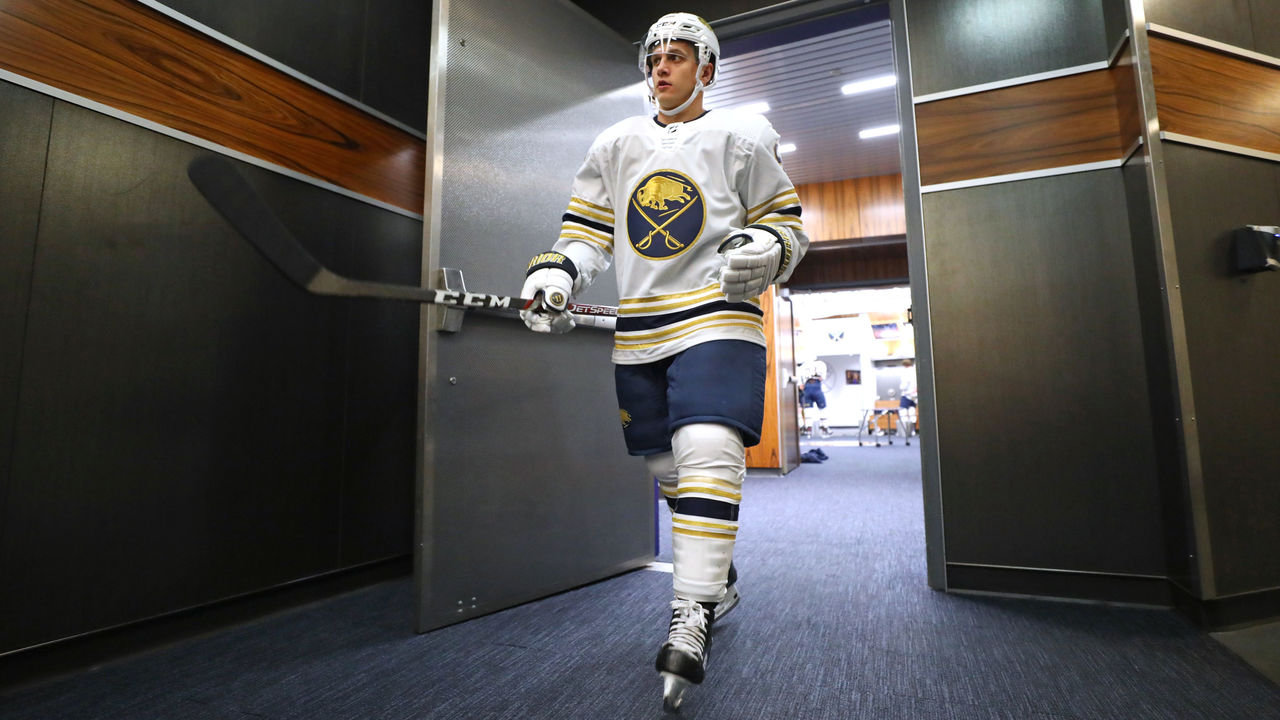
"The silver medal is going to be special for my whole life," Buffalo Sabres forward Dominik Kahun said of the unexpected result. "When we came back from PyeongChang, it was unbelievable how many people were waiting for us at the airport. It was a little bit like when the soccer team comes back from the World Cup."
"But," Kahun added, "after a few weeks it was like everybody forgot about it."
That's the predicament that the German hockey community faces: Is this recent progress a fleeting jolt of success and interest in the sport? Or, is it something more permanent, a sign of things to come for a country that has slowly but surely ascended to an impressive seventh on the IIHF World Ranking? Major stakeholders are trying their best to assure it's the latter.
––––––––––
Marco Sturm Jean Catuffe / Getty Images
Before Draisaitl, Grubauer, Seider, and Stutzle, there was Marco Sturm.
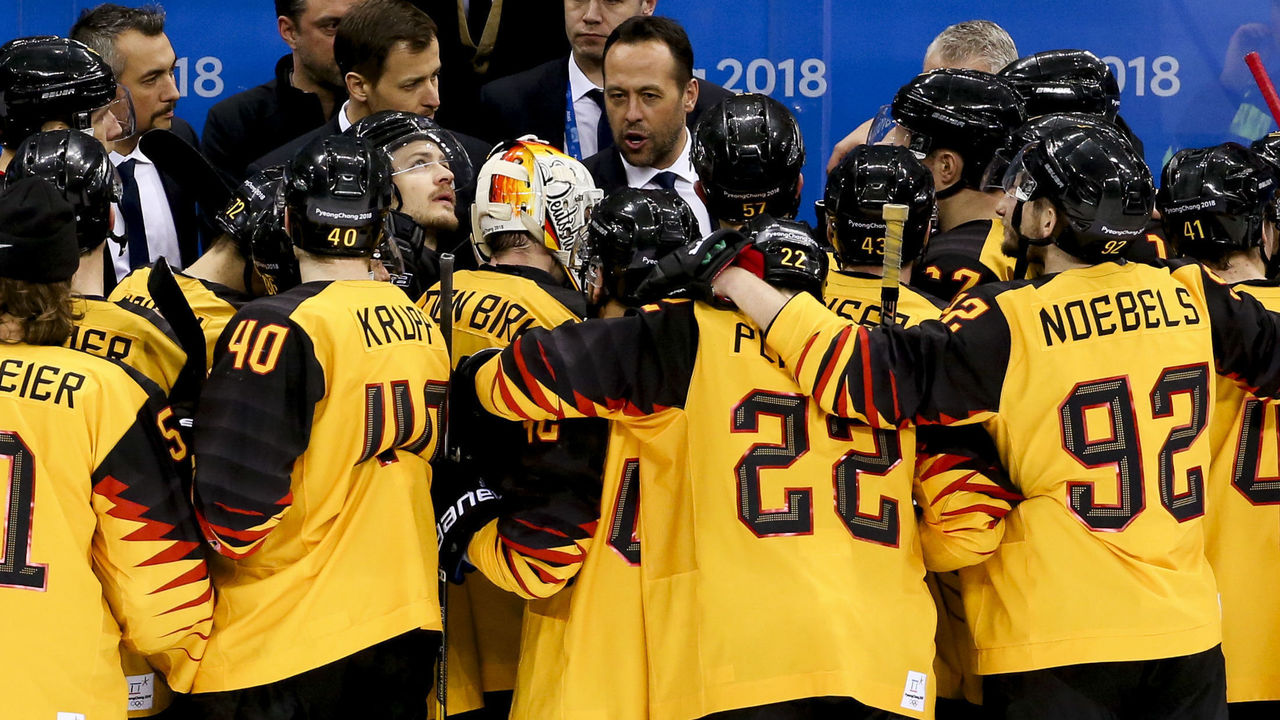
Sturm, Germany's all-time leading NHL scorer, appeared in 938 games from 1997 to 2012 for six franchises, most notably the San Jose Sharks and Boston Bruins. Sturm, now 41, is an assistant coach for the Los Angeles Kings as well as a vital contributor to the German Ice Hockey Federation. It was Sturm, with barely any coaching experience, who guided Germany to silver in PyeongChang.
The result was shocking despite the absence of NHLers creating a more level Olympic playing field. The German federation hadn't expected to compete for medals at major events like the Olympics and World Championship until at least 2026. "We want to play in the medal round (consistently). That was the goal of Power Play 26," Sturm said. "And then the silver medal happened, and we were laughing."
Sturm officially joined the federation in 2015, shortly after the unveiling of Power Play 26, a comprehensive plan for short-, medium-, and long-term growth. Spearheaded by federation president Franz Reindl amid a "crossroads" for German hockey, Power Play 26 prioritizes a modern approach to developing youth players. For instance, it demands kids' coaches focus on skills training rather than team tactics. The plan is aimed squarely at establishing sustainable success instead of opportunistic, one-off triumphs.
"It was a surprising 14 days in PyeongChang," said Reindl, a former forward who won an Olympic bronze in 1976. "The weather was nice, and everything was great. But this is not normal. We're being realistic. Our goal is to be competitive in the future, which means we need more high-quality players, top players. It feels like we're on a good way, but there's still a lot of work to do."
For years, six nations - Canada, Finland, Sweden, Russia, the United States, and the Czech Republic - have formed the elite echelon in international hockey. The second tier has been traditionally populated by Slovakia, Germany, Switzerland, Denmark, Latvia, and Norway.
"Our goal," Sturm said, "is to always be in the top eight in the world rankings. In order to do that, we've got to start with youth hockey."
Franz Reindl Getty Images
There are roughly 24,000 registered hockey players in Germany, Reindl said, which is only 3,000 fewer than rival and neighbor Switzerland, according to the IIHF's website. These German players are spread out across 15 regional branches that oversee 65 local organizations. The federation ships coaches and administrators to these local hubs on a regular basis - 350 total visits a year, according to Reindl - to reinforce best practices and ensure instruction and culture is consistent in all regions.
"We're not waiting for the talent to come to us. We're not being selective," is how Reindl frames the hands-on approach. The hope is that consistency produces a certain type and quality of player.
"We have a close eye on our technique, on basic skills, on stickhandling skills, on skating skills, and as soon as we see we have a good development in those areas, we'll build upon it through our philosophy," said Stefan Schaidnagel, the federation's general manager.
"What's the definition of German hockey players? Is he tall? Is he a good defending player? Is he fast, a quick skater? Does he have clear structure? On top of our skills, we want to reach a real German hockey philosophy. That way everybody knows that when you play against Germany, you're playing against a team which is fast, which is solid on defense, which creates ideas in the offensive zone, which uses the neutral zone for good structure and good transition."
The federation receives €1.5 million in government funding each year, Schaidnagel said, a "little boost" from the amount it received prior to winning silver. The Olympic buzz also triggered an uptick in corporate sponsorship for the national body.
This government stipend, earmarked mostly for growing youth and women's hockey, seems to be having its desired effect. Registration at the youth level has increased between 8% and 10% annually, according to Reindl. It would probably be higher if hockey wasn't such an expensive sport in relation to basketball, handball, and tennis. Hockey's money problem is not unique to Germany. But it is compounded by the fact that its sporting culture is so closely tied to soccer. (Asked for a pecking order of sports in Germany, Sturm said, "There's soccer. Then there's nothing. Then there's the rest.")
"Imagine you only have to pay for two pairs of soccer boots a year, and then you need new skates, which would cost nowadays up to $1,000 or whatever, a stick, which is probably $250 nowadays," Seider said. "It's a pretty expensive sport and not a lot of families are financially ready to do that every single season. I was pretty lucky. My parents probably could have gone on way nicer vacations, but instead they sponsored a lot of tournaments for me, and I appreciate it a lot."
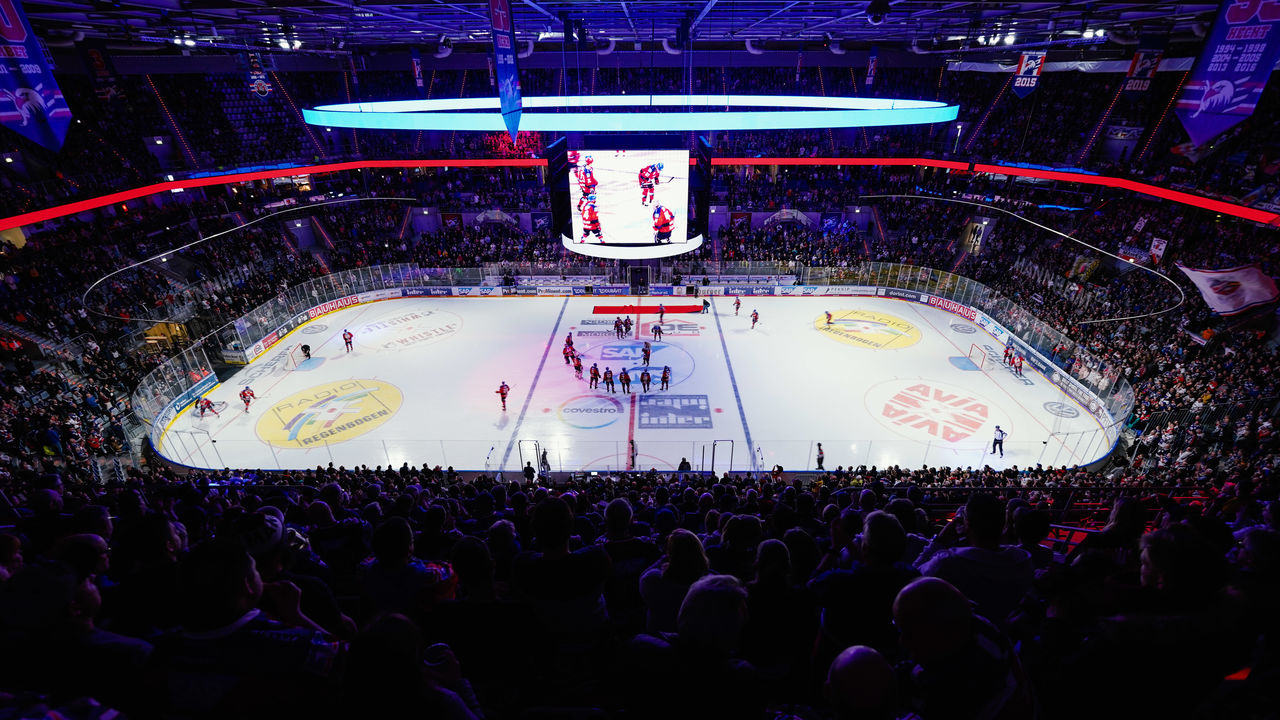
Mannheim's SAP Center Getty images
The federation rolled out the Five-Star Program as part of Power Play 26, wherein local clubs are judged and funded based on the professionalism of their operation. The national body distributes stars based on a rubric that grades quality of arenas, locker rooms, and other facilities. Access to goalie coaches, video rooms, and physiotherapy staff are big pluses, too. Organizations' code of conduct is also audited.
"One star could be five or six different topics. And one topic has another five or six different points under it," Sturm said of the program's depth.
This incentive system is in place to help develop players throughout Germany and not just in the traditional hockey hotbeds of Mannheim, Berlin, and Cologne. The master plan is centered around spreading the wealth between Germany's three professional leagues, not just the top flight Deutsche Eishockey Liga (DEL).
"To get to the second star, you have to get through the first star," Sturm said. "It builds up and builds up, and then if you're at five, that's great. There's some teams who are not in the DEL - maybe in the third division - who get five stars. They make 40, 50, 60 thousand euros, and that's huge. For that, they can hire a new coach."
Distributing the wealth across each league is also key to the program's success as the federation attempts to raise standards across the country. Naturally, there's been resistance from well-run DEL teams who have deep-pocketed owners and a particular way of operating. "We don't really care about the Five-Star Program here," said Pavel Gross, head coach of powerhouse Adler Mannheim. "The program here in Mannheim is a six-star program and has been for years."
Dominik Kahun Sara Schmidle / Getty Images
Another bone of contention in the German hockey community is playing time for teenagers in the DEL. The surefire NHL-bound prospects - such as Seider, Stutzle, Peterka, Reichel - have no gripes, but there aren't many other teens receiving ample ice time. Teams tend to favor veterans who are often imported from elsewhere over developing homegrown youngsters.
"That's probably the most important thing that we are discussing every year here in the DEL," said Kahun, who spent four seasons with Munich EHC. "Last year, they made a rule that you must have two guys of a certain age that have to be on the team and in the lineup. But there are certain coaches who will put them in the lineup but keep them on the bench for all 60 minutes. That's even worse. They should play in the second league and get ice time."
"Our goal has to be to show the (DEL) that (young German players) behind Stutzle, Peterka, and Reichel are easily able to play in the league also," Schaidnagel said. He believes there are 10-to-15 teens capable of playing in the DEL but aren't because teams are focused solely on winning.
Kahun, who like Draisaitl, Seider, and Stutzle moved to Mannheim early in his teens to play with and against better hockey players, found his big break in the DEL. He originally had tried to get noticed by NHL scouts in Canada as an import player on the OHL's Sudbury Wolves, but a move back home proved beneficial for the 25-year-old born in the Czech Republic and raised in Germany.
"Back in the day, if you were a talented guy, you probably went to the (Canadian Hockey League) and hoped to be a high pick in the CHL import draft and then walk your way through that," Seider said. "Now you can actually play in the best German league and stay in your home country. You can be on the power play, be on the PK, be a leader, and compete against men. That's a big one, a big advantage over people who are coming from, I don't know, the U.S. program or the CHL. You're competing against men."
Seider's whole family moved to Mannheim after he outgrew competition in Erfurt, the town where he grew up. "If you want to get to a better team, you have to move on," Seider said. "Or, if you want to develop a little bit more, you have to move on. I had the opportunity to play for Mannheim, and I was really happy that my family took that step."
NHL teams were heavily scouting the DEL to watch the likes of Stutzle (Mannheim), Peterka (Munich), and Reichel (Berlin) before sports around the world were shut down earlier this year. Gross calls the 2002-born trio "something special" but not necessarily a reflection of the state of the entire German development system. "I don't think we'll see some similar players next year or in two years," he said.
Stutzle, who considered playing in North America in his NHL draft year, ended up alongside Canadian center Ben Smith and Finnish winger Tommi Huhtala on Mannheim's top line. The shifty 6-foot-1, 187-pound left-winger skated for 16-17 minutes a game, including plenty of time on the club's No. 1 power-play unit, Gross said. He produced at an eye-popping rate - 34 points in 41 games - for someone who turned 18 in January and was matched up against men every single shift.
"You don't need to know much about hockey to realize how good of a player he is," Kahun said. "He was outstanding (in 2019-20) as a young kid in the DEL."
Stutzle was a fantastic soccer player growing up, showing signs of pro potential. He made a commitment to hockey around age 9, though. "My strengths are my playmaking ability and skating," Stutzle said when asked for a personal scouting report. "My hockey IQ and my work ethic I would describe (as good, too). I think I can still work on everything since I'm very young, especially staying on my feet and winning more battles; gaining more weight, more muscle is probably the biggest thing I need to work on."
Tobias Reider Andy Devlin / Getty Images
Sixty-eight NHL draft picks were born in Germany, according to Elite Prospects. Draisaitl (No. 3 in 2014) is the highest selection in the expansion era. Seider is the only other top-10 pick, while Dominik Bokk (25th in 2018), Marcel Goc (20th in 2001), and Sturm (21st in 1996)round out the country's first-rounders. Goaltender Olaf Kolzig (19th in 1989) grew up in Canada but used his German citizenship to represent the country in various international competitions.
In the NHL's round of 16 - which starts Tuesday - there's Grubauer on the Avalanche, forward Tom Kuhnhackl and goalie Thomas Greiss on the Islanders, and forward Tobias Rieder on the Flames. Draisaitl and the Minnesota Wild's Nico Sturm were eliminated in the qualifying round. This group of playoff warriors, mixed with other German NHLers and the top prospects, could provide a solid roster for the 2022 Beijing Games.
The current generation of youngsters adores Draisaitl, and the NHL scoring champion and MVP finalist reciprocates the love through mentorship.
"He was reaching out during the year at least once a week to check with me, to make sure I'm doing good, that everything's going well," Seider said. "He knows how hard it is in the AHL. He went through it, and he even got sent down to juniors again. So he helped me a lot, and I'm very, very thankful for that."
Said Draisaitl, "I would love to help these kids as much as I can, if they ever need anything or have any questions. I'm always there for them and I'd love to help them, but I think these kids nowadays are so advanced, so good, their confidence is so high, that I think they'll make the right decisions and they'll be great players in their own right."
Leon Draisaitl Getty Images
Sturm likes to compare Draisaitl's popularity in Germany now to that of Dirk Nowitzki when he was at his peak as an NBA superstar.
"There was no bigger guy than Nowitzki, athlete-wise," Sturm said. "But, when you live there, it's hard. You rarely see something on TV. You don't see too many highlights. ... You get lost a little bit in the shuffle and you lose track, and you start wondering what Leon is doing."
Exposing Germans to one of the best hockey players in the world - one of their own - is part of the equation that Reindl, Schaidnagel, and all involved in Power Play 26 are attempting to solve. A mountain of progress has been made over the past five years, but Germany can't get complacent.
"We are on the right track," Schaidnagel said. "But now it's coming to the time where we need to re-evaluate every day, every month, every year, and ask ourselves, 'Are we still on the right track?'"
Sturm's Kings own 11 picks in the 2020 draft. They have an opportunity to draft Stutzle at No. 2, as well as five more chances in the second and third rounds to possibly land Peterka or Reichel. What a capper that would be for Sturm, the country, and the kids.
"I'm very proud to be a German," Sturm said, "and they should be proud too."
One of the longest-serving and most well-respected reporters in hockey isn't calling it a career quite yet, but his days as an insider appear to be nearing an end.
TSN's Bob McKenzie, who's covered the game for more than three decades, revealed Monday he'll begin a "semi-retirement" following the NHL's second and final phase of the draft lottery.
McKenzie joined TSN in 1986 after starting his journalism career with print publications including the Toronto Star and The Hockey News.
He's reported and provided analysis on TV and across digital platforms for events such as the NHL draft, free agency, the trade deadline, and the World Junior Hockey Championship.
McKenzie also signed on as a contributor with NBCSN after TSN lost national NHL broadcasting rights in Canada to Sportsnet in 2014.
The Professional Hockey Writers Association honored McKenzie in 2015 with the Elmer Ferguson Memorial Award, bestowed annually "in recognition of distinguished members of the hockey-writing profession whose words have brought honor to journalism and to hockey."